What Is the Passing Score for the CELPIP Test?
Introduction
If you're planning to immigrate to Canada, apply for Canadian citizenship, or improve your Comprehensive Ranking System (CRS) score through Express Entry, one of the first questions you'll probably ask is. CELPIP scores are aligned with the Canadian Language Benchmark (CLB) system. To understand this relationship clearly, read our detailed guide on CELPIP score vs CLB explained.
"What is the passing score for the CELPIP test?"
It sounds like a simple question, but the answer surprises many test takers. The truth is that there is no single passing score for the CELPIP test.
Unlike many school or university exams where everyone needs the same passing percentage, the CELPIP test works differently. Your required score depends entirely on why you're taking the exam. Some programs accept only the full test, while others accept the listening and speaking version. Learn which one is right for you in this comparison guide.
For example:
- Someone applying for Canadian citizenship may have a different language requirement than someone applying through Express Entry.
- A nurse seeking professional registration may need a higher score than someone applying under a different immigration pathway.
- Two candidates taking the same test on the same day may both achieve their goals even with different scores.
This is one of the biggest misconceptions we see among CELPIP candidates.
Many students spend months chasing the highest possible score when, in reality, they only need to achieve the score required for their specific application.
As CELPIP trainers, we've met candidates who were disappointed after scoring CELPIP 8 because they believed they had "failed." Later, they discovered that their score already met the language requirement for the program they were applying for. On the other hand, we've also worked with candidates who achieved good English scores but still needed a higher benchmark to maximize their Express Entry points. While CLB 7 meets the minimum, you may wonder if it is actually a strong score.
That's why understanding the CELPIP scoring system before you begin preparing is so important.
This guide will explain:
- How CELPIP scores work
- Whether the CELPIP test has a pass or fail score
- Score requirements for Canadian citizenship
- Score requirements for Express Entry
- How CELPIP scores relate to Canadian Language Benchmarks (CLB)
- Common mistakes students make
- Practical tips to achieve your target score
By the end of this guide, you'll know exactly which score you should aim for and how to prepare more effectively. While there is no single universal passing score, Express Entry has clearly defined benchmarks. Read more in CELPIP requirements for Express Entry.
Quick Answer
If you're looking for a short answer, here it is:
There is no universal passing score for the CELPIP test. Your required score depends on the purpose of your test.
For example:
- Canadian citizenship applicants must meet the language requirement established by the Government of Canada.
- Express Entry candidates receive points based on their language proficiency, and higher CELPIP scores generally lead to more CRS points.
- Some employers and professional licensing organizations set their own minimum language requirements.
The first step is always to identify your goal before deciding what score you need. Citizenship has simpler requirements compared to PR programs. You can check the exact requirement in CELPIP score for Canadian citizenship.
Why So Many People Get Confused About the CELPIP Passing Score
Every week, candidates ask questions like:
- "Is CELPIP 7 a pass?"
- "Is CELPIP 8 good enough?"
- "Do I need 9 in every module?"
- "What happens if I get one low score?"
- "Does the average score matter?"
These are reasonable questions, but they often come from one incorrect assumption:
People think CELPIP works like a traditional examination. It doesn't. Imagine two students. CELPIP scores range from 1 to 12 and correspond directly to CLB levels. You can explore the full scoring system in this detailed scoring guide.
Student A
Priya wants to apply for Canadian citizenship. She checks the language requirement first, discovers the benchmark she needs, prepares for that goal, and successfully qualifies.
Student B
Aman wants to improve his Express Entry profile. Instead of checking the CRS system, he assumes "higher is always better" and spends months trying to achieve perfect scores in every skill even though his weakest area is Writing.
Both students take the same test. Both receive different scores. Both have different goals.
The important question isn't:
"Did I pass?"
The important question is:
"Did I achieve the score required for my immigration or career objective?"
That shift in thinking changes the way you prepare for the exam.
Understanding How CELPIP Scores Work
Before discussing score requirements, it's important to understand how CELPIP is scored.
The CELPIP General Test evaluates four language skills:
- Listening
- Reading
- Writing
- Speaking
Each skill receives its own score ranging from 1 to 12. There is no single overall pass or fail result. Since there is no single universal passing score, understanding how each section is evaluated is important. Learn more in how CELPIP scoring works.
Instead, every skill is reported separately, allowing immigration authorities, employers, and licensing organizations to evaluate your English ability in each area. Before focusing on scores, it’s important to choose the correct test type. Read more about CELPIP General vs General LS.CELPIP score reports may also display an average score for some purposes, but IRCC does not use the average score for immigration or citizenship decisions. For Express Entry, candidates typically need at least CLB 7 in all skills. You can explore this in detail in this Express Entry score guide.
This is extremely important.
Suppose your results are:
|
Skill |
Score |
|
Listening |
10 |
|
Reading |
9 |
|
Writing |
8 |
|
Speaking |
9 |
Many students would look at this and ask:
"What's my overall score?" For most Canadian immigration programs, that's the wrong question. Instead, immigration programs usually consider each language ability individually. Since different programs require different scores, many candidates retake the test to improve their results. Read more about retaking the CELPIP test.
What Do CELPIP Levels Mean?
CELPIP scores correspond closely to the Canadian Language Benchmarks (CLB), Canada's national standard for describing English language proficiency.
A simplified comparison looks like this:
|
CELPIP Level |
CLB Equivalent |
General Description |
|
12 |
CLB 12 |
Expert proficiency |
|
11 |
CLB 11 |
Advanced proficiency |
|
10 |
CLB 10 |
Highly effective proficiency |
|
9 |
CLB 9 |
Effective proficiency |
|
8 |
CLB 8 |
Good proficiency |
|
7 |
CLB 7 |
Adequate proficiency |
|
6 |
CLB 6 |
Developing proficiency |
|
5 |
CLB 5 |
Acquiring proficiency |
|
4 |
CLB 4 |
Basic daily communication |
The higher your score, the stronger your English skills in real-life Canadian situations. Since CELPIP scores directly map to CLB levels, it’s important to understand this conversion. Here’s a complete breakdown of CELPIP score vs CLB.
Expert Insight: Don't Chase the Highest Score Without a Reason
One of the biggest mistakes candidates make is setting the wrong target.
For example:
A student preparing for citizenship doesn't necessarily need the same score as someone trying to maximize Express Entry points.
If your target is CLB 7, spending months trying to reach CLB 10 may not be the best use of your time. Instead, your goal should be to consistently achieve the score required for your application while building enough confidence to perform well on test day.
That's why the first question I ask students is never:
"What score did you get?"
Instead, I ask:
"What score do you actually need?" That answer shapes the entire preparation strategy.
What CELPIP Score Do You Need for Different Canadian Immigration Programs?
Now that you understand how the CELPIP scoring system works, let's answer the question that matters most:
"What score do I actually need?"
The answer depends entirely on your purpose for taking the CELPIP test. Think of the CELPIP test as a measuring tool rather than a pass-or-fail exam. Just as different jobs require different qualifications, different Canadian immigration programs require different English language levels. If your score is below the required level, you can retake the test after preparation. Learn how it works in this detailed retake guide.
Let's look at the most common situations:
1. CELPIP Score for Canadian Citizenship
If you're applying for Canadian citizenship, the language requirement is generally much lower than many people expect.
Most applicants between the applicable ages need to demonstrate CLB 4 in speaking and listening to meet the citizenship language requirement. The exact eligibility rules, including age requirements and acceptable proof of language, are determined by the Government of Canada and should always be verified before applying.
What does CLB 4 actually mean?
Many students panic when they hear the term "language benchmark."
In reality, CLB 4 represents the ability to communicate in everyday situations. Your CELPIP score (1–12) corresponds to CLB levels, which are used by immigration authorities. You can explore this mapping in detail in our guide on CELPIP vs CLB scoring system.
For example, you should be able to:
- Introduce yourself.
- Ask for directions.
- Understand basic conversations.
- Speak about your family and work.
- Handle routine daily interactions.
You are not expected to speak like a university professor or a native English speaker.
The goal is practical communication in everyday Canadian life.
Real-Life Example
Let's imagine Ravi.
Ravi has lived in Canada for six years.
- He works in a warehouse.
- He communicates with his manager every day.
- He can explain simple problems.
- He can order food.
- He can visit a doctor.
- He can speak to his children's teachers.
Although his grammar isn't perfect, he communicates effectively.
For many citizenship applicants, this level of English is already sufficient to meet the required language benchmark.
Notice something important.
Ravi doesn't need advanced vocabulary.
He doesn't need perfect pronunciation.
He needs functional English.
That difference removes a lot of unnecessary stress.
Common Mistake
Many citizenship applicants spend months memorizing advanced vocabulary because they believe they must achieve CELPIP Level 9 or 10.
In reality, they would make much better progress by practicing everyday conversations confidently.
If your goal is Canadian citizenship, focus on:
- Clear pronunciation
- Everyday vocabulary
- Listening carefully
- Speaking naturally
Don't waste valuable study time trying to sound overly academic.
2. CELPIP Score for Express Entry
Express Entry is completely different.
Unlike citizenship, Express Entry doesn't simply ask,
"Did you meet the language requirement?"
Instead, it rewards stronger English skills with additional points.
This means every improvement in your language ability can potentially strengthen your overall profile, depending on the immigration program and your complete CRS score. While some programs require CLB 7 or higher, citizenship only needs CLB 4 in listening and speaking. Read the full explanation here: CELPIP score for citizenship.
Think of it this way.
Two candidates may have identical education, work experience, and age.
The only difference is their English score:
- Candidate A earns higher language scores.
- Candidate B earns lower language scores.
Even though both speak English reasonably well, Candidate A may receive significantly more CRS points because of stronger language results.
That's why language is often one of the fastest areas where candidates can improve their Express Entry profile.
Real-Life Example
Consider Maria.
She already has:
- Canadian work experience.
- A bachelor's degree.
- Several years of professional experience.
Her CRS score is competitive, but not high enough to receive an Invitation to Apply. Instead of returning to university or changing jobs, she spends three months improving her English. Her stronger CELPIP performance increases her language points and strengthens her overall Express Entry profile.
This is one reason experienced immigration consultants often encourage candidates to invest in language preparation. Improving your English can sometimes be easier and more cost-effective than trying to gain additional education or work experience.
Should Everyone Aim for CLB 9?
One of the most common questions students ask is:
"Should I aim for CLB 9?"
The answer depends on your situation.
For many Express Entry candidates, reaching CLB 9 can significantly improve CRS points. However, that doesn't automatically mean every student should make CLB 9 their only goal. If you're currently scoring around CLB 5, your first objective should be to consistently reach CLB 7.
After that, you can build toward higher benchmarks. Breaking your preparation into stages is much less stressful than trying to jump directly to an advanced level.
3. Provincial Nominee Programs (PNPs)
Provincial Nominee Programs are different again. Each Canadian province can establish its own language requirements for different immigration streams. For example, one occupation may require a higher language level than another. Some streams prioritize skilled workers.
Others focus on graduates, entrepreneurs, healthcare professionals, or workers in occupations experiencing labour shortages. Because these programs change periodically, it's essential to verify the latest language requirements before submitting an application.
Practical Advice
If you're applying through a Provincial Nominee Program,
Don't rely on information from social media or online discussion forums.
Instead:
- Check the official provincial immigration website.
- Confirm which language benchmark applies to your stream.
- Build your study plan around that target.
Preparing for the wrong score can cost both time and money.
4. Professional Licensing
Some regulated professions require proof of English proficiency before licensing.
Examples include:
- Nursing
- Pharmacy
- Early childhood education
- Skilled trades
- Other regulated occupations
Professional licensing organizations may have their own language requirements, and these can differ from immigration requirements.
For example, a candidate may already qualify for immigration but still need stronger English skills before receiving professional registration.
Always check the specific requirements published by the relevant licensing authority.
5. Employment Requirements
Some Canadian employers request English language test results as part of their hiring process. However, unlike immigration programs, employers often focus on practical communication rather than a specific CELPIP level. For example, a customer service representative needs excellent speaking and listening skills.
A software developer may require strong reading and writing abilities. An office administrator might need balanced skills across all four language areas. In other words, the required score depends on the job itself.
Does a Higher CELPIP Score Always Mean Better Opportunities?
Not necessarily. A higher score is always valuable because it demonstrates stronger English proficiency. However, your target should match your objective.
Let's compare three students.
|
Student |
Goal |
Recommended Focus |
|
Ravi |
Canadian Citizenship |
Meet the required benchmark with confidence. |
|
Maria |
Express Entry |
Maximize language points to improve CRS score. |
|
Daniel |
Professional Licensing |
Meet the language standard required by the licensing body. |
Each student studies differently because each has a different destination.
That's exactly how your preparation should work.
How to Choose Your Target Score
Before opening a practice book or watching another YouTube lesson, ask yourself these five questions:
1. Why am I taking the CELPIP test?
- Citizenship?
- Express Entry?
- Provincial Nominee Program?
- Employment?
- Professional licensing?
2. What language level does my application require?
Always verify the latest official requirement rather than relying on old blog posts or social media advice.
3. What is my current level?
- Take a realistic mock test.
- Many students underestimate or overestimate their abilities.
- Knowing your starting point helps you build an effective study plan.
4. How much time do I have?
If your test is four weeks away, your strategy will differ from someone preparing over six months.
5. Which skill is holding me back?
- Many candidates focus only on Speaking because they find it stressful.
- However, Writing or Reading may actually be limiting their results.
- A diagnostic practice test often reveals where your biggest improvement opportunities lie.
Expert Advice from CELPIP Trainers
One of the biggest differences between successful candidates and unsuccessful ones isn't intelligence.
It's preparation.
Students who understand:
- Their target score
- The scoring system
- And the exam format

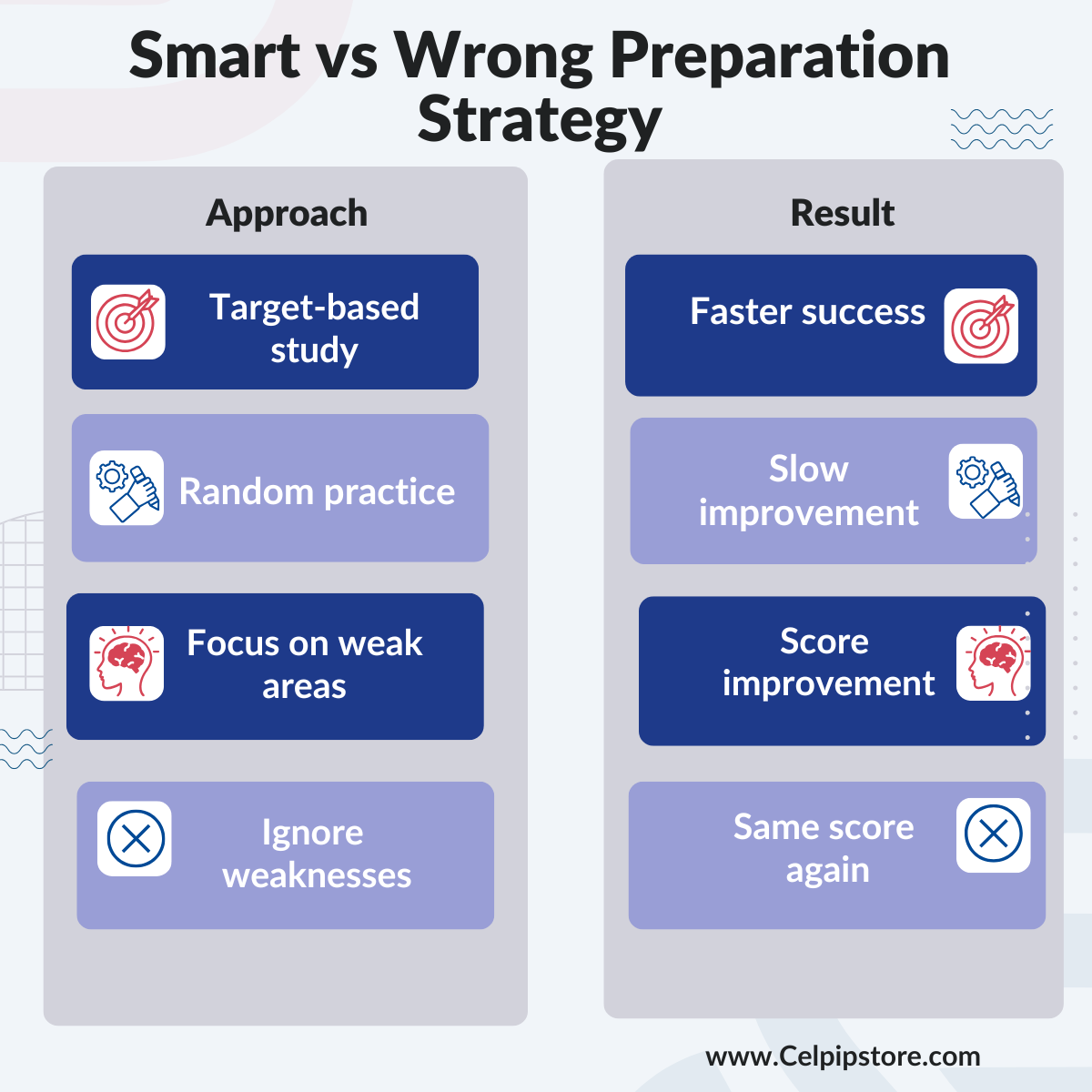
Usually prepare more efficiently than students who simply complete random practice questions every day. That's why we always recommend beginning with a clear goal before creating your study plan. Knowing what score you need is just as important as knowing how to achieve it.
Excellent. This is the most important section of the article.
Why?
- Because Parts 1 and 2 answer "What score do I need?"
- Part 3 answers "How do I actually achieve it?"
This is also where we naturally introduce CELPIPStore as a helpful resource rather than a sales pitch. That's much better for user experience and long-term SEO.
How to Achieve Your Target CELPIP Score
Now that you know there isn't a universal passing score, the next question is obvious:
- "How can I achieve the score I need?"
- The answer isn't simply "study harder."
The candidates who consistently achieve their target scores usually follow a structured study plan. They understand the test format, identify their weak areas, practice regularly under timed conditions, and learn from their mistakes.
Let's look at what actually works.
Step 1: Know Your Current Level
Many candidates make the mistake of studying without knowing where they stand. Imagine driving to a new city without checking your starting location. You know your destination, but you have no idea how to get there.
Preparing for the CELPIP test works the same way. Before you begin serious preparation, take a full-length practice test under exam conditions.
This will help you answer questions such as:
- Which skill is your strongest?
- Which skill needs the most improvement?
- Are you already close to your target score?
- How much preparation time will you realistically need?
For example:
Sarah wants to achieve CLB 9 for Express Entry.
After taking a mock test, she receives:
|
Skill |
Score |
|
Listening |
9 |
|
Reading |
9 |
|
Writing |
7 |
|
Speaking |
8 |
Instead of studying everything equally, she focuses on Writing and Speaking.
Within six weeks, she reaches her target.
That's far more efficient than spending months practicing skills that are already strong.
Step 2: Understand the Test Format
Many students lose marks because they don't fully understand how the exam works.
For example:
- They spend too much time on Reading.
- They panic during Speaking because of the preparation timer.
- They write excellent English but ignore the Writing task instructions.
- They miss key information during Listening because they aren't familiar with different question types.
Knowing the format reduces stress and helps you manage your time more effectively.
Before your test, make sure you understand:
- The number of sections.
- The types of questions.
- The time limits.
- The scoring criteria.
- The computer-based testing environment.
Confidence often comes from familiarity.
Step 3: Practice Like It's Test Day
One of the biggest differences between average candidates and high scorers is how they practice.
Many students:
- Pause audio recordings,
- Look up answers immediately,
- Repeat Speaking responses until they're perfect,
- Or spend unlimited time on Writing tasks.
Unfortunately, that's not how the real exam works.
Effective practice should closely resemble the actual test.
That means:
- Following the official time limits.
- Completing each section without interruptions.
- Avoiding dictionaries or translators during practice.
- Reviewing your mistakes only after finishing the test.
Practicing under realistic conditions prepares both your English skills and your confidence.
Step 4: Focus on Your Weakest Skill
Every candidate has strengths and weaknesses.
Some examples:
Candidate A
Excellent speaker.
Weak writer.
Candidate B
Strong reader.
Weak listener.
Candidate C
Excellent grammar.
Limited vocabulary.
Trying to improve everything at once often leads to slow progress. Instead, prioritize the skill that's holding back your overall performance. For many students, improving one weaker skill can make a significant difference in their results.
Step 5: Learn From Every Mistake
Practice tests aren't just about measuring your score.
They're about identifying patterns.
After each practice test, ask yourself:
- Why did I lose marks?
- Was it vocabulary?
- Was it grammar?
- Did I misunderstand the question?
- Did I run out of time?
- Was I nervous?
Keeping a mistake journal can be surprisingly effective.
For example:
|
Date |
Section |
Mistake |
Improvement |
|
June 5 |
Writing |
Didn't address one bullet point |
Read instructions carefully before writing |
|
June 8 |
Listening |
Missed numbers |
Practice note-taking |
|
June 12 |
Speaking |
Spoke too quickly |
Slow down and pause naturally |
Over time, you'll notice recurring issues and you'll know exactly what to work on.
Common Mistakes That Prevent Candidates From Reaching Their Target Score
After helping many students prepare for the CELPIP test, we've noticed that the same mistakes appear again and again.
Here are some of the most common ones.
Mistake 1: Chasing a Higher Score Than Necessary
If your immigration pathway requires CLB 7, spending months trying to reach CLB 10 may not be the best use of your time.
Always understand your target before creating your study plan.
Mistake 2: Memorizing Answers
Some candidates try to memorize Speaking responses or Writing templates word for word.
This usually backfires.
The CELPIP test is designed to assess your ability to communicate naturally.
Templates can help you organize your ideas, but your responses should always sound genuine and relevant to the question.
Mistake 3: Ignoring Time Management
Running out of time is one of the most common reasons candidates lose marks.
Time management improves with realistic practice not luck.
Mistake 4: Practicing Only One Skill
Many candidates focus almost entirely on Speaking because they find it stressful.
However, your Reading or Writing score may actually be limiting your overall performance.
Balanced preparation usually produces better results.
Mistake 5: Not Reviewing Practice Tests
Taking practice tests is valuable.
Reviewing them carefully is even more valuable.
Learning from mistakes is where real improvement happens.
Myths vs Reality
Let's clear up a few common misconceptions.
|
Myth |
Reality |
|
CELPIP has one passing score. |
There is no universal passing score. Your required score depends on your purpose for taking the test. |
|
I must score 12 in every skill. |
Most candidates simply need to meet the language requirement for their program. |
|
Perfect grammar guarantees a high score. |
Grammar matters, but organization, vocabulary, clarity, and task completion are also important. |
|
Native speakers automatically score perfectly. |
Even fluent speakers benefit from understanding the test format and scoring criteria. |
|
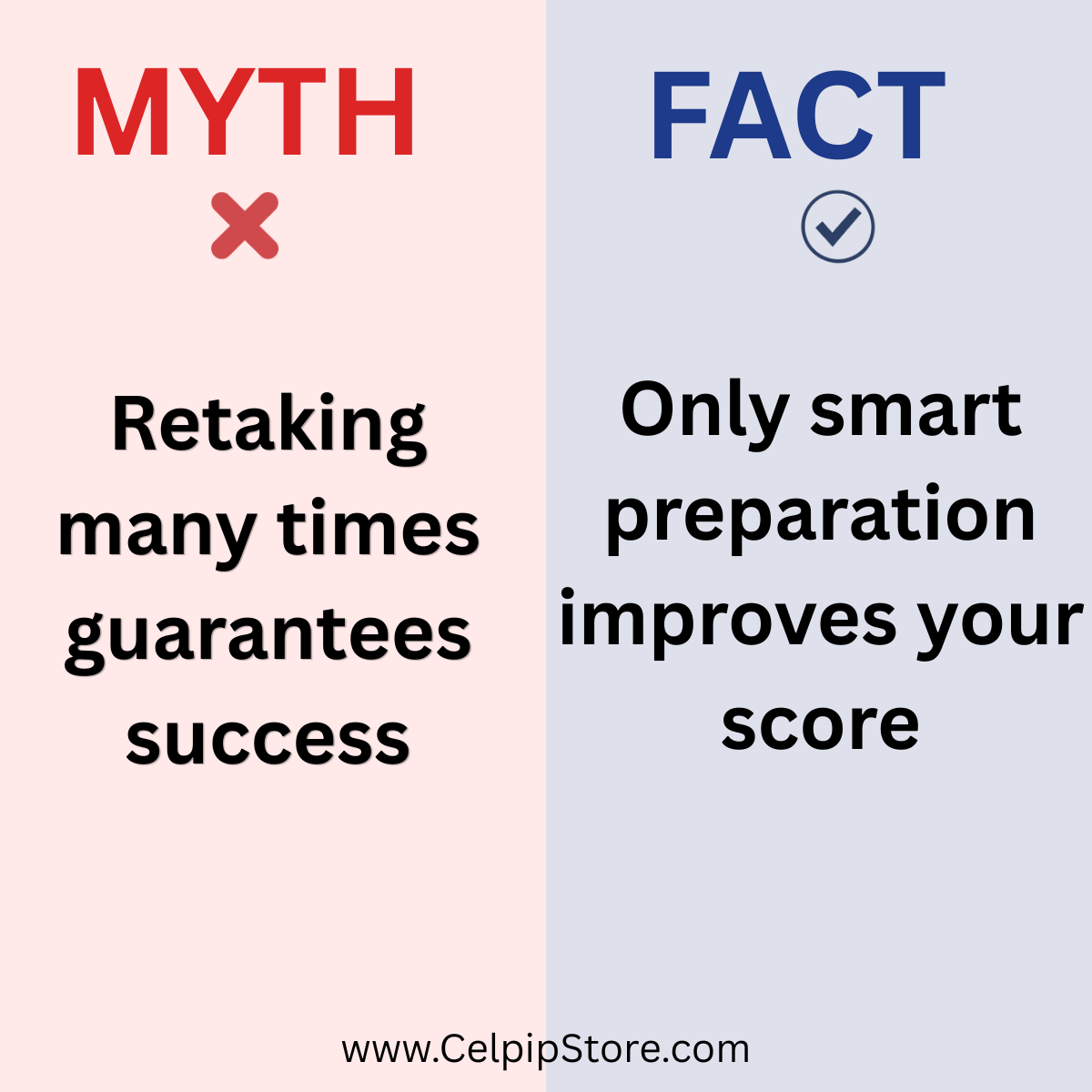
More study hours always produce better results. |
Focused, consistent practice is usually more effective than simply studying longer. |
Frequently Asked Questions
Q1. Is there a pass or fail in the CELPIP test?
No. The CELPIP test reports your performance in each language skill. Whether your score is sufficient depends on the requirements of your immigration program, employer, or licensing organization.
Q2. Is CELPIP Level 7 a good score?
Yes. CELPIP Level 7 demonstrates a solid level of English proficiency. Whether it is enough depends on the purpose of your test.
Q3. Is CELPIP Level 9 difficult to achieve?
It requires strong English skills and consistent preparation. Many candidates achieve this level through structured practice, especially if they focus on their weaker skills.
Q4. Can I retake the CELPIP test?
Yes. If you're not satisfied with your results, you can register for another test, subject to the testing organization's policies.
Q5. Which CELPIP test should I take?
The answer depends on your application. Many immigration pathways require the CELPIP-General Test, while CELPIP-General LS is accepted for certain citizenship applications. Always confirm which test your application requires before booking your exam.
Q6. How does CELPIP score relate to CLB?
CELPIP scores are directly converted into CLB levels. Learn more in our guide on CELPIP score vs CLB explained.
Q7. What is the CELPIP requirement for Canadian citizenship?
You only need CLB 4 in listening and speaking. Learn more in this detailed guide.
Q8. What CELPIP score is required for Express Entry?
Most programs require at least CLB 7 in each skill. Learn more in CELPIP score for Express Entry.
Q9. How is CELPIP scored?
CELPIP evaluates each skill separately on a scale of 1–12. Read the full breakdown in How CELPIP is scored.
Q10. Which CELPIP test should I take?
It depends on your goal. For PR, you need the full test, while for citizenship, the LS version is enough. Learn more in this detailed guide.
Q11. Can I retake CELPIP if I fail?
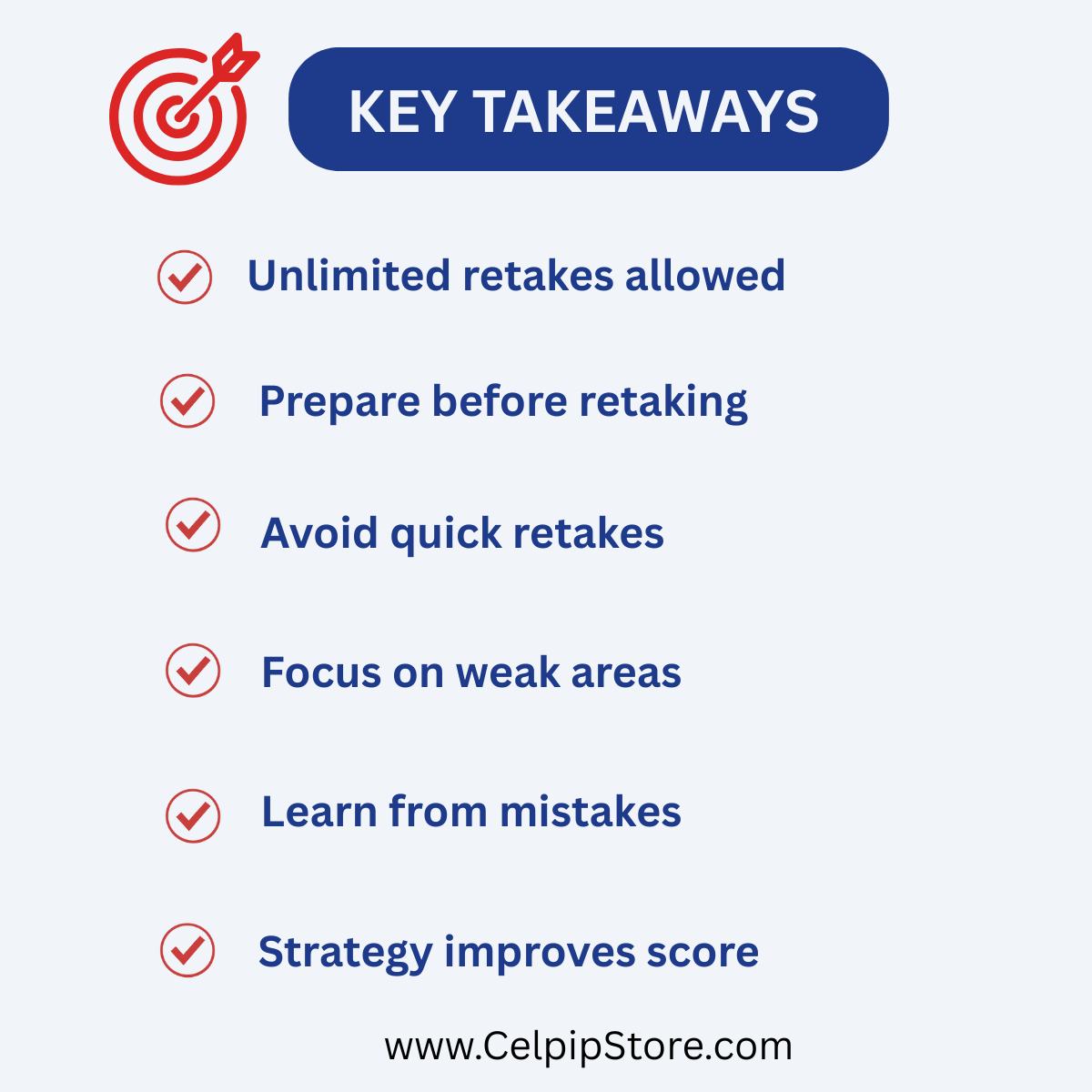
Yes, there is no limit on attempts, and you can take the test again to improve your score . Learn more in this guide.
Final Thoughts
If there's one message we hope you take away from this guide, it's this:
Don't ask, "What is the CELPIP passing score?"
Instead, ask:
"What score do I need for my specific goal?"
That simple change in mindset can save you time, reduce unnecessary stress, and help you prepare more effectively. Whether you're applying for Canadian citizenship, improving your Express Entry profile, or meeting the language requirements of a professional licensing body, understanding your target score is the first step toward success. Didn’t get your target score? Read can you retake the CELPIP test. Planning for PR? Check the full requirements in CELPIP score for Express Entry.
Once you've identified your goal, focus on consistent practice, realistic mock tests, and continuous improvement. Every point you gain represents stronger communication skills and brings you one step closer to achieving your Canadian dream. Want to understand how your score is evaluated? Read CELPIP score vs CLB explained.
Ready to Start Preparing?
Knowing your target score is important but reaching it requires practice. Want to understand how your score is calculated? Read How CELPIP is scored.
To build confidence before test day, practice under realistic exam conditions using high-quality questions that reflect the format of the actual CELPIP test.
On CELPIPStore, you'll find practice resources designed to help you:
- Become familiar with the test format.
- Improve your Speaking and Writing performance.
- Build confidence with timed practice.
- Identify your strengths and areas for improvement.
The more realistic your preparation, the more confident you'll feel on exam day. If you are applying for citizenship, check the exact requirements in CELPIP score for Canadian citizenship.
Good luck with your CELPIP journey!