Is CELPIP Level 7 a Good Score?
If you've recently received your CELPIP results and saw Level 7, your first question is probably:
"Is CELPIP Level 7 a good score?"
The short answer is:
Yes. CELPIP Level 7 is a solid English language score for many candidates. However, whether it is good enough depends entirely on why you're taking the test.
For some people, Level 7 may meet the language requirement for their application. For others, achieving a higher score could improve their opportunities or make them more competitive.
That's why simply asking whether Level 7 is "good" isn't the most useful question.
A better question is:
"Is CELPIP Level 7 enough for my specific goal?"
In this guide, First, you need to understand what the official passing score, what Level 7 means, when it may be sufficient, when you may benefit from a higher score, and how you can improve your score if needed.
What Does CELPIP Level 7 Mean?
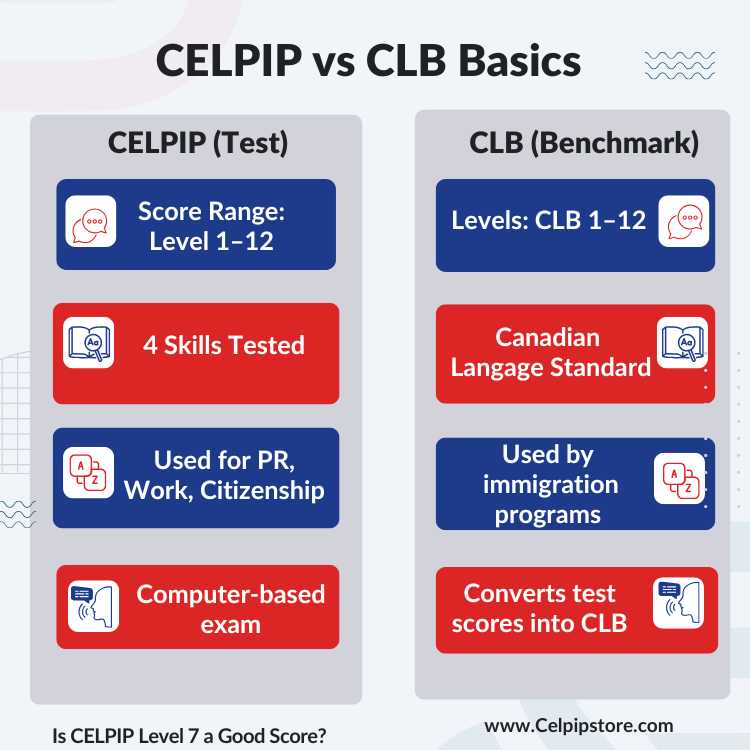
The CELPIP test evaluates your English ability in four separate skills:
- Listening
- Reading
- Writing
- Speaking
Each skill receives its own score. To fully understand this, check the passing score requirements.
A Level 7 result generally indicates that you can:
- Understand everyday conversations.
- Participate in discussions with confidence.
- Read common workplace and community materials.
- Write clear emails and messages.
- Express your ideas in an organized way.
Like many language assessments, it measures practical communication rather than perfect grammar.
This is why many successful candidates who score Level 7 communicate effectively in real-life situations, even if they occasionally make small language errors.
(1).jpg "First_Explanation-Sub1_(1200_x_1200_px)(1).jpg")
Is Level 7 Good for Canadian Immigration?
This is one of the most frequently asked questions.
The answer depends on the immigration pathway you are applying under.
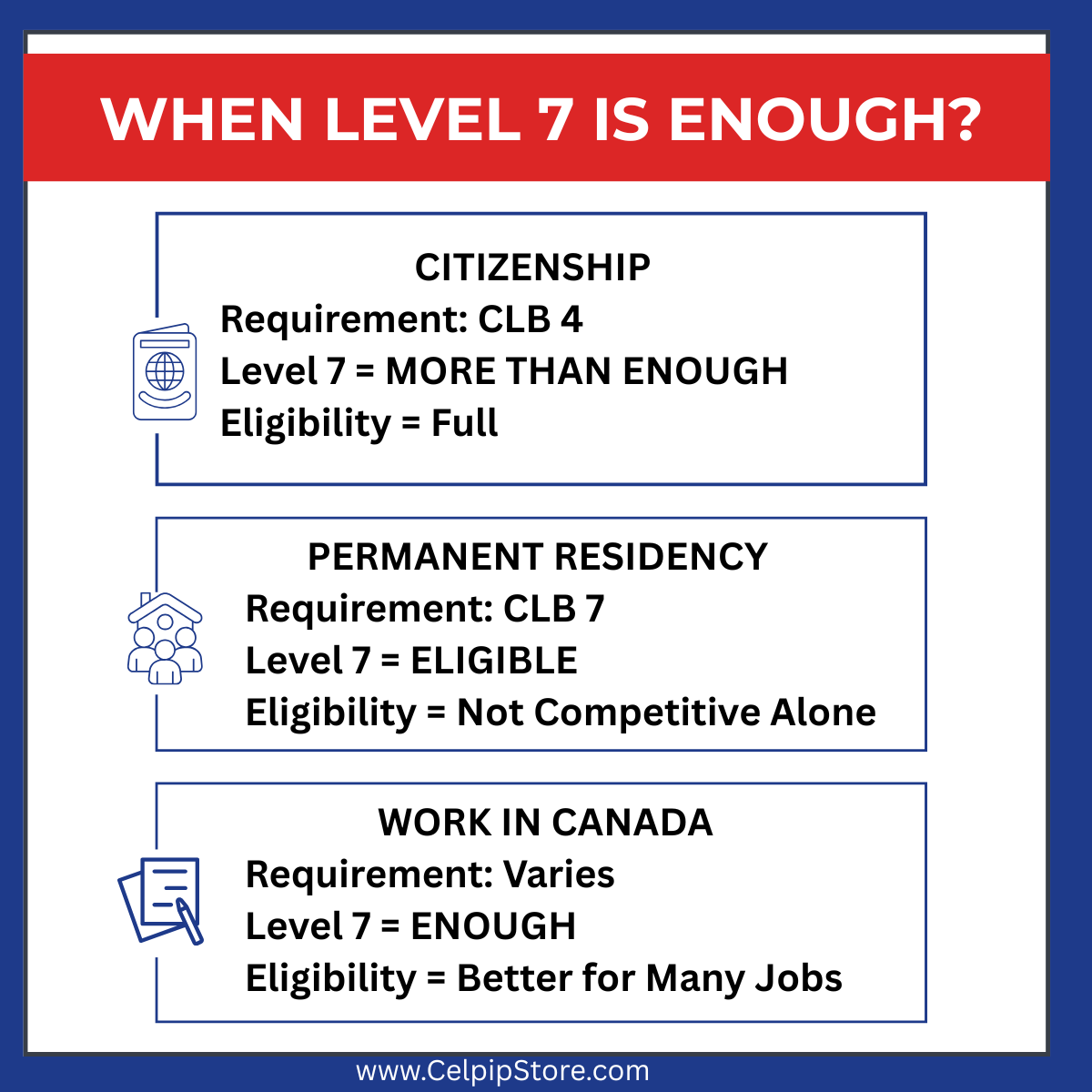
Different Canadian immigration programs may have different language requirements or may award different benefits for stronger language scores. Before making any decisions, always check the latest official requirements for your intended program. Instead of comparing your score with someone else's, compare it with the requirements that apply to your application.
Real-Life Example
Let's look at two fictional examples.
Example 1 – Aman
Aman receives:
- Listening: 7
- Reading: 7
- Writing: 7
- Speaking: 7
Before booking another CELPIP test, he reviews the language requirements for the program he intends to apply for. He discovers that his current scores already meet those requirements, so he chooses to move forward with his application instead of spending more time and money on another exam.
Example 2 – Priya
Priya receives:
- Listening: 9
- Reading: 8
- Writing: 7
- Speaking: 8
After reviewing her application goals, she realizes that improving her Writing score could strengthen her overall profile. She creates a focused study plan targeting Writing rather than repeating every section without a strategy.
These examples show why understanding your own requirements is more important than comparing scores with friends or online forums.
Common Misconceptions About Level 7
Many candidates misunderstand what a Level 7 score represents.
Myth 1: Level 7 Is an Average Score
Reality:
Level 7 reflects a competent level of English that many candidates work hard to achieve.
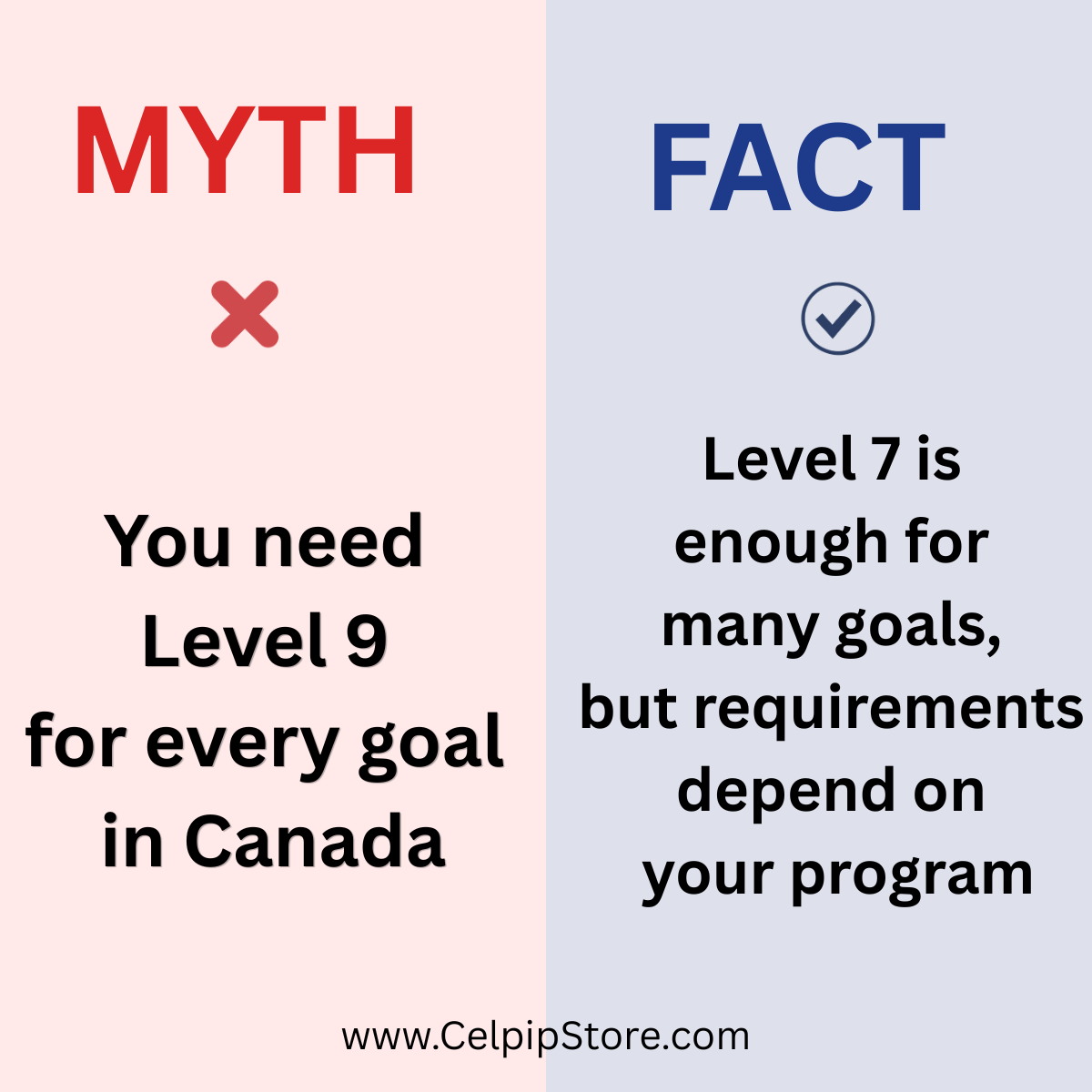
Myth 2: Everyone Needs Level 9
Reality:
Not every immigration or professional pathway requires the same language level.
Your goal should always match your application requirements.
Myth 3: If I Score 7 Once, I Can't Improve
Reality:
Many candidates improve through focused practice, feedback, and realistic mock tests.
Language ability develops over time with consistent effort.
How to Improve Beyond Level 7
If your target requires a higher score, don't simply study longer study smarter.
Here are proven strategies.
1. Take Full-Length Practice Tests
Practice under realistic exam conditions to identify your strengths and weaknesses.
2. Focus on One Weak Skill
Instead of trying to improve everything at once, concentrate on the skill that is limiting your progress.
3. Review Every Mistake
After each mock test, ask:
- Why did I lose marks?
- Was it vocabulary?
- Grammar?
- Time management?
- Understanding the question?
Learning from mistakes is often more valuable than taking another practice test immediately.
4. Practice Speaking Daily
Even 15–20 minutes of speaking practice each day can improve fluency and confidence over time.
5. Improve Writing Through Feedback
Writing improves fastest when you receive constructive feedback and revise your work.
Instead of writing more essays, focus on understanding why corrections were made.
Signs You're Ready for Level 8 or Higher
You may be ready to aim for a higher score if you can:
- Communicate naturally without memorized responses.
- Organize ideas clearly in Writing.
- Understand conversations without relying on repeated listening.
- Manage your time confidently during practice tests.
- Consistently achieve your target scores in mock exams.
Common Mistakes Candidates Make
Avoid these frequent errors:
- Comparing your score with friends instead of official requirements.
- Retaking the test without improving weak areas.
- Memorizing Speaking answers.
- Ignoring Writing practice.
- Studying without taking timed mock tests.
Small improvements in preparation often produce better results than simply increasing study hours.
.png "Untitled_(1200_x_1200_px).png")
Expert Advice
One of the biggest mistakes candidates make is assuming that a higher score is always necessary. Before booking another test, confirm whether your current score already meets the requirements for your application. If it does, your time may be better spent preparing the rest of your documents rather than chasing a score you don't actually need.
Frequently Asked Questions
Q1. Is CELPIP Level 7 difficult to achieve?
For many learners, achieving Level 7 requires consistent preparation and regular practice. The difficulty depends on your current English proficiency and familiarity with the test format.
Q2. Can I get Canadian citizenship with CELPIP Level 7?
Eligibility depends on the official language requirements for your citizenship application. Always verify the latest government criteria before applying.
Q3. Should I retake the CELPIP test after scoring Level 7?
Only if your current score does not meet the requirements for your intended application or if improving your score would provide a clear benefit.
Q4. Is Level 7 better than IELTS 6?
Different English language tests use different scoring systems, so direct comparisons should be made using official score equivalency information rather than assumptions.
Q5. How long should I study to improve from Level 7?
The time varies from person to person. A structured study plan, regular mock tests, and focused practice on weaker skills usually produce the best results.

.
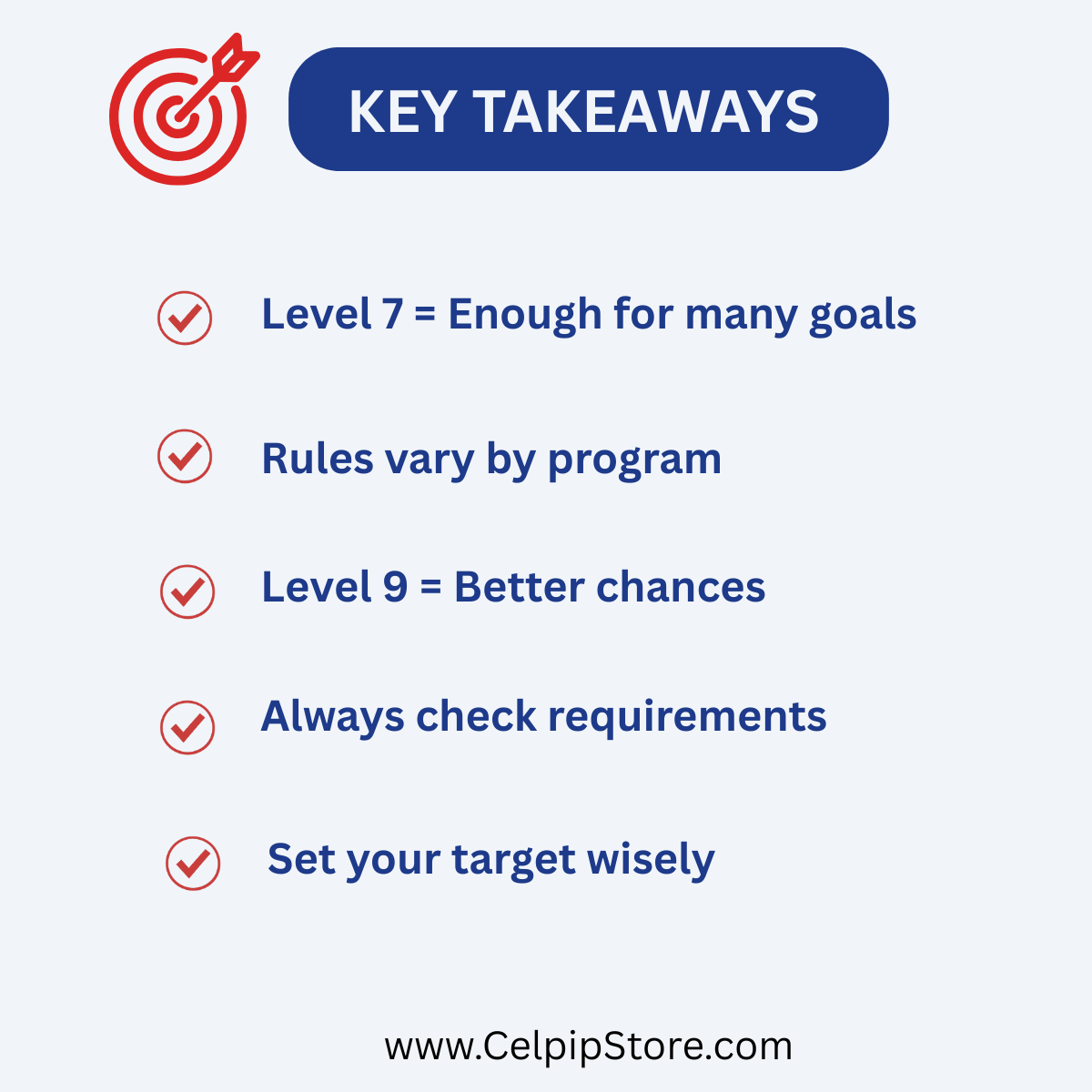
CELPIP Level 7 is a meaningful achievement and demonstrates that you can communicate effectively in English in many real-world situations. However, the most important question isn't whether Level 7 is "good" it's whether it meets the requirements for your specific immigration, citizenship, employment, or professional goal.
Before deciding to retake the exam, review the official language requirements for your application, evaluate your current strengths and weaknesses, and create a focused preparation plan if improvement is needed.
If you're looking for a deeper explanation of CELPIP scoring, CLB levels, and score requirements for different pathways, read our comprehensive guide: "What Is the Passing Score for CELPIP?" It provides a complete overview to help you understand your target score and prepare with confidence.