1.png)
CELPIP Level 9 Explained: Expert Communication & How to Reach Level 10–12
Introduction
Reaching CELPIP Level 9 is an exceptional achievement and demonstrates that you can communicate in English with a level of confidence that closely reflects real-world professional and academic expectations.
At this stage, you're no longer focused on simply speaking fluently or writing accurately. Instead, you're expected to communicate with precision, flexibility, and authority even when discussions involve unfamiliar topics, multiple perspectives, or complex ideas.
Whether you're leading a workplace meeting, presenting a proposal, resolving a conflict, participating in a panel discussion, or explaining technical concepts to different audiences, Level 9 reflects communication that is consistently effective and well controlled. CELPIP Level 9 is part of a broader scoring system that ranges from Level 1 to 12. To understand how it compares with other levels, read CELPIP levels explained.
Many candidates ask:
-
Is Level 9 considered an expert score?
-
How different is it from Level 8?
-
What communication skills define expert English?
-
What separates Level 9 from Levels 10–12?
The answer can be summarized in two words:
Expert Communication
Expert communication means choosing the right words for the right audience, organizing ideas with clarity, responding thoughtfully under pressure, and adapting naturally to changing conversations.
It's not about using difficult vocabulary to impress people.
It's about communicating so effectively that your ideas are easy to understand, persuasive, and memorable.
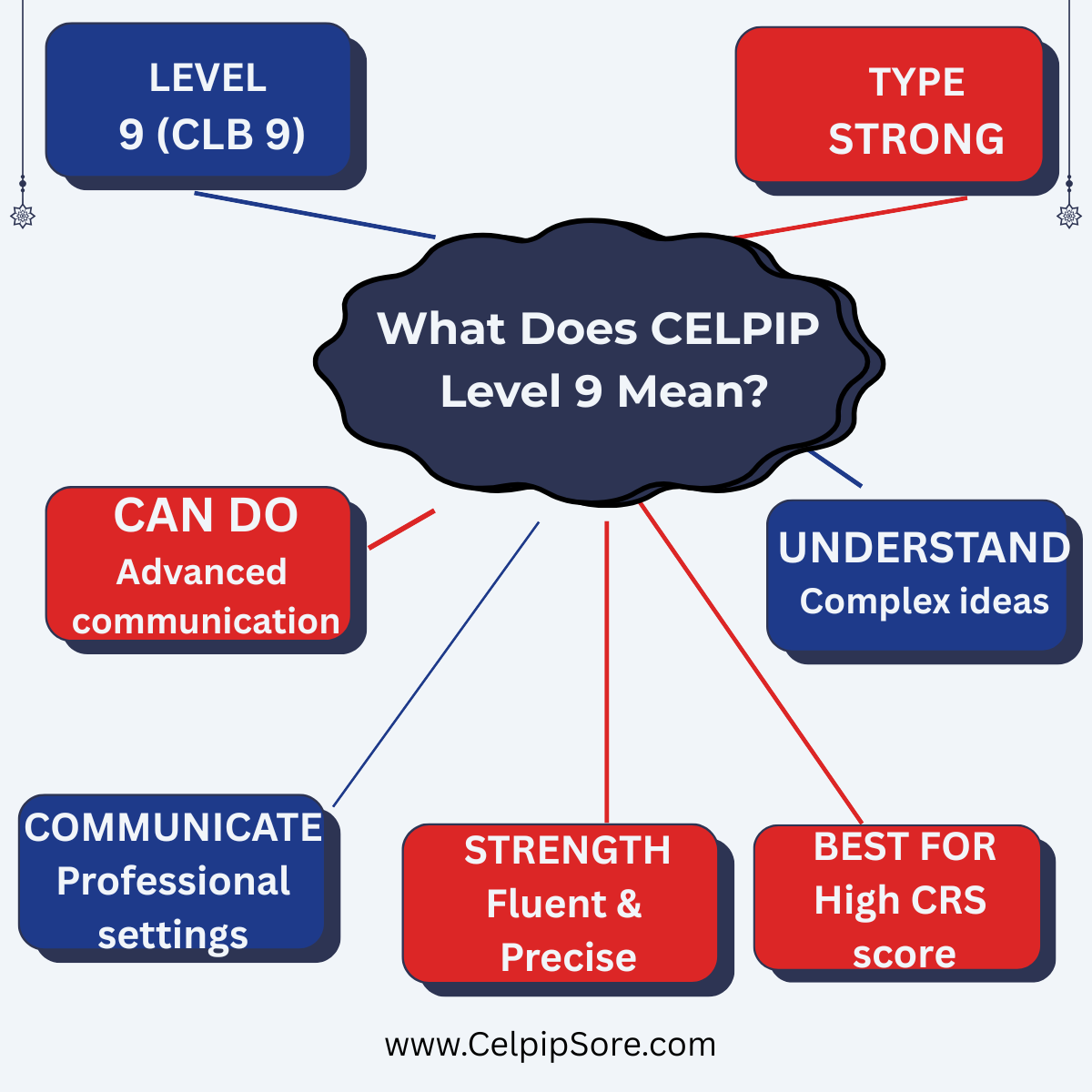
What Does CELPIP Level 9 Mean?
CELPIP Level 9 demonstrates expert-level English communication.
Candidates at this level typically:
-
Understand subtle meaning and implied messages.
-
Communicate confidently with professionals, clients, and leaders.
-
Present complex ideas logically and persuasively.
-
Respond naturally without relying on memorized language.
-
Adapt communication style for formal, informal, and multicultural environments.
-
Handle unexpected questions calmly and effectively.
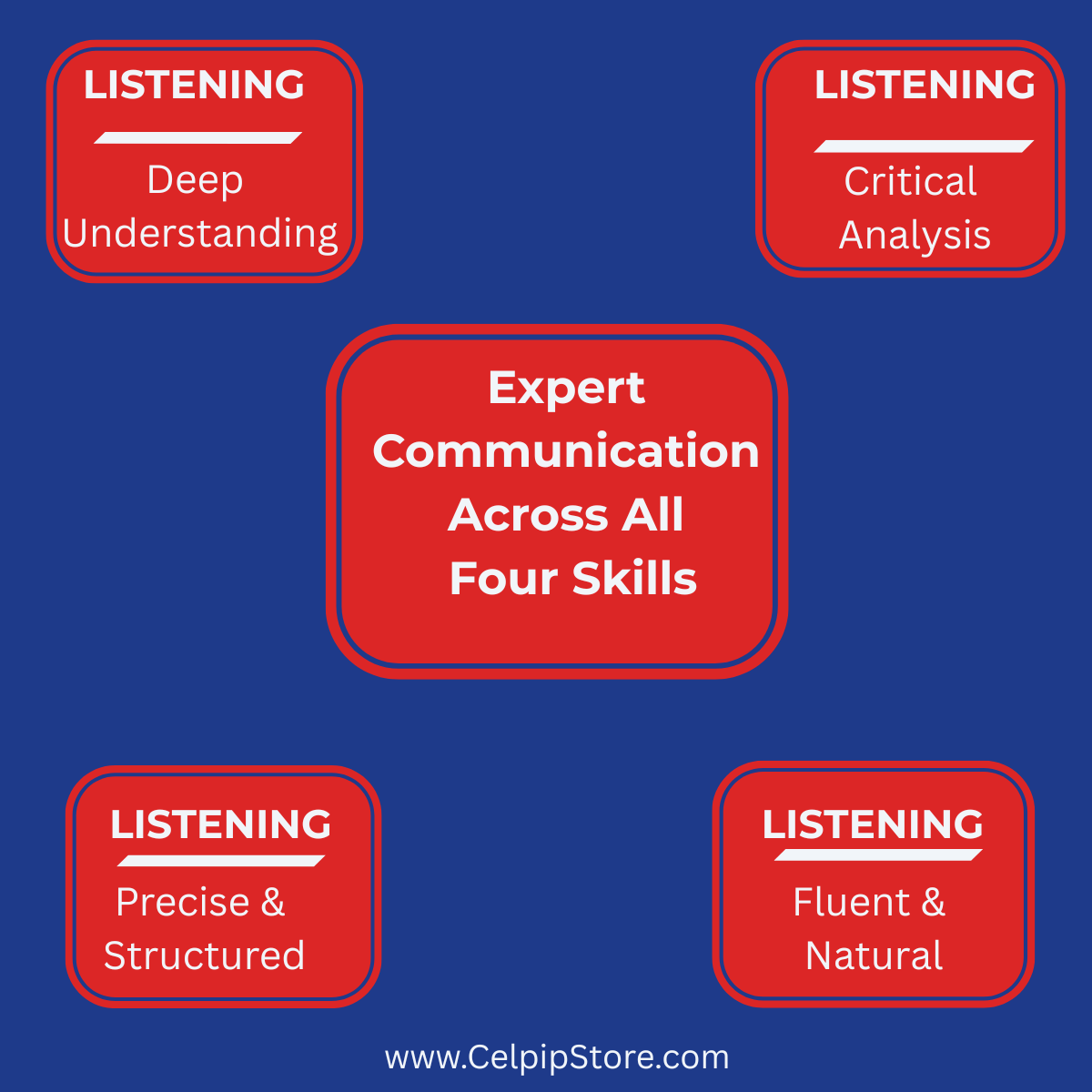
Communication at Level 9 is characterized by consistency. Whether you're speaking, writing, listening, or reading, your performance remains strong across a wide range of situations.
Level 8 vs Level 9
|
Level 8 |
Level 9 |
|
Advanced Fluency |
Expert Communication |
|
Strong organization |
Exceptional precision |
|
Professional vocabulary |
Sophisticated and accurate vocabulary |
|
Flexible responses |
Highly adaptable responses |
|
Effective communication |
Influential communication |
The biggest difference is not the number of words you know it's how effectively and consistently you use them.
Who Usually Achieves CELPIP Level 9?
Candidates at this level often include:
-
Senior professionals
-
Team leaders and managers
-
Consultants
-
Educators
-
Healthcare professionals
-
Experienced international graduates
-
Individuals who use English daily in demanding environments
These candidates are comfortable explaining ideas, leading discussions, negotiating solutions, and communicating with confidence in high-stakes situations.
What Can You Do at CELPIP Level 9?
A Level 9 communicator can:
-
Lead professional meetings with confidence.
-
Explain technical or abstract ideas clearly.
-
Negotiate solutions diplomatically.
-
Respond to challenging questions without hesitation.
-
Interpret subtle humor, tone, and implied meaning.
-
Write persuasive reports and recommendations.
-
Adjust communication style based on audience and context.
Communication is not only accurate it is purposeful and influential.
Real-Life Example
Imagine you're presenting a proposal to senior management.
A colleague asks:
"Your proposal looks promising, but how would you address concerns about the project's long-term cost?"
A Level 9 response might be:
"That's an important consideration. While the initial investment is higher than our current approach, the proposed system would reduce operating costs over the long term through improved efficiency and fewer manual processes. I would also recommend implementing the project in phases, allowing us to evaluate results before expanding further. This approach minimizes financial risk while giving the organization the flexibility to make informed decisions based on measurable outcomes."
This answer demonstrates:
-
Structured thinking
-
Balanced reasoning
-
Professional tone
-
Practical problem-solving
-
Persuasive communication
Why Level 9 Matters
CELPIP Level 9 demonstrates that English is no longer simply a language you speak it is a tool you use to influence, collaborate, solve problems, and build professional relationships.
Candidates at this level can communicate effectively across industries, cultures, and situations, making them well prepared for leadership roles, advanced academic environments, and complex workplace interactions.
The Four Language Skills at CELPIP Level 9
Reaching CELPIP Level 9 means you've developed more than strong English skills you've developed the ability to communicate effectively in demanding situations where precision, confidence, and adaptability matter. Level 9 is widely considered a strong score, but its value depends on your goals. Compare it with other levels in CELPIP levels explained.
At this level, every language skill works together.
Strong listening improves your speaking.
Better reading strengthens your writing.
Critical thinking improves all four.
Let's examine what examiners expect from each skill.
Listening at Level 9
Listening at Level 9 is about far more than understanding words.
Expert communicators recognize:
-
Implied meaning
-
Speaker attitude
-
Tone
-
Emotion
-
Assumptions
-
And hidden intentions
Imagine listening to a workplace discussion where several colleagues share different opinions.
A Level 9 candidate can quickly identify:
-
The main issue
-
Who agrees
-
Who disagrees
-
Why each person feels that way
-
And what solution is most likely to succeed
Listening becomes active analysis rather than passive understanding.
Real-Life Example
During a meeting, a manager says:
"I'm not convinced this proposal addresses our long-term staffing concerns."
The speaker isn't simply discussing staffing.
They're expressing concern about sustainability, planning, and future risk.
A Level 9 listener immediately understands the underlying message.
Listening Habits of Expert Communicators
Level 9 candidates regularly:
- Listen to professional podcasts
- Watch panel discussions
- Follow interviews
- Listen to debates
- Analyze how experienced speakers organize ideas
Rather than simply hearing English,
They study communication.
Reading at Level 9
Reading becomes analytical.
Instead of asking,
"What does this article say?"
expert readers ask,
"Why did the author write it this way?"
They evaluate:
-
Evidence
-
Credibility
-
Assumptions
-
Logical reasoning
-
Persuasive techniques
-
And possible bias
Example
Imagine reading two articles about remote work.
Rather than deciding which one you prefer,
You compare:
-
Supporting evidence
-
Writing style
-
Intended audience
-
Persuasive strategy
-
Strengths
-
Weaknesses
Expert readers think critically instead of accepting information at face value.
Reading Habits
Strong Level 9 readers regularly read:
-
business publications,
-
government reports,
-
opinion editorials,
-
research summaries,
-
Canadian news,
-
professional magazines.
Exposure to different writing styles naturally strengthens vocabulary and comprehension.
Writing at Level 9
Writing becomes persuasive rather than descriptive.
Instead of simply expressing an opinion,
Level 9 writers:
-
Build logical arguments
-
Anticipate counterarguments
-
Explain consequences
-
Recommend practical solutions
-
Conclude convincingly
Every paragraph serves a purpose.
Example Structure
Introduction
- Clear opinion
- Supporting evidence
- Example
- Alternative viewpoint
- Recommendation
- Conclusion
This structure demonstrates mature communication and critical thinking.
Writing Characteristics
Expert writers:
- Avoid repetition
- Choose precise vocabulary
- Connect ideas smoothly
- Maintain logical progression
- Write naturally for the intended audience
Whether writing an email, report, or opinion response, the reader never struggles to understand the message.
Speaking at Level 9
Speaking is where expert communication becomes most visible.
Level 9 speakers:
-
Organize ideas immediately
-
Explain complex topics clearly
-
Adapt naturally
-
Respond confidently to unexpected questions
-
And remain calm under pressure
Rather than sounding rehearsed,
They sound authentic.
Example Scenario
You're asked:
"Should artificial intelligence replace human decision-making in healthcare?"
A Level 9 response might begin:
"Artificial intelligence has enormous potential to improve healthcare by analyzing large amounts of data quickly and identifying patterns that humans might overlook. However, I don't believe it should replace human decision-making entirely. Medical professionals must still consider ethical issues, patient preferences, and unique circumstances that technology may not fully understand. In my opinion, AI should support healthcare professionals rather than replace them."
Notice the response:
-
Answers directly
-
Explains both sides
-
Supports the opinion
-
Maintains a balanced tone
-
Sounds natural
Communication Across Different Situations
Level 9 communicators adjust naturally depending on who they're speaking with.
Workplace
Professional
Clear
Solution-focused
Friends
Relaxed
Natural
Engaging
Customers
Patient
Respectful
Helpful
Managers
Confident
Organized
Evidence-based
Public Presentations
Structured
Persuasive
Professional
The ability to adapt communication style is one of the strongest indicators of expert fluency.
Characteristics of a Level 9 Communicator
Expert communicators consistently demonstrate:
Clarity
Ideas are easy to understand
Precision
Vocabulary fits the situation perfectly
Confidence
They remain calm under pressure
Flexibility
They adjust naturally to changing conversations
Critical Thinking
Opinions are supported with evidence and thoughtful reasoning
Audience Awareness
They communicate differently depending on who is listening
Executive Communication Scenario
Imagine you're leading a project meeting.
A client asks:
"The project seems promising, but what happens if the implementation takes longer than expected?"
A Level 9 communicator might respond:
"That's a valid concern. We've developed a phased implementation plan that allows us to monitor progress at each stage and make adjustments if necessary. If unexpected delays occur, we'll prioritize the most critical components first while keeping stakeholders informed through regular updates. This approach minimizes disruption and helps ensure the project's long-term success." Since CELPIP scores directly correspond to CLB levels, it’s useful to understand the full range of levels. You can explore this in this complete levels guide.
This response demonstrates:
- Confidence
- Organization
- Problem-solving
- Professional vocabulary
- Leadership communication
How to Progress from Level 9 to Levels 10–12
Reaching CELPIP Level 9 already places you among highly proficient English communicators.
The journey to Levels 10–12 isn't about learning thousands of new words or mastering complicated grammar rules.
Instead, it's about becoming consistently exceptional.
At these highest levels, communication becomes effortless, adaptable, and remarkably precise.
The difference is often measured in small details that make a lasting impression.
The Biggest Difference
Many learners believe Levels 10–12 require "perfect English."
That's a misconception.
Examiners don't expect perfection.
They expect communication that feels:
-
Effortless
-
Natural
-
Accurate
-
Persuasive
-
And appropriate for every situation
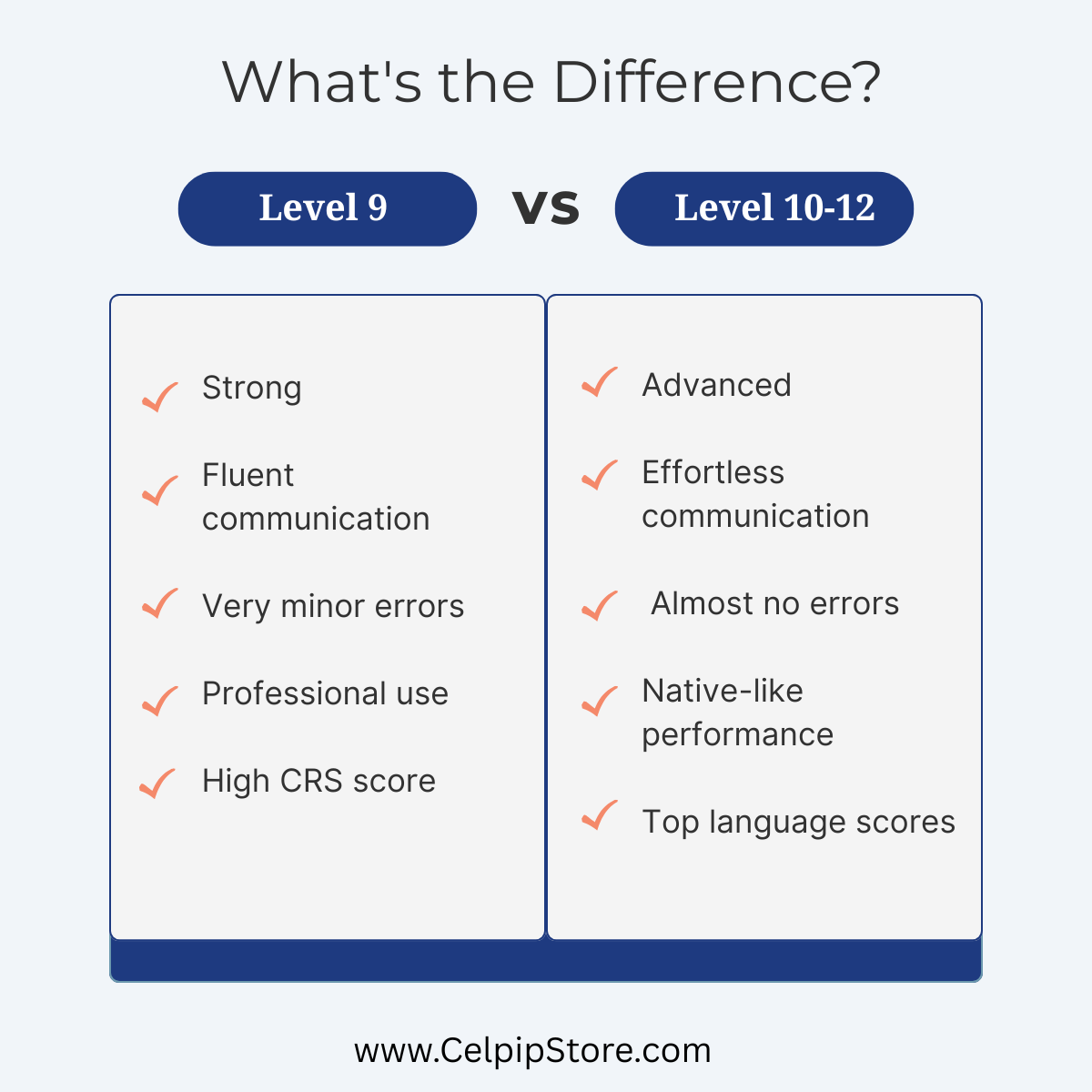
The highest-scoring candidates don't sound like they're taking a language test.
They sound like experienced professionals communicating naturally.
Habit 1 — Think Before You Speak
Many candidates begin answering immediately.
Expert communicators pause briefly.
That short pause allows them to:
-
Organize ideas
-
Choose better vocabulary
-
Build stronger examples
-
And deliver a more confident response
Silence for one or two seconds often produces a much better answer than rushing into speech.
Habit 2 — Support Every Opinion
High-level communication always answers an important question:
Why?
Instead of saying:
"I prefer working from home."
A stronger response is:
"I prefer working from home because it allows me to focus better, reduce commuting time, and maintain a healthier work-life balance. However, I also recognize that regular face-to-face collaboration remains important for building strong relationships within a team."
Notice how the response:
-
Explains
-
Balances
-
And expands the idea
Habit 3 — Adapt to Your Audience
Exceptional communicators don't speak the same way to everyone.
They naturally adjust their communication style.
Example
Talking to a close friend:
"That movie was amazing."
Talking to your manager:
"I thought the presentation was particularly effective because it explained the project's objectives clearly."
Talking to a client:
"Based on your requirements, I believe this approach offers the most practical long-term solution."
Audience awareness is one of the strongest indicators of expert communication.
Habit 4 — Develop Flexible Vocabulary
Candidates often try to impress examiners by using rare or complicated words.
Expert communicators do something different.
They choose the best word not the hardest word.
For example:
Instead of repeatedly saying:
"Good"
They naturally vary their vocabulary:
-
Effective
-
Beneficial
-
Valuable
-
Practical
-
Successful
-
reliable
-
appropriate
The goal is variety without sounding forced.
Habit 5 — Handle Unexpected Questions Calmly
Real conversations rarely follow a script.
That's why Level 9 communicators remain calm when discussions change direction.
Imagine you're asked:
"What if your original solution doesn't work?"
Instead of becoming nervous, an expert communicator responds:
"That's certainly possible. If the initial approach doesn't achieve the expected results, I'd evaluate the available data, identify the main challenges, and adjust the strategy accordingly. Being flexible is often more important than trying to follow a perfect plan."
This demonstrates confidence, critical thinking, and adaptability.
Executive Communication Scenario
Imagine you're presenting a proposal to senior leadership.
One executive asks:
"What risks haven't been considered?"
A Level 9 communicator might answer:
"While we've addressed the primary operational and financial risks, one area that deserves additional attention is employee adoption. Even the strongest systems can fail if users aren't properly trained. To reduce that risk, I'd recommend introducing the project in stages, providing ongoing training, and collecting regular feedback so adjustments can be made throughout implementation."
This answer demonstrates:
-
Strategic thinking
-
Anticipation
-
Balanced judgment
-
Practical problem-solving
-
And leadership communication
Common Mistakes That Prevent Levels 10–12
Even advanced candidates sometimes limit their scores by making avoidable mistakes.
Overusing Advanced Vocabulary
Complex words don't automatically improve communication.
Natural language is always more effective.
Speaking Too Quickly
Fast speech often reduces clarity.
Confident speakers focus on pacing rather than speed.
Giving One-Sided Opinions
Expert communicators recognize multiple perspectives before presenting their own conclusion.
Weak Examples
General statements rarely persuade.
Specific examples make communication more convincing and memorable.
Memorized Responses
Prepared answers are easy to recognize.
Examiners reward genuine communication, not rehearsed speeches. To understand the difference between advanced and expert proficiency, check the full comparison in CELPIP level comparison.
Weekly Practice Plan
Monday
Read a Canadian editorial and summarize the author's main argument.
Tuesday
Listen to a business podcast or panel discussion.
Identify the strongest arguments made by each speaker.
Wednesday
Write a 350-word opinion essay on a current issue.
Support your ideas with examples.
Thursday
Record yourself answering two unfamiliar CELPIP Speaking questions.
Review your organization, vocabulary, and delivery.
Friday
Learn ten new professional expressions and use each one in a sentence.
Saturday
Complete one full-length timed CELPIP practice test.
Focus on consistency across all four skills.
Sunday
Review your mistakes.
Choose one area to improve during the following week.
Daily Habits of Expert Communicators
People who consistently perform at Level 9 and above often:
- Read high-quality English every day.
- Listen to a variety of English accents.
- Engage in meaningful conversations.
- Reflect on feedback instead of ignoring mistakes.
- Expand vocabulary through real contexts.
- Stay curious about current events and different perspectives.
They don't practice English only for the exam—they make it part of their daily lives.
Frequently Asked Questions About CELPIP Level 9
Is CELPIP Level 9 a Good Score?
Absolutely.
CELPIP Level 9 is considered an expert level of English communication.
Candidates at this level can confidently participate in professional meetings, workplace discussions, academic environments, and everyday conversations with a high degree of accuracy and fluency.
It demonstrates that you can communicate effectively even when topics become complex or unfamiliar.
Is Level 9 Close to Native English?
Level 9 represents expert communication, but it doesn't necessarily mean someone speaks exactly like a native English speaker.
Many native speakers naturally make grammatical mistakes, hesitate occasionally, or use informal language.
CELPIP evaluates how effectively you communicate not whether you sound native.
A Level 9 candidate communicates clearly, confidently, and appropriately in almost every situation.
How Long Does It Take to Reach Level 9?
The answer depends on your starting point.
For someone already performing around Level 7 or Level 8, reaching Level 9 often requires focused practice rather than dramatically improving vocabulary or grammar.
The biggest improvements usually come from:
-
Organizing ideas more effectively
-
Giving stronger examples
-
Improving critical thinking
-
Speaking naturally under pressure
-
And communicating consistently across all four skills
Quality practice matters far more than simply studying for more hours.
Is Grammar Still Important?
Yes, but grammar alone won't earn a Level 9 score.
Examiners expect grammar to support communication rather than dominate it.
Strong candidates make very few grammatical errors, but more importantly, those errors rarely interfere with understanding.
Natural communication always comes first.
What Vocabulary Should I Learn?
Instead of memorizing long lists of difficult words, build vocabulary around real-life contexts.
Focus on language used in:
-
Business meetings
-
Healthcare
-
Education
-
Technology
-
Current events
-
Customer service
-
And everyday Canadian life
Learning vocabulary in context makes it easier to remember and use naturally.
Can Memorized Answers Help?
No.
Experienced examiners can quickly recognize memorized responses.
Prepared answers often sound unnatural, fail to address the specific question, and make it difficult to adapt when the topic changes.
Instead, practice organizing your thoughts quickly so you can respond confidently to any question.
What Examiners Notice in High-Scoring Candidates
Candidates who consistently achieve Level 9 share several characteristics.
They Stay Organized
Their answers follow a logical structure from beginning to end.
They Think Critically
Rather than giving simple opinions, they explain reasons, consider alternatives, and support ideas with relevant examples.
They Sound Natural
They don't try to impress with unnecessarily complicated language.
Instead, they communicate clearly and confidently.
They Adapt Easily
Whether discussing travel, work, education, technology, or community issues, they adjust naturally to the topic and audience.
They Remain Calm
Unexpected questions don't interrupt their communication.
They pause briefly, organize their thoughts, and respond with confidence.
Final Checklist Before Your CELPIP Test
Before test day, ask yourself:
- Can I explain my opinion clearly?
- Can I support my ideas with relevant examples?
- Can I understand implied meaning in conversations?
- Can I adapt my language to different situations?
- Can I communicate confidently without memorizing answers?
- Can I stay organized even under time pressure?
If you answered "yes" to most of these questions, you're well on your way to performing at Level 9.
Expert Communication Checklist
Successful Level 9 candidates consistently demonstrate:
Listening
- Understand implied meaning
- Follow complex conversations
- Recognize tone and attitude
Reading
- Evaluate arguments
- Identify purpose and bias
- Analyze detailed information
Writing
- Present logical arguments
- Support ideas with evidence
- Maintain clear organization
Speaking
- Respond naturally
- Communicate confidently
- Adapt to different audiences
- Handle unexpected questions effectively
Final Thoughts
CELPIP Level 9 represents more than an exam score.
It reflects the ability to communicate with confidence in situations that matter whether you're leading a meeting, explaining an important decision, participating in a professional discussion, or solving real-world problems.
The journey from Level 9 to Levels 10–12 isn't about becoming a different communicator. To move beyond Level 9, you should understand what higher levels require. Read CELPIP levels explained.
It's about becoming a more polished, consistent, and influential one.
Keep reading, listening, writing, and speaking every day.
Seek feedback, challenge yourself with unfamiliar topics, and focus on communicating ideas not simply using English correctly.
Every meaningful conversation strengthens your ability to communicate with confidence.
Continue Your CELPIP Journey
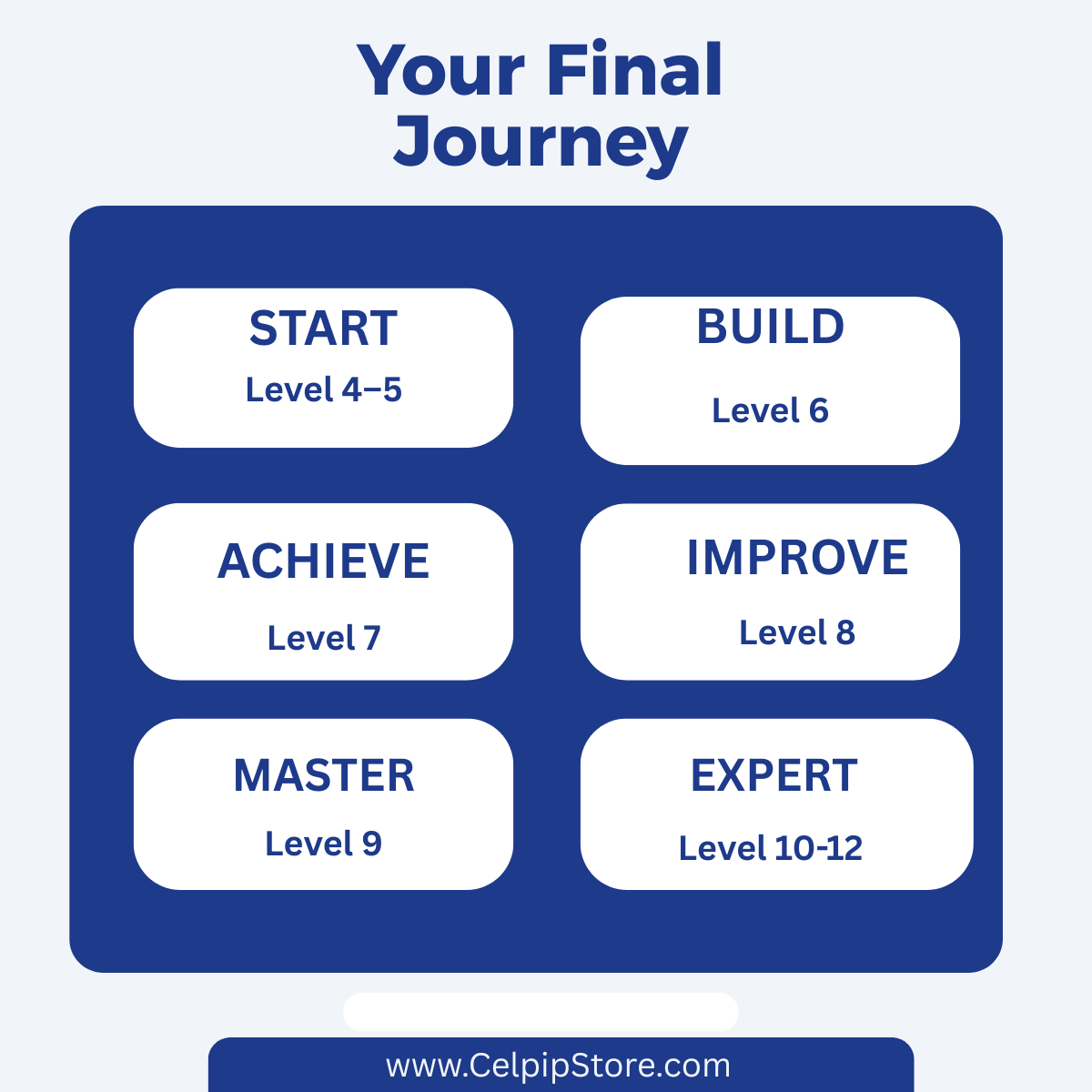
Now that you understand CELPIP Level 9, take the final step in the score-level series:
CELPIP Levels 10–12 Explained: Near-Native Excellence & Mastering Professional English. Want to see where Level 9 stands among all levels? Read CELPIP levels explained.
In the next guide, you'll learn:
-
What distinguishes Levels 10–12 from Level 9
-
The habits of top-performing CELPIP candidates
-
How to refine your English to the highest proficiency levels
-
Practical strategies for maintaining excellence across all four skills
Key Takeaways
-
Level 9 represents expert communication, not perfect English.
-
Communication should be clear, adaptable, persuasive, and consistent.
-
Small improvements in organization, audience awareness, and critical thinking make the biggest difference at this stage.
-
Memorization is less effective than developing flexible communication skills.