
CELPIP Writing Vocabulary Guide (2026): High-Score Words & Expressions for CLB 9+
Introduction
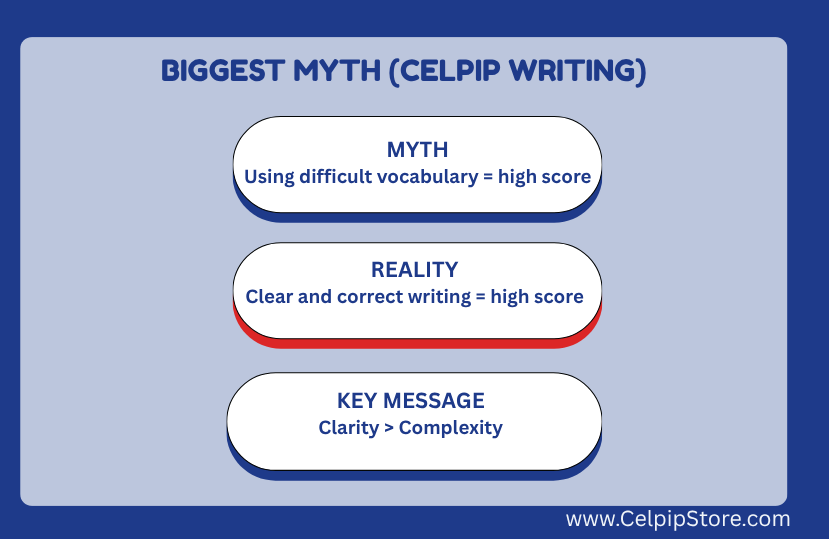
Many students believe that using “big words” will increase their CELPIP score. However, this is one of the biggest misconceptions.
In reality:
- Incorrect advanced vocabulary reduces your score
- Unnatural expressions confuse the reader
- Overcomplicated language leads to grammar mistakes
CELPIP examiners are not looking for “difficult English.”
They are looking for clear, natural, and appropriate vocabulary.
This lesson will help you build a smart vocabulary system that improves your writing without making it complicated.
Vocabulary is an important part of CELPIP Writing, but your final score depends on how well you apply a complete writing system across both Task 1 and Task 2. Strong structure and strategy are equally important. You can understand this full system in CELPIP Writing Mastery: Complete Strategy for High Band Scores.
Learning Objectives
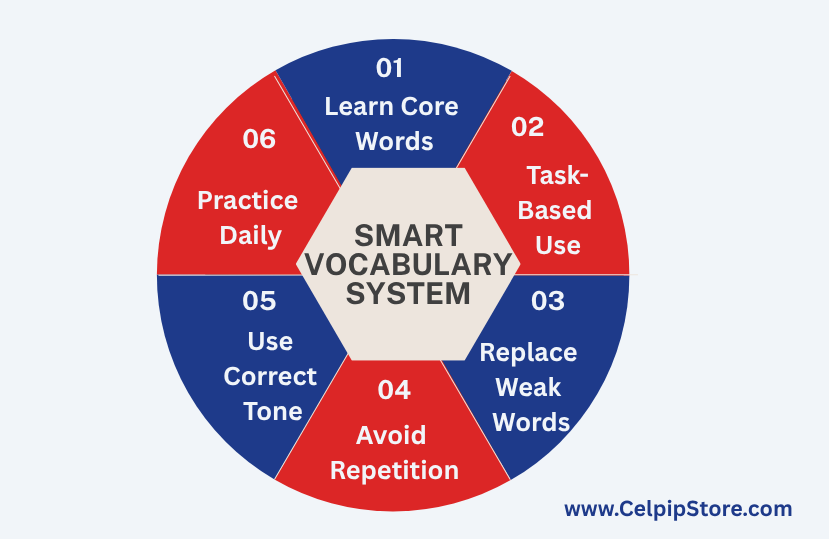
By the end of this lesson, you will be able to:
- Use natural and effective vocabulary in writing
- Improve Task 1 email tone using appropriate words
- Use academic vocabulary for Task 2 essays
- Avoid common vocabulary mistakes
- Replace basic words with better alternatives
- Write clearly and confidently
Using strong vocabulary alone is not enough you must combine it with a proper writing framework that controls structure, tone, and task response in the exam. This complete framework is explained in CELPIP Writing Mastery Complete Strategy Guide.
Overview
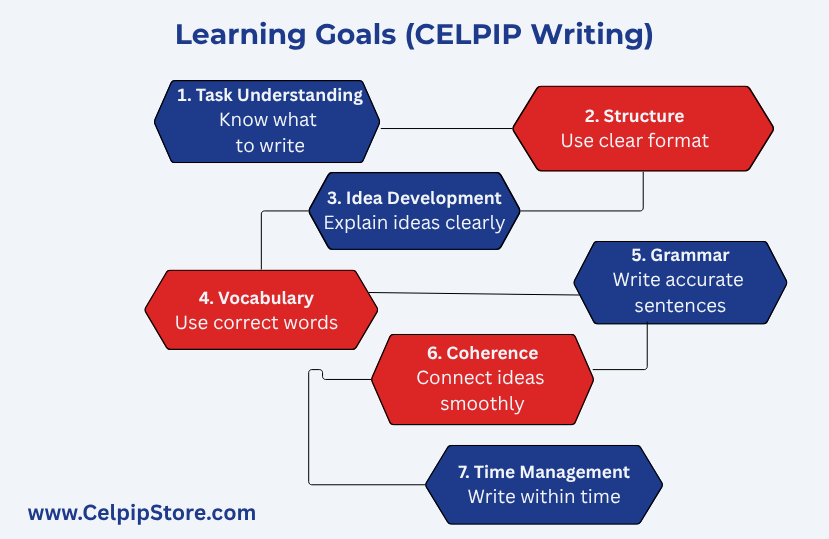
This lesson focuses on practical vocabulary usage, not memorization.
You will learn:
- Everyday -> academic word upgrades
- Task 1 formal expressions
- Task 2 academic vocabulary
- Sentence-level improvements
- Vocabulary accuracy strategies
Achieving CLB 9+ requires accurate vocabulary usage along with strong organization, coherence, and consistent performance in both writing tasks.
You can build these skills using CELPIP Writing Mastery for High Band Scores.
Common Vocabulary Mistakes
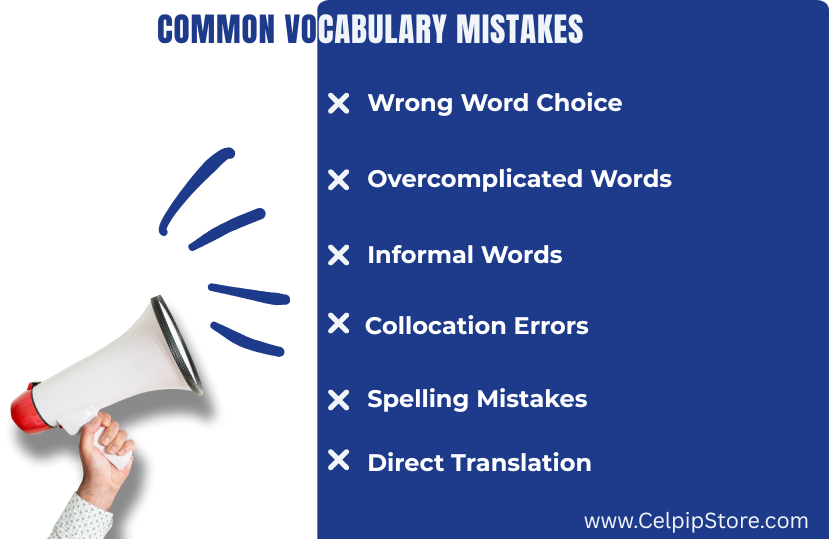
- Using very difficult words incorrectly
- Memorizing unnatural phrases
- Repeating the same words
- Using informal language in formal tasks
- Translating directly from native language
Key Insight:
Simple + correct + natural vocabulary = high score. Many candidates lose marks because they use vocabulary incorrectly or rely only on advanced words without understanding the full scoring system of CELPIP Writing. To fix this, refer to CELPIP Writing Mastery Complete Scoring Strategy.
Task 1 (Email Vocabulary)
In Task 1, vocabulary should be:
- Polite
- Clear
- Professional
Opening Expressions
- “I am writing to inform you that…”
- “I would like to request…”
- “I am contacting you regarding…”
Request Expressions
- “I would appreciate it if you could…”
- “Could you please…”
- “I kindly request…”
Closing Expressions
- “Thank you for your time and consideration.”
- “I look forward to your response.”
Tone is more important than vocabulary difficulty
Task 2 (Essay Vocabulary)
In Task 2, vocabulary should be:
- Academic
- Clear
- Logical
Useful Academic Words
- important -> significant
- good -> beneficial
- bad -> negative
- help -> assist
- show -> demonstrate
Opinion Expressions
- “I strongly believe that…”
- “In my opinion…”
Reason Expressions
- “One major reason is that…”
- “Another important factor is…”
Result Expressions
- “As a result…”
- “Therefore…”
Use vocabulary naturally, not forcefully
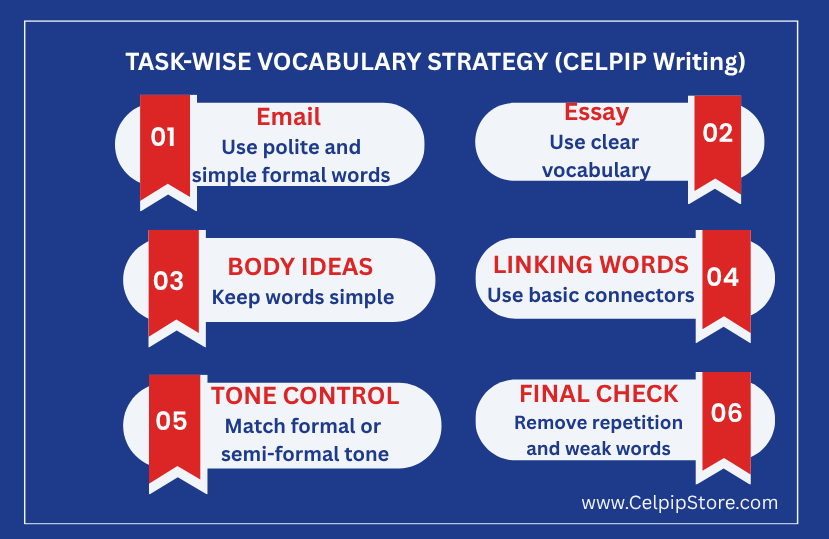
Vocabulary Upgrade Example
Basic:
- “This is good for students.”
Improved:
- “This is beneficial for students.”
Small changes = big improvement.
Technique 1: Word Replacement Strategy
Instead of using basic words repeatedly:
- Replace with simple academic alternatives
- Keep meaning clear
Technique 2: Collocations (Natural Word Pairs)
Use words that naturally go together:
- make a decision
- take action
- solve a problem
- provide support
This improves natural fluency
Technique 3: Avoid Overuse
Do NOT:
- Use same word repeatedly
- Force advanced words
Balance is key
Examiner Insights
Examiners reward:
- Natural vocabulary
- Appropriate tone
- Clear meaning
They penalize:
- Incorrect word usage
- Overcomplicated vocabulary
- Repetition
CLB 8 vs CLB 9 Vocabulary
CLB 8
- Basic vocabulary
- Some repetition
CLB 9
- Varied vocabulary
- Natural expressions
- Accurate usage
Practice Exercises
Exercise 1
Replace basic words:
- good ->
- bad ->
- important ->
Exercise 2
Rewrite sentence:
- “This is very good for people.”
Practice Strategy
- Learn 5 new words daily
- Use them in sentences
- Practice rewriting
- Avoid memorization
Practice makes vocabulary natural. Vocabulary improves best when it is practiced inside full writing tasks, where you can apply expressions naturally under real exam conditions. Follow the full system in CELPIP Writing Mastery Complete Preparation Strategy.
Summary
Vocabulary is not about complexity it is about clarity and correctness.
You learned:
- How to use natural vocabulary
- Task-specific expressions
- Academic word replacements
- Vocabulary improvement strategies
Final Checklist
Before submitting:
- Is vocabulary simple and clear?
- Is tone appropriate?
- Did I avoid repetition?
- Are words used correctly?
7-Day Vocabulary Plan
Day 1–2 -> Learn basic replacements
Day 3–4 -> Practice Task 1 vocabulary
Day 5–6 -> Practice Task 2 vocabulary
Day 7 -> Full writing test
Conclusion
To achieve CLB 9 in CELPIP Writing:
- Use simple but strong vocabulary
- Focus on clarity
- Avoid overcomplication
- Practice consistently
Right words, used correctly, create high scores. Vocabulary is a key scoring factor, but your final writing score depends on how well you combine language, structure, and strategy across both tasks. Start with CELPIP Writing Mastery Complete Guide for High Scores.