
CELPIP Speaking Task 5 Problem Solving: Complete CLB 9 Strategy + High-Score Framework
Introduction
CELPIP Speaking Task 5 (Problem Solving) is one of the most important speaking tasks because it tests your ability to think clearly under pressure and offer practical solutions.
Unlike opinion or storytelling tasks, Task 5 is more structured and real-life based. You are usually given a situation where something is wrong, difficult, or needs improvement, and you must suggest solutions.
Many students struggle here not because they lack English skills, but because they cannot quickly organize a clear problem -> solution -> explanation flow.
CLB 9 candidates do not panic. They follow a fixed problem-solving system that works for any situation.
Learning Objectives
By the end of this lesson, you will be able to:
- Understand how Task 5 problem-solving questions work
- Identify problems quickly in speaking prompts
- Generate simple, practical solutions under pressure
- Structure responses logically for CLB 9 scoring
- Speak fluently without overthinking
- Connect problem -> impact -> solution smoothly
Overview: What Task 5 Really Tests
Task 5 is not testing creativity or advanced thinking. It is testing your ability to:
- Understand a situation quickly
- Identify what is wrong
- Suggest realistic solutions
- Explain why your solution works
The examiner is checking how clearly you can handle real-life communication situations.
The Core Challenge Students Face
Most students struggle in Task 5 because they:
- Spend too much time understanding the problem
- Try to find “perfect solutions” instead of simple ones
- Speak without structure
- Jump directly to solutions without explaining the problem
- Lose fluency due to overthinking
This leads to disorganized and incomplete responses.
What CLB 9 Performance Looks Like in Task 5
A CLB 9 speaker:
- Identifies the problem clearly in one sentence
- Explains the impact briefly
- Gives 1–2 simple solutions
- Supports solutions with reasons
- Stays fluent and structured throughout
They do not try to be creative. They focus on clarity and practicality.
Common Mistakes Students Make in CELPIP Speaking Task 5 (Problem Solving)
- Jumping directly to solutions without clearly explaining the problem first
- Misunderstanding the situation due to rushing through the question
- Giving unrealistic or impractical solutions that would not work in real life
- Providing only one solution instead of developing 2–3 supporting options
- Repeating the same idea in different words instead of adding new points
The Core Idea: Task 5 Is a Communication Flow Test
In CELPIP Speaking Task 5, many students try to “solve the problem perfectly.” This is not required.
The examiner is not checking your real-world problem-solving ability. They are checking how clearly you can:
- understand a situation
- identify the problem
- suggest practical solutions
- explain your ideas in a structured way
CLB 9 speakers do this using a fixed communication flow, not random thinking.
CLB 9 Problem Solving Framework (Universal Structure)
Use this system for ANY Task 5 question.
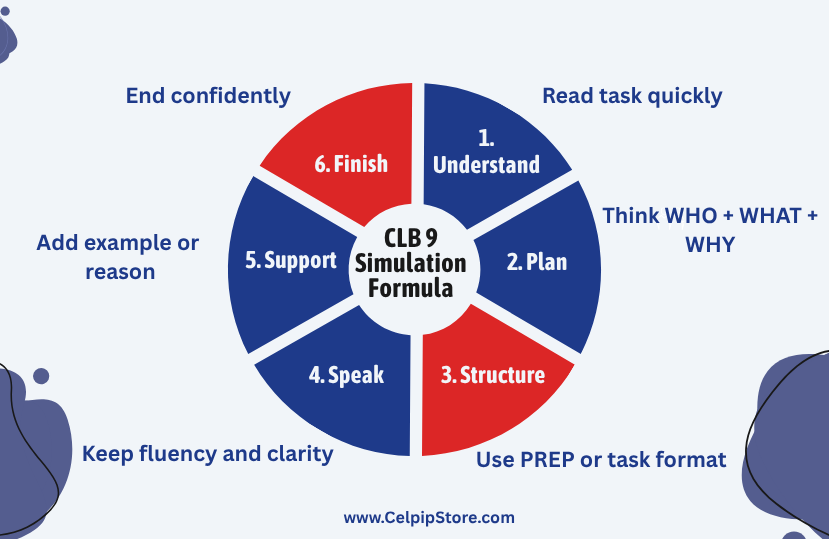
1. Problem Identification (Say What Is Wrong Clearly)
Start by clearly stating the problem in one simple sentence.
Use phrases like:
- “The main problem is that…”
- “The situation is difficult because…”
- “There is an issue with…”
Example:
- “The main problem is that students are not able to manage their time properly.”
This step sets clarity immediately.
2. Impact Explanation (Why It Matters)
Briefly explain the effect of the problem.
Focus on:
- Who is affected
- What negative outcome happens
Example:
- “This causes stress and reduces productivity in their studies.”
This shows deeper understanding.
3. First Solution (Main Fix)
Give your first and most practical solution.
Keep it simple and realistic.
Example:
- “One solution is to create a proper daily schedule for students.”
4. Reason for Solution (Why It Works)
Explain why your solution is effective.
Example:
- “This helps students organize their time better and complete tasks efficiently.”
5. Second Solution (Optional Expansion)
Add another supporting solution for stronger response.
Example:
- “Another solution is to reduce unnecessary distractions like social media during study time.”
6. Closing Statement (Clear Conclusion)
End your response clearly and confidently.
Use:
- “That is why I think this is the best approach.”
- “Overall, these solutions can improve the situation.”
Why This Framework Works
This system works because it matches examiner expectations:
- Clear problem understanding
- Logical flow of ideas
- Practical solutions
- Structured communication
It removes confusion and improves fluency at the same time.
Fluency in Task 5: The Real CLB 9 Difference
In Task 5, fluency is not about speaking fast or giving many ideas. It is about maintaining a stable problem -> solution flow without hesitation or confusion.
Most students lose fluency because they try to “invent perfect solutions” in real time. CLB 9 speakers do something different: they use simple, predictable solution patterns.
This keeps their speaking smooth even under pressure.
What Examiners Actually Look For
Examiners evaluate Task 5 using four main criteria:
1. Task Completion
Did you clearly identify the problem and propose solutions?
A strong response always includes both:
- Problem clarity
- Solution clarity
2. Coherence
Are your ideas logically connected?
Your response should feel like a clear chain:
Problem -> Impact -> Solution -> Reason

3. Fluency
Do you speak continuously without long pauses?
Minor pauses are acceptable, but frequent stopping or restarting reduces your score.
4. Language Use
Is your language simple, natural, and accurate?
CLB 9 is achieved through clarity, not complexity.
The “3-Solution Rule” (High-Score Strategy)
CLB 9 speakers often use a simple structure:
- Solution 1: Main fix
- Solution 2: Support fix
- Solution 3: Optional improvement
This creates depth without overthinking.
Example mindset:
- Fix the cause
- Reduce the effect
- Improve the system
Real-Time Thinking Strategy (Very Important)
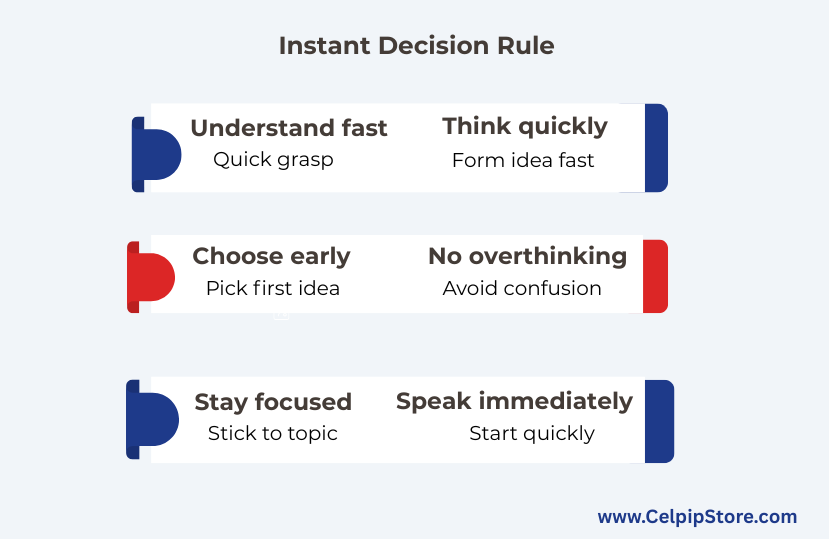
In Task 5, you should NOT stop to think of perfect solutions.
Instead, use this quick mental system:
STEP 1: Identify Category
- Time problem?
- Money problem?
- Communication problem?
- Organization problem?
STEP 2: Use Default Solutions
You don’t need creativity. Use safe solutions:
- Plan/schedule
- Communicate clearly
- Add rules/guidelines
- Seek help/support
- Reduce distractions
STEP 3: Expand While Speaking
Start simple, then add explanation.
Example:
- “One solution is to make a schedule…”
- “This helps people manage time better…”
Sample CLB 9 Response (Task 5 Style)
“The main problem is that students are not managing their time properly, which is causing stress and poor performance.
One solution is to create a proper daily schedule. This helps students organize their tasks and complete their work on time.
Another solution is to reduce distractions like social media during study hours. This allows students to focus better.
That is why I believe these solutions can improve the situation effectively.”
Complete Summary of Task 5 Strategy
CELPIP Speaking Task 5 (Problem Solving) becomes simple when you stop trying to “solve the problem perfectly” and instead focus on structured communication under pressure.
At CLB 9 level, your success depends on how clearly you can:
- identify a problem
- explain its impact
- propose practical solutions
- maintain smooth speaking flow
Once this system becomes automatic, Task 5 becomes predictable and high scoring.
Final CLB 9 Checklist (Before Speaking Task 5)
Before you answer, quickly confirm:
Problem Clarity
- I clearly understand the situation
- I will state the problem in one sentence
- I will not overthink details
Structure Control
- I will follow: Problem -> Impact -> Solution -> Reason
- I will give 1–2 simple solutions
- I will stay focused on the question
Fluency Control
- I will start speaking immediately
- I will not pause to find perfect ideas
- I will keep speaking continuously
Solution Control
- I will use practical, real-life solutions
- I will avoid unrealistic or complex ideas
- I will explain why my solution works
Exam-Day Strategy (Critical for CLB 9)
In the actual test, do not wait to “fully understand everything” before speaking.
Start immediately with:
- “The main problem is…”
Then continue step-by-step:
- Problem
- Impact
- Solution
- Reason
- Conclusion
Do NOT stop mid-way to think. Keep flow alive.
Even simple solutions are enough if they are clear and structured.
Common Mistakes (Final Recap)
Across Task 5, avoid:
- Jumping directly to solutions without explaining the problem
- Giving unrealistic or overly complicated ideas
- Overthinking instead of speaking quickly
- Repeating the same solution in different words
- Mixing problem and solution without structure
- Losing fluency due to long pauses
- Ending without a clear conclusion
These mistakes directly reduce clarity and score performance.
7-Day Task 5 Master Practice Plan
Day 1–2: Problem Recognition Training
Practice identifying problems in 10–15 different scenarios.
Day 3–4: Solution Building Practice
For each problem, create 2 simple solutions quickly.
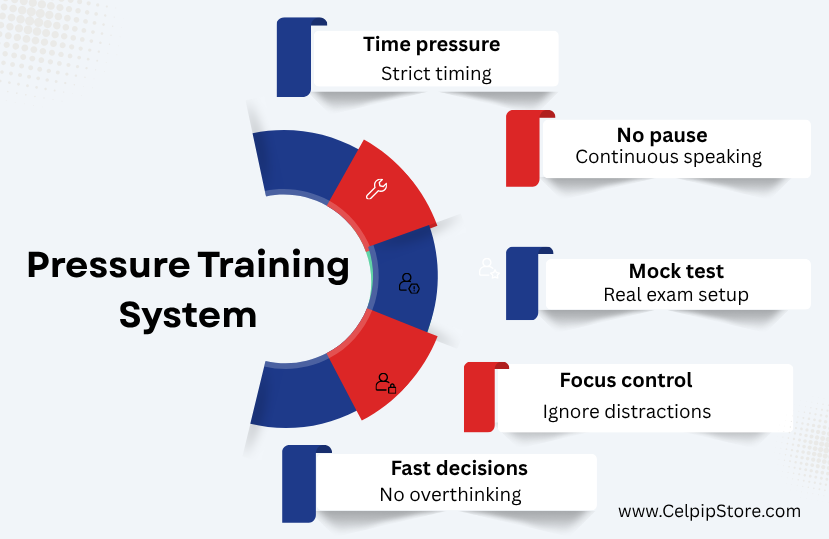
Day 5–6: Timed Speaking Drills
Speak full Task 5 responses within strict time limits.
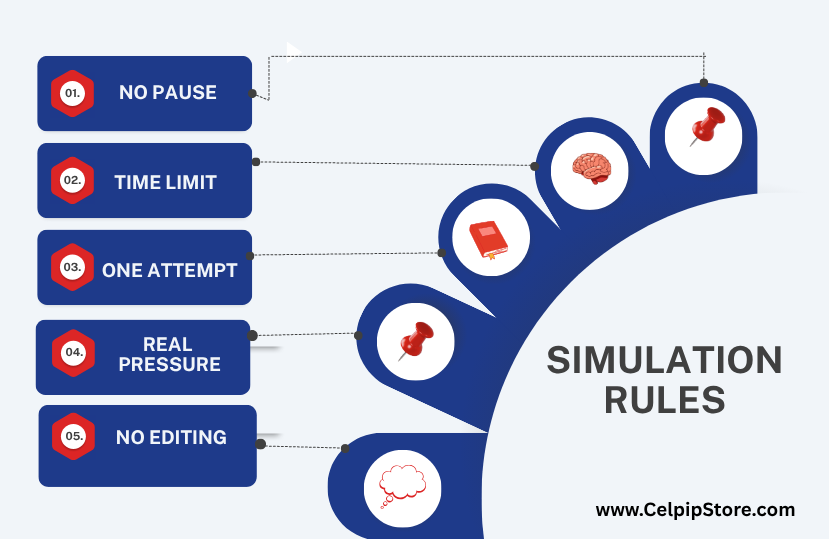
Day 7: Full Mock Speaking Test
Combine Task 5 with other speaking tasks for real exam simulation.
Final Master Insight
Task 5 is not a problem-solving intelligence test.
It is a structured speaking test under pressure.
Once you apply the system:
- problem becomes clear
- solutions become automatic
- speaking becomes smooth
- confidence increases immediately