.png)
CELPIP Levels Explained: What Each Level Means (Complete Guide 2026)
Introduction
If you're preparing for the CELPIP exam, you've probably come across questions like:
- What does CELPIP Level 7 actually mean?
- Is Level 9 considered a good score?
- What is the difference between Level 6 and Level 8?
- Which CELPIP level should I aim for?
- How can I improve from one level to the next?
These are some of the most common questions asked by CELPIP candidates, and for good reason. Understanding your CELPIP level is essential because it helps you measure your English language proficiency and track your progress throughout your preparation journey.
One of the biggest misconceptions among test takers is that CELPIP levels are simply numbers that determine whether you pass or fail. In reality, CELPIP levels provide a much more detailed picture of your ability to communicate effectively in English across four key language skills: Listening, Reading, Writing, and Speaking.
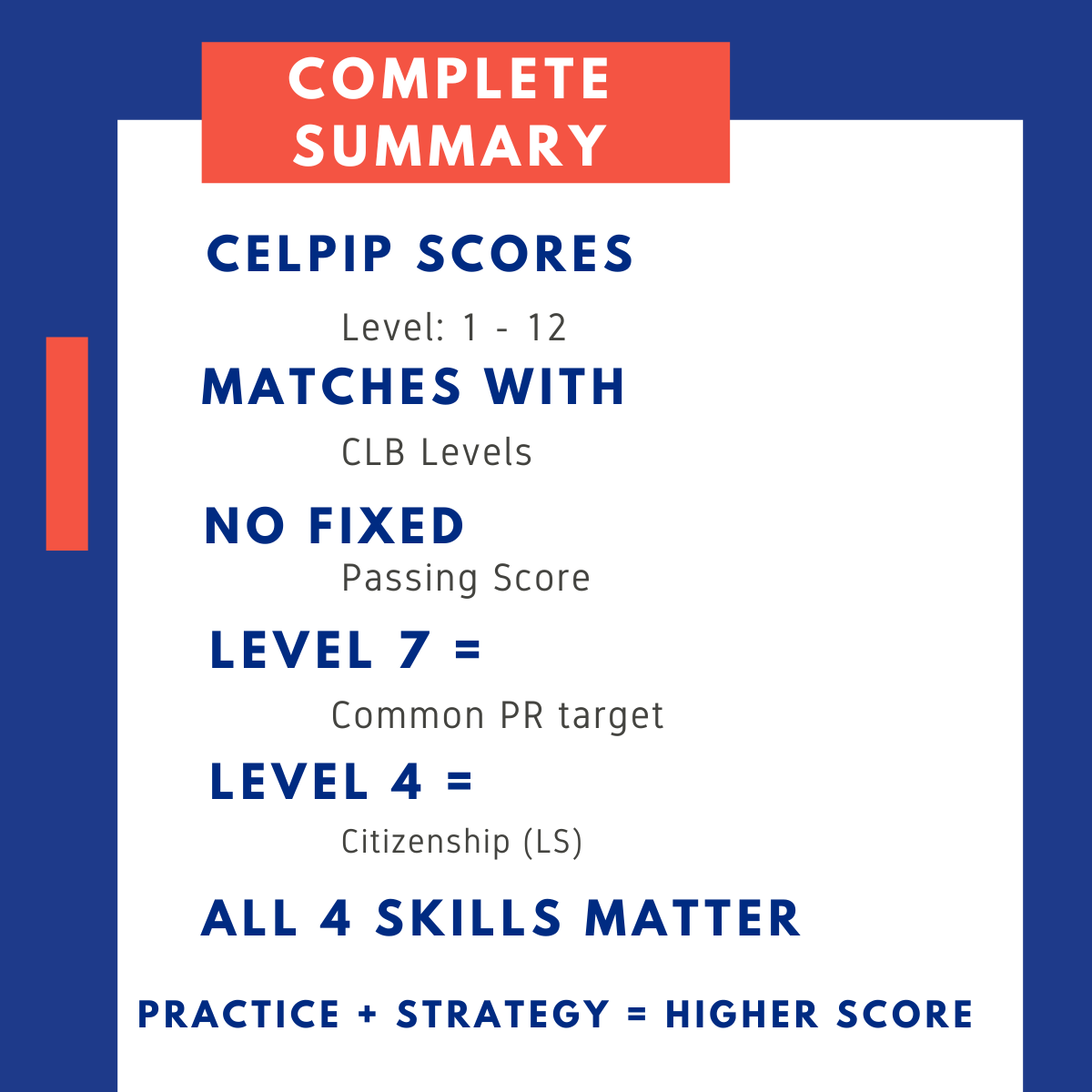
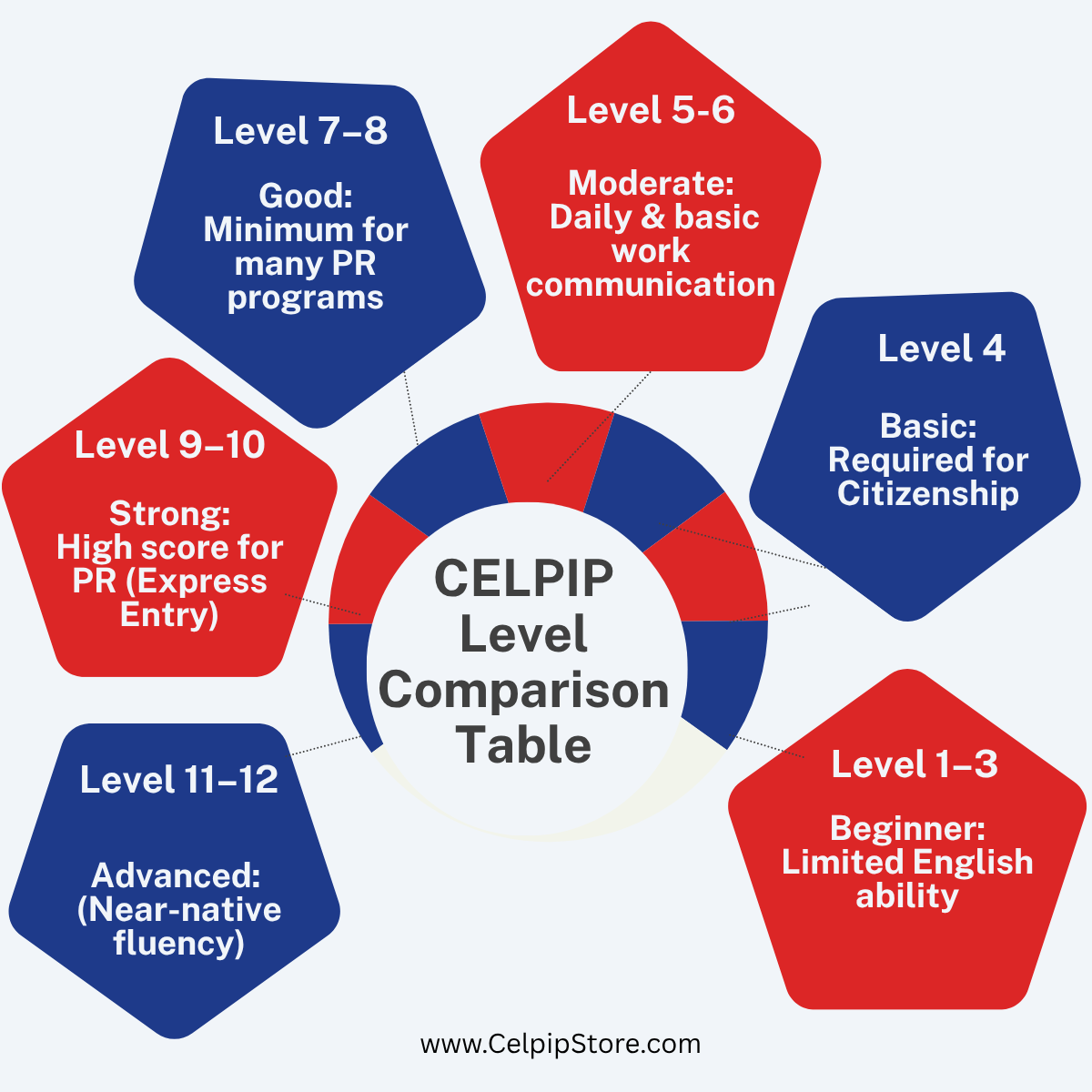
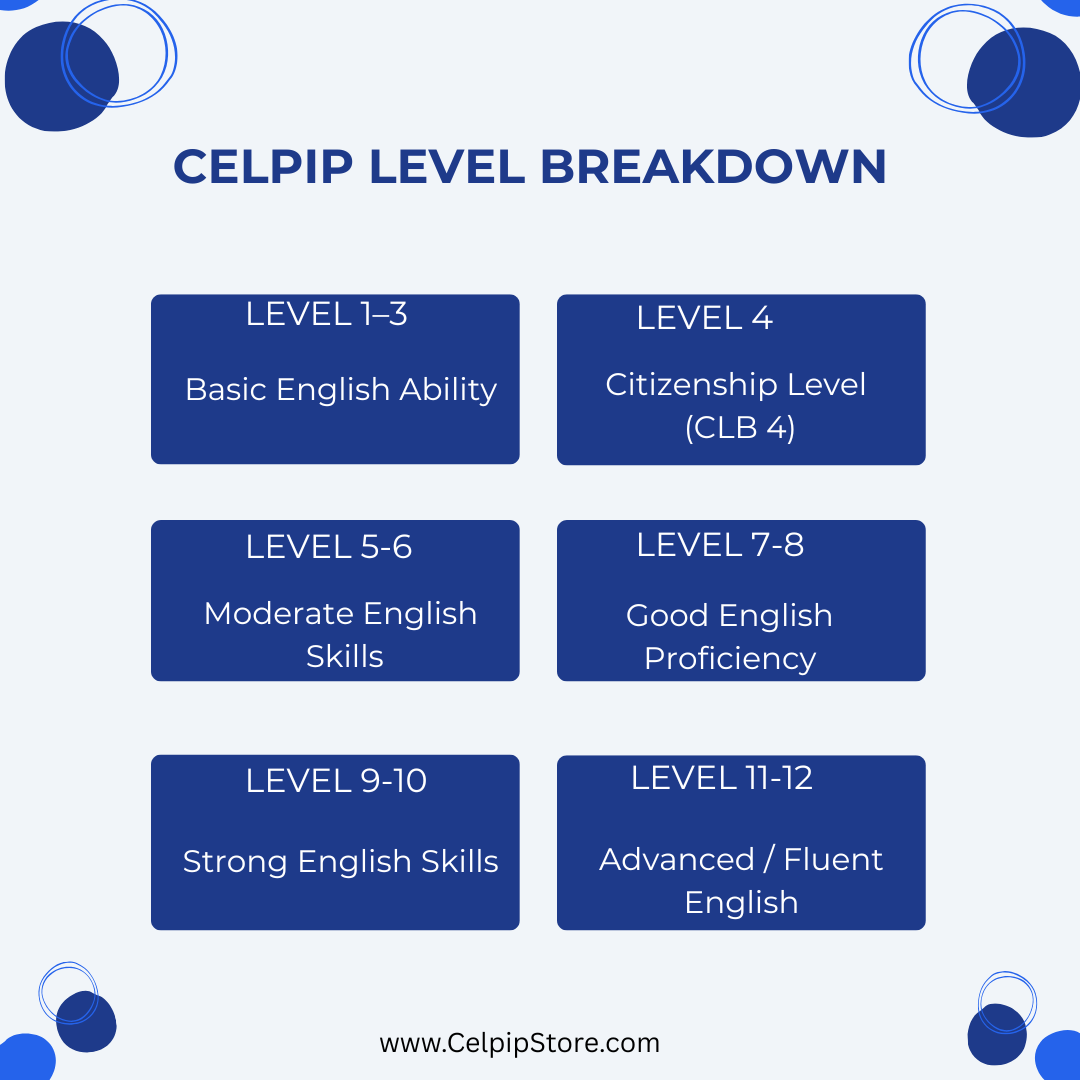
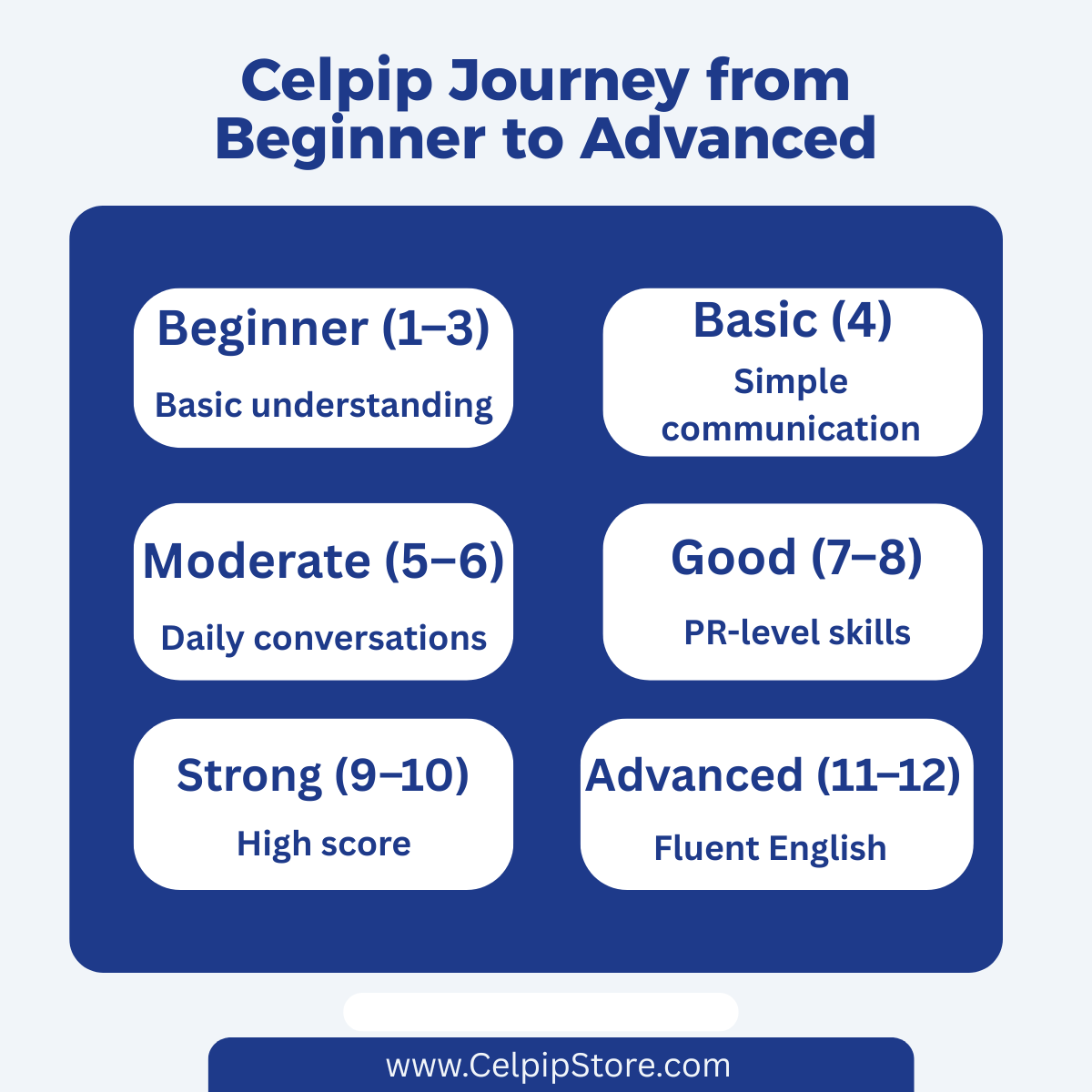
Each level represents a different stage of English proficiency. As your level increases, it reflects stronger communication skills, greater confidence, and an improved ability to understand and use English in everyday situations. CELPIP Level 4 indicates basic proficiency in everyday situations. For a detailed breakdown of skills and examples, read Understanding CELPIP Level 4.
Think of CELPIP levels as milestones on a journey rather than grades on a report card. Every improvement, whether it's moving from one level to the next or strengthening a specific language skill, represents meaningful progress toward becoming a more confident English communicator.
In this comprehensive guide, we'll explain what CELPIP levels mean, how they are assessed, how they relate to real-world communication, and practical strategies you can use to improve your performance. We'll also address common myths, answer frequently asked questions, and share study techniques that can help you move toward your target level. CELPIP Level 5 represents developing proficiency in everyday communication. For a complete breakdown of skills and improvement strategies, read CELPIP Level 5 explained.
Whether you're taking the CELPIP exam for immigration, citizenship, employment, or personal development, understanding the level system will help you prepare more effectively and focus your efforts where they matter most. CELPIP Level 6 indicates developing proficiency in everyday and workplace communication. For a detailed breakdown of skills and how to improve, read CELPIP Level 6 explained.
By the end of this guide, you'll have a clear understanding of:
- What CELPIP levels represent.
- How the four language skills are evaluated.
- What different proficiency levels indicate.
- How to identify your current strengths and weaknesses.
- Practical ways to improve your English level over time.
Let's begin by understanding what CELPIP levels are and why they play such an important role in assessing English communication skills. CELPIP Level 7 indicates adequate proficiency in workplace and everyday communication and is often required for immigration programs. For a detailed explanation of skills and strategies, read CELPIP Level 7 explained.
What Are CELPIP Levels?
Many people assume that a CELPIP level is simply another exam score. However, a CELPIP level is much more than a number. It represents your overall ability to communicate effectively in English in practical, everyday situations. CELPIP Level 8 indicates good proficiency in workplace and community contexts. For a detailed explanation of skills and improvement strategies, read CELPIP Level 8 explained.
Unlike traditional school examinations that mainly reward memorization, the CELPIP exam focuses on real-life communication. It evaluates how well you can understand spoken and written English, express your ideas clearly, organize your thoughts logically, and respond appropriately in situations you may encounter while living or working in Canada.
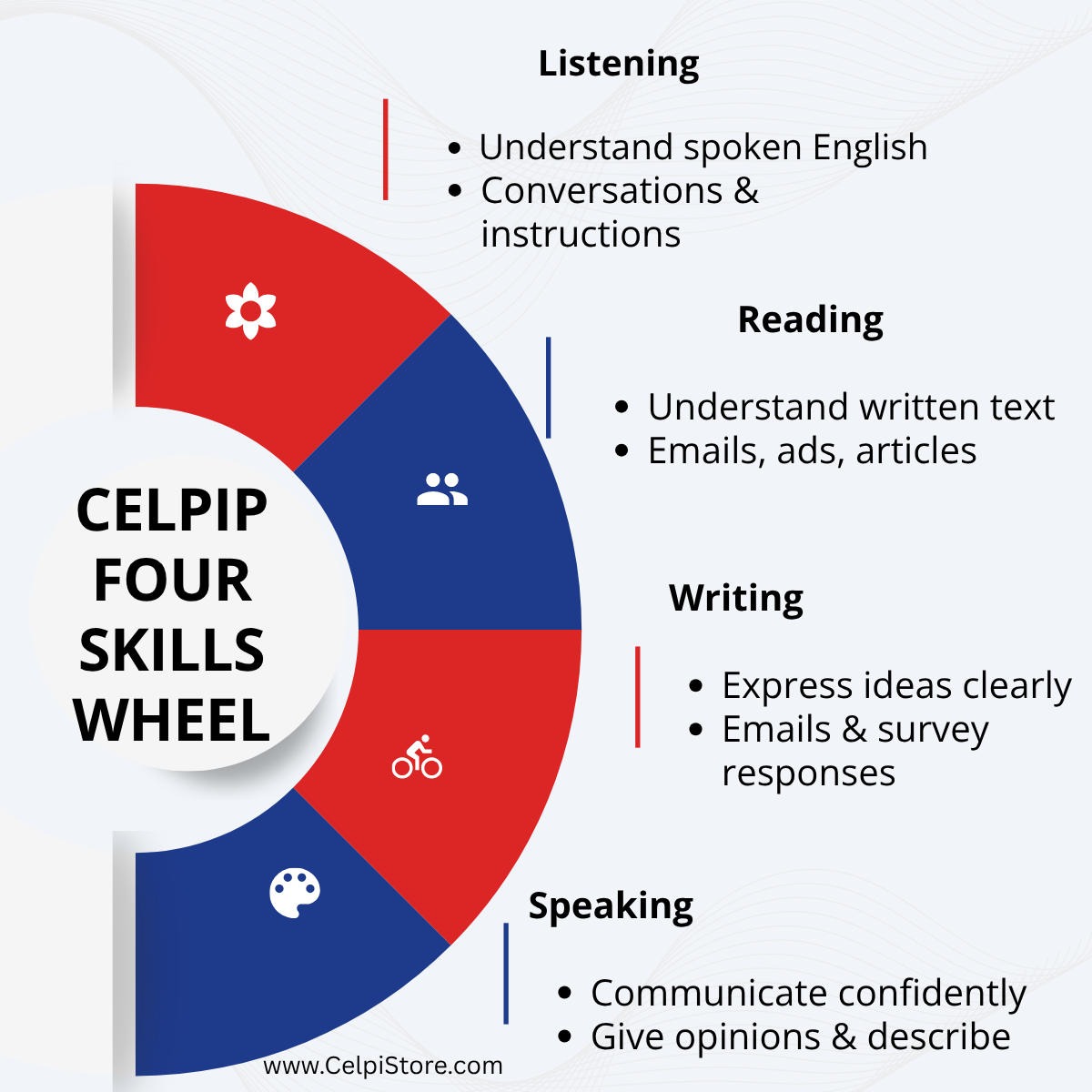
Every candidate receives separate results for the four language skills:
- Listening
- Reading
- Writing
- Speaking
These individual results help you identify both your strengths and the areas that need further improvement. For example, you may perform very well in Listening and Reading but need additional practice in Speaking or Writing. Understanding this breakdown allows you to prepare strategically instead of studying every skill equally.
Another important point to remember is that improving your CELPIP level doesn't happen overnight. Language development is gradual. Small improvements made consistently over weeks and months often lead to significant progress. Among beginner levels, Level 4 is especially important for citizenship and basic communication. You can explore it in detail in this Level 4 guide That's why successful candidates focus on building sustainable study habits rather than searching for shortcuts.
Imagine learning to play the piano. You don't become an expert after one lesson. Instead, you improve through regular practice, correcting mistakes, and gradually mastering more challenging pieces. Learning English follows the same pattern. Among these levels, Level 5 is a key transition stage where candidates move from basic to more structured communication. You can explore it in detail in this Level 5 guide.
CELPIP levels reflect this gradual growth. As you develop stronger vocabulary, better listening skills, clearer pronunciation, more organized writing, and greater confidence in communication, your performance naturally improves.
It's also important to remember that your goal shouldn't be to compare your level with someone else's. Every learner starts from a different point, has different strengths, and prepares for different purposes. Your focus should always be on improving your own communication skills and reaching the level required for your personal or professional goals. Level 6 is a crucial transition stage where candidates move from basic to more structured communication. You can explore it in detail in this Level 6 guide.
In the next section, we'll take a closer look at how the CELPIP level scale works and what the different levels tell us about English language proficiency. Level 7 is a crucial benchmark because it often acts as the minimum eligibility level for many Canadian immigration pathways. You can explore it in detail in this Level 7 guide.
How to Improve Your CELPIP Level (A Practical Step-by-Step Guide)
Understanding your current CELPIP level is only the beginning of your journey. The real goal is continuous improvement.
Many candidates ask:
- "How long does it take to improve one level?"
- "Can I improve my score before my exam?"
- "What should I study every day?"
- "Should I focus on grammar or vocabulary?"
The truth is that there isn't a magic formula.
Improving your English communication skills requires consistent practice, smart planning, and regular self-assessment. Fortunately, you don't need to study for six or eight hours every day. A well-structured study routine is often far more effective than spending long hours without a clear plan.
Let's explore practical strategies that can help you improve your English proficiency over time. If you are currently at Level 4, understanding your strengths and weaknesses is key. Read How CELPIP Level 4 works.
Know Your Starting Point
Before you can improve, you need to know where you are today.
Many candidates start studying without identifying their strengths and weaknesses. As a result, they spend equal time on all four language skills, even when only one or two areas actually need extra attention. If you are currently at Level 5, understanding your skill gaps is essential for progress. Read How to reach Level 6 from Level 5.
Take an honest look at your abilities.
Ask yourself:
- Which language skill feels easiest?
- Which one causes the most difficulty?
- Where do I lose the most marks during practice?
If your Speaking is strong but your Writing needs improvement, your study plan should reflect that. If you are currently at Level 6, understanding your weaknesses is key to reaching Level 7. Read How to reach Level 7 from Level 6.
Remember: Smart preparation always begins with accurate self-assessment.
Set a Clear Goal
Studying without a goal is like travelling without a destination.
Instead of saying:
"I want a better score."
Define a specific objective.
For example:
- Improve listening comprehension.
- Build stronger vocabulary.
- Speak more fluently.
- Write better-organized responses.
- Complete practice tests within the time limit.
Breaking your preparation into smaller goals makes progress easier to measure and keeps you motivated. Level 8 is considered a strong score and often places candidates above minimum requirements. You can explore it in detail in this Level 8 guide.
Build a Weekly Study Routine
One of the biggest mistakes candidates make is studying only when they feel motivated.
Consistency is much more powerful than motivation.
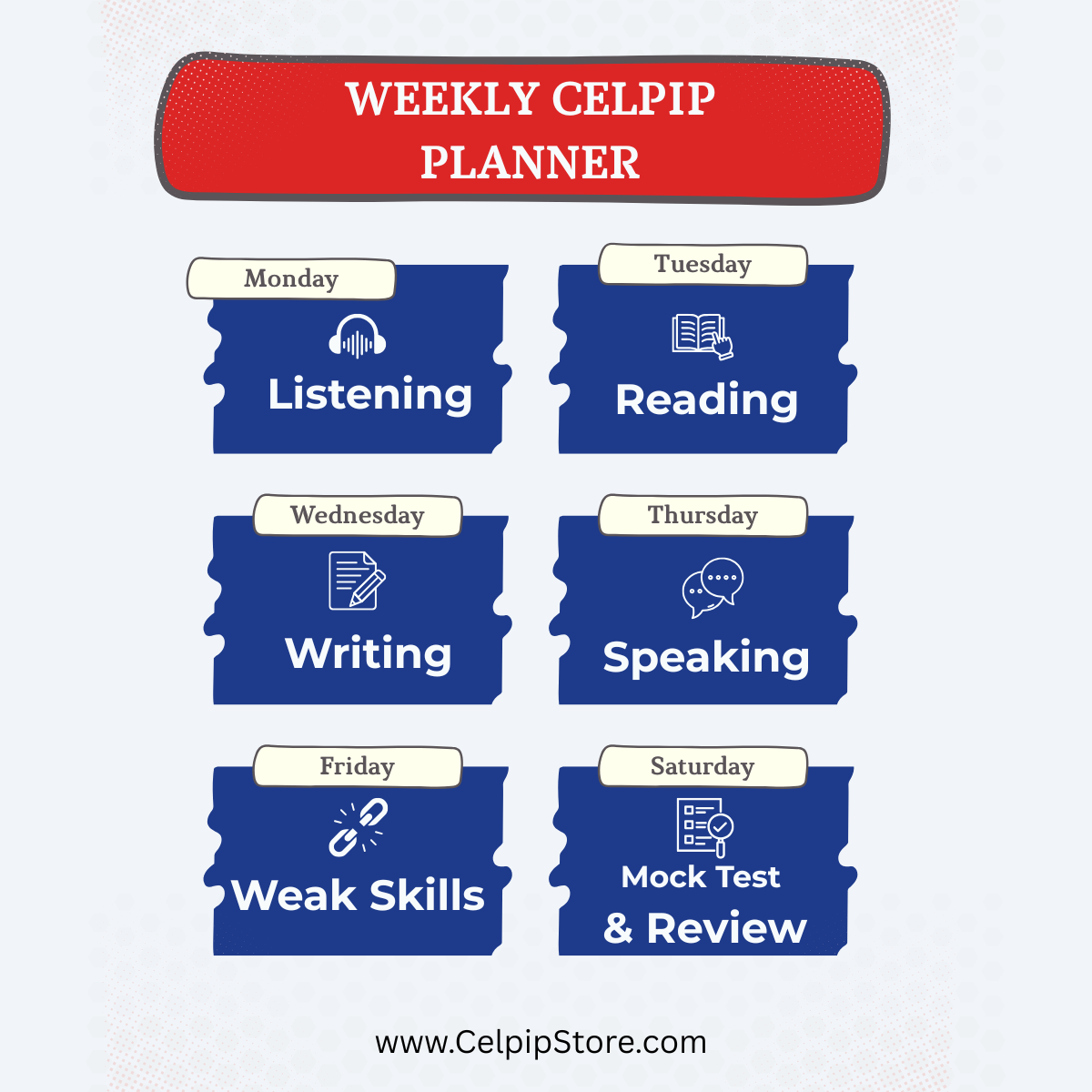
Here's an example of a balanced weekly routine:
|
Day |
Focus Area |
|
Monday |
Listening Practice |
|
Tuesday |
Reading Skills |
|
Wednesday |
Writing Tasks |
|
Thursday |
Speaking Practice |
|
Friday |
Vocabulary & Grammar Review |
|
Saturday |
Timed Practice Test |
|
Sunday |
Review Mistakes & Plan Next Week |
Even one focused hour each day can produce excellent long-term results.
Improve Your Vocabulary Naturally
Vocabulary is one of the building blocks of effective communication.
However, many candidates make the mistake of memorizing long word lists. For example, many programs require at least Level 7 in all skills, meaning even one lower score can affect your eligibility . Learn more in CELPIP Level 7 explained.
Instead, learn vocabulary in context.
For example:
- Read English news articles.
- Watch interviews.
- Listen to podcasts.
- Read blogs and magazines.
- Keep a notebook of useful expressions.
When you learn words in real situations, they become easier to remember and use naturally.
Practice Speaking Every Day
Speaking is often the skill candidates fear the most.
The good news is that confidence comes through regular practice.
You don't need a classroom to improve.
You can:
- Describe your daily activities aloud.
- Record yourself answering practice questions.
- Speak with friends or family.
- Join online English conversation groups.
- Use AI speaking tools for additional practice.
Don't worry about perfection.
Focus on communicating clearly and confidently.
Read Every Day
Reading exposes you to new vocabulary, sentence structures, and writing styles.
Try to read something in English every day.
Examples include:
- News articles
- Blogs
- Travel websites
- Product reviews
- Business articles
- Short stories
Start with material that's comfortable for your current level, then gradually increase the difficulty. While lower levels may meet minimum eligibility, higher levels like Level 8 can significantly strengthen your profile. Learn more in CELPIP Level 8 explained.
Listen Like a Native Learner
Many students only listen during practice tests.
Instead, make English listening part of your daily routine.
Listen while:
- Driving
- Walking
- Exercising
- Cooking
- Travelling
Good resources include:
- Podcasts
- News channels
- Interviews
- Educational videos
- TED-style talks
- Everyday conversations
Your brain becomes familiar with natural pronunciation, rhythm, and vocabulary over time.
Learn From Your Mistakes
This may be the most important advice in this entire guide.
Every mistake teaches you something.
After each practice session, ask yourself:
- Why was this answer incorrect?
- What confused me?
- How can I avoid this mistake next time?
Successful candidates don't just complete practice tests.
They study their mistakes carefully.
That's where real improvement happens.
Take Regular Mock Tests
Mock tests do much more than measure your progress.
They help you:
- Improve time management
- Build confidence
- Reduce exam anxiety
- Identify weak areas
- Experience real exam conditions
Aim to complete regular full-length practice tests as your exam date approaches.
Stay Consistent
Many candidates expect dramatic improvement after one week.
Language learning doesn't work that way.
Think about learning to ride a bicycle.
You improve little by little.
Eventually, something that once felt impossible becomes natural.
English develops in exactly the same way.
Every article you read, every podcast you listen to, every sentence you write, and every conversation you practice contributes to your long-term improvement.
- Stay patient
- Stay consistent
- Progress follows
Common Habits of Successful CELPIP Candidates
Successful candidates often have these habits in common:
- They practice regularly.
- They review mistakes carefully.
- They focus on communication rather than memorization.
- They balance all four language skills.
- They stay positive and patient.
Success isn't usually the result of studying harder.
It's the result of studying smarter.
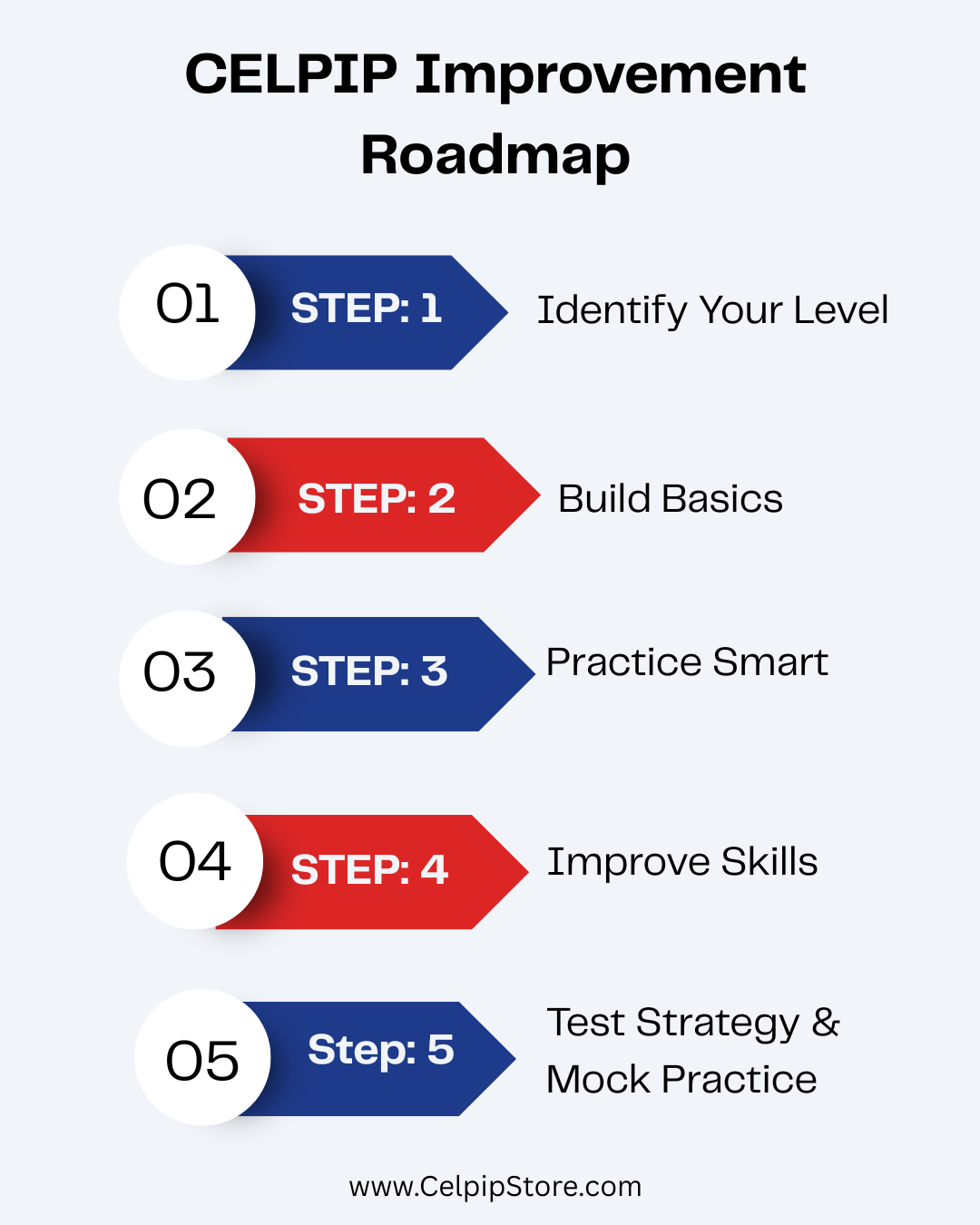
A Simple Improvement Formula
You can think of your preparation using this formula:
Assessment -> Planning -> Daily Practice -> Feedback -> Improvement -> Repeat
Following this cycle consistently helps you build stronger English skills over time.
Even with a good study plan, many candidates still believe myths that slow their progress.
Some think memorizing answers guarantees success.
Others believe grammar is the only thing that matters.
In the next section, we'll separate fact from fiction by exploring the most common myths about CELPIP levels and preparation.
Common Myths About CELPIP Levels (Fact vs Fiction)
When preparing for the CELPIP exam, candidates often receive advice from friends, social media, online forums, or coaching groups. While some of this advice is helpful, much of it is based on misunderstandings or outdated information.
Believing these myths can lead to ineffective study habits, unnecessary stress, and disappointment on test day.
Let's examine some of the most common myths and separate fact from fiction.
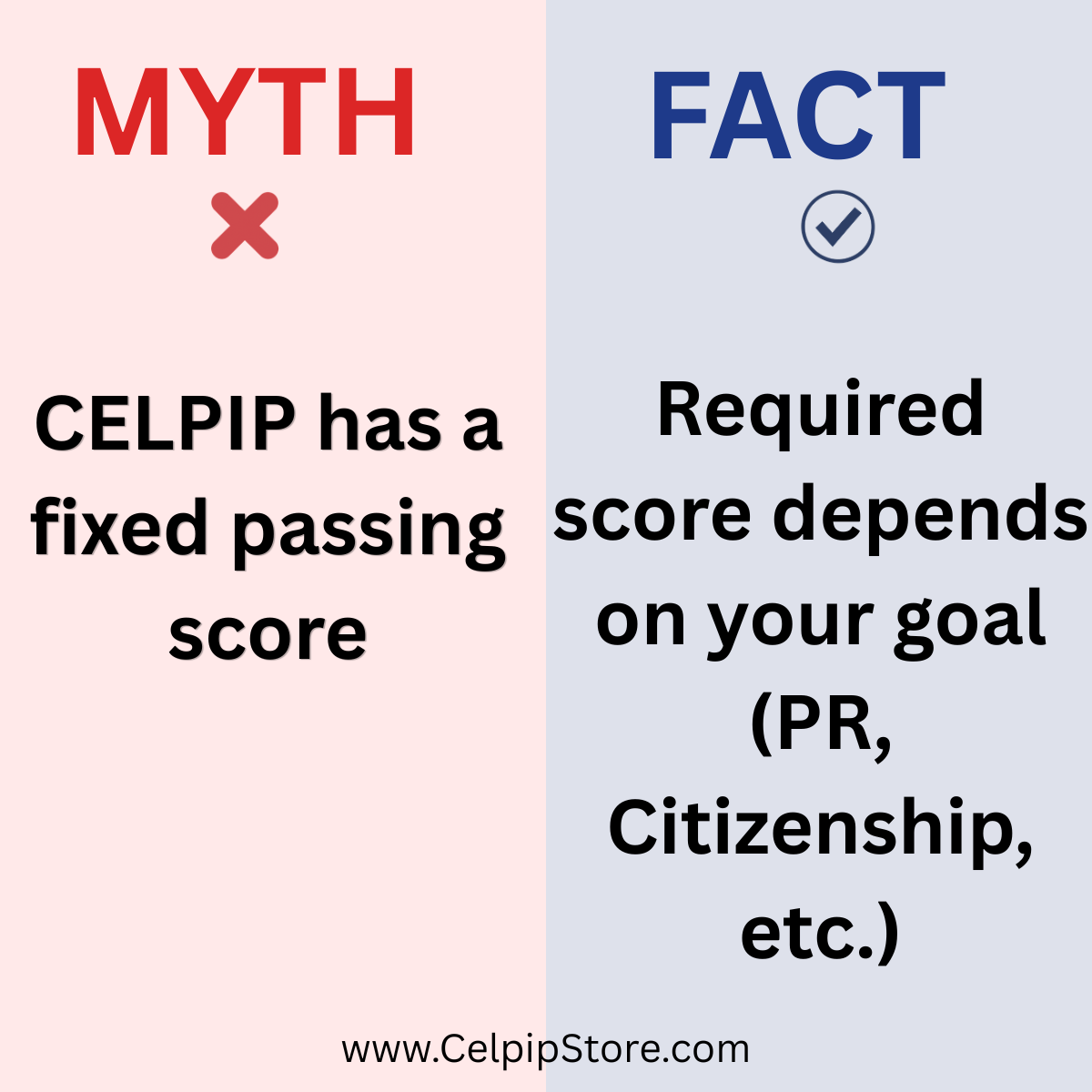
Myth 1 – There Is One Universal Passing Score
Myth
"There is one official passing score for everyone."
Reality
One of the biggest misconceptions about the CELPIP exam is that every candidate must achieve the same score to succeed.
In reality, the score you need depends on why you are taking the exam. Different immigration pathways, employers, educational institutions, and professional organizations may have different English language requirements.
Instead of asking, "What is the passing score?" ask yourself:
"What score is required for my specific goal?"
This simple change in thinking makes your preparation much more focused.
Myth 2 – Memorizing Answers Guarantees a Higher Score
Myth
"If I memorize enough sample answers, I'll get a high score."
Reality
The CELPIP exam evaluates your ability to communicate naturally and effectively.
Memorized responses often sound unnatural, don't match the question perfectly, and can make it difficult to respond confidently when something unexpected appears.
Instead of memorizing complete answers, learn how to organize your ideas, explain your opinions, and support them with examples.
Communication skills always outperform memorization.
Myth 3 – Grammar Is the Only Thing That Matters
Myth
"If my grammar is perfect, I'll automatically get a high score."
Reality
Grammar is important, but it is only one part of effective communication.
The exam also evaluates:
- Understanding
- Organization
- Vocabulary
- Clarity
- Fluency
- Relevance of ideas
A candidate with perfect grammar but poor organization or weak communication may not perform as well as someone who communicates clearly with a few minor grammar mistakes.
Your goal should be Clear Communication, not perfection.
Myth 4 – Speaking Like a Native Speaker Is Necessary
Myth
"I need a Canadian or British accent to get a high score."
Reality
The CELPIP exam does not require you to sound like a native English speaker.
Examiners focus on whether your speech is:
- Clear
- Understandable
- Well organized
- Natural
- Relevant to the task
Many successful candidates have accents from around the world.
Confidence and clarity matter far more than sounding like a native speaker.
Myth 5 – You Must Learn Thousands of Difficult Words
Myth
"The more difficult vocabulary I use, the higher my score."
Reality
Using advanced vocabulary incorrectly can actually make your communication less effective.
It's much better to use words that you understand and can use naturally.
Strong communication is based on:
- Accuracy
- Clarity
- Appropriate vocabulary
- Logical organization
Simple, correct English is always better than complicated English used incorrectly.
Myth 6 – Practicing Only Your Strongest Skill Is Enough
Myth
"My Speaking is already good, so I'll just practice Speaking."
Reality
The CELPIP exam evaluates four separate language skills.
Ignoring weaker areas can slow your overall progress and reduce your confidence during the exam.
Balanced preparation helps you become a stronger communicator and prepares you for a wider variety of tasks.
Myth 7 – More Study Hours Always Mean Better Results
Myth
"If I study ten hours a day, I'll improve faster."
Reality
Quality is more important than quantity.
One hour of focused, structured practice is often more effective than several hours of distracted studying.
Successful candidates usually:
- Set clear goals.
- Practice consistently.
- Review mistakes.
- Measure progress regularly.
Smart preparation beats long preparation.
Myth 8 – Mock Tests Are Only for Advanced Students
Myth
"I'll take practice tests only after I finish studying."
Reality
Mock tests are useful from the beginning of your preparation.
They help you:
- Understand the exam format.
- Build confidence.
- Improve time management.
- Identify weak areas early.
- Track your improvement over time.
Regular practice tests should be part of every study plan.
Myth 9 – You Can Improve Overnight
Myth
"I only need a few days before the exam."
Reality
Language learning is a gradual process.
Improving your Listening, Reading, Writing, and Speaking skills takes consistent effort over time.
Small improvements made every day produce much better results than last-minute cramming.
Think of preparing for CELPIP as training for a marathon, not sprinting a short race.
Myth 10 – Once You Reach Your Target Level, Learning Stops
Myth
"After I achieve my target score, I don't need to improve my English anymore."
Reality
The real purpose of learning English extends beyond the exam.
Strong communication skills will help you:
- Study more effectively.
- Perform better at work.
- Build stronger professional relationships.
- Communicate confidently in everyday life.
- Adapt more easily to life in Canada.
The CELPIP exam is a milestone not the final destination.
Quick Myth vs Fact Summary
|
Myth |
Reality |
|
There is one passing score for everyone. |
Required scores vary depending on your purpose. |
|
Memorizing answers guarantees success. |
Natural communication is more effective. |
|
Grammar is everything. |
Communication skills involve much more than grammar. |
|
You need a native accent. |
Clear and understandable speech is what matters. |
|
Difficult vocabulary always scores higher. |
Appropriate vocabulary is more important than complexity. |
|
Practice only your strongest skill. |
Balance all four language skills. |
|
Longer study hours always help. |
Consistent, focused practice is more effective. |
|
Mock tests are only for advanced learners. |
Mock tests help candidates at every stage. |
|
You can improve overnight. |
Language development takes time. |
|
Learning ends after the exam. |
English skills continue to benefit your personal and professional life. |
Key Takeaway
Many candidates struggle not because they lack ability, but because they spend time following advice that simply isn't true.
The best preparation strategy is based on facts, consistent practice, realistic goals, and continuous improvement.
Once you replace these myths with effective study habits, your preparation becomes more focused, less stressful, and far more productive.
Now that we've cleared up the most common misconceptions, let's answer the questions that candidates ask most often.
In the next section, we'll cover 15 detailed Frequently Asked Questions about CELPIP levels, providing practical answers that will help you prepare with greater confidence.
Frequently Asked Questions (FAQs) About CELPIP Levels
1. What do CELPIP levels actually measure?
CELPIP levels measure your ability to communicate effectively in English across four language skills: Listening, Reading, Writing, and Speaking. Rather than testing memorization, the exam evaluates how well you understand information, express ideas, and communicate in practical, real-life situations. As your level increases, it reflects stronger communication skills and greater confidence using English.
2. Is there a passing level in the CELPIP exam?
The CELPIP exam itself does not define one universal passing level for every candidate. The score or level you need depends on the purpose of taking the exam, such as immigration, citizenship, employment, or professional licensing. Always check the latest requirements for your specific application or organization before setting your target.
3. Which CELPIP level should I aim for?
The answer depends on your individual goals. Before beginning your preparation, identify why you are taking the exam and confirm the current language requirements from the official source or the organization requesting your results. Having a clear target helps you create a focused study plan.
4. How can I improve my CELPIP level?
Improvement comes from consistent practice rather than shortcuts. Build a balanced study routine that includes Listening, Reading, Writing, and Speaking every week. Practice under timed conditions, review your mistakes carefully, and focus extra attention on your weakest skill. Small improvements made consistently often produce significant long-term progress.
5. How long does it take to improve one CELPIP level?
There is no fixed timeline because every learner starts at a different level and studies with different intensity. Factors such as your current English proficiency, daily practice, learning methods, and previous experience all influence your progress. The most reliable approach is to study consistently and track your improvement through regular practice.
6. Are all four language skills equally important?
Yes. The CELPIP exam evaluates Listening, Reading, Writing, and Speaking separately because each skill represents an essential part of real-life communication. Even if one skill is already strong, balanced preparation across all four areas will make you a more confident and effective communicator.
7. Can I prepare for CELPIP without joining coaching classes?
Absolutely. Many candidates prepare successfully through self-study. The key is to use reliable learning resources, maintain a structured study schedule, complete regular practice exercises, and review your mistakes. Self-discipline and consistency are often more important than the method you choose.
8. Should I memorize answers for the Speaking and Writing sections?
No. Memorizing complete answers is not recommended because every test question is different. Instead, learn how to organize your ideas, explain your opinions clearly, and support them with relevant examples. Natural communication is much more effective than repeating memorized responses.
9. What is the best daily study routine for CELPIP?
A balanced routine works best. Dedicate time each day to one or more language skills, practice under timed conditions, review mistakes, and expose yourself to English through reading, listening, speaking, and writing. Consistency is more valuable than studying for long hours only occasionally.
10. How important are mock tests?
Mock tests are one of the most valuable preparation tools. They help you become familiar with the exam format, improve time management, reduce anxiety, identify weak areas, and measure your progress. As your exam date approaches, completing full-length practice tests becomes increasingly important.
11. What is the biggest mistake candidates make?
One of the most common mistakes is studying without a clear plan. Other frequent mistakes include ignoring weaker skills, relying on memorized answers, avoiding mock tests, and expecting rapid improvement without consistent practice. A structured preparation strategy usually produces better results.
12. Is grammar more important than vocabulary?
Both are important, but neither should be studied in isolation. Effective communication requires a combination of grammar, vocabulary, organization, fluency, and clarity. Your goal should be to communicate naturally and accurately rather than focusing on only one aspect of the language.
13. Can I improve my Speaking skills at home?
Yes. You can improve by recording yourself, describing daily activities aloud, answering sample questions, participating in online conversation groups, or practicing with AI-powered speaking tools. The key is to speak regularly and review your performance.
14. What should I do if one skill is much weaker than the others?
Continue practicing all four skills, but dedicate additional time to your weakest area. Improving your weakest skill often has the greatest impact on your overall confidence and communication ability.
15. What is the most effective preparation strategy?
The most effective strategy combines clear goals, consistent daily practice, balanced skill development, regular mock tests, and careful review of mistakes. Instead of searching for shortcuts, focus on building real English communication skills that will benefit you both during the exam and in everyday life.
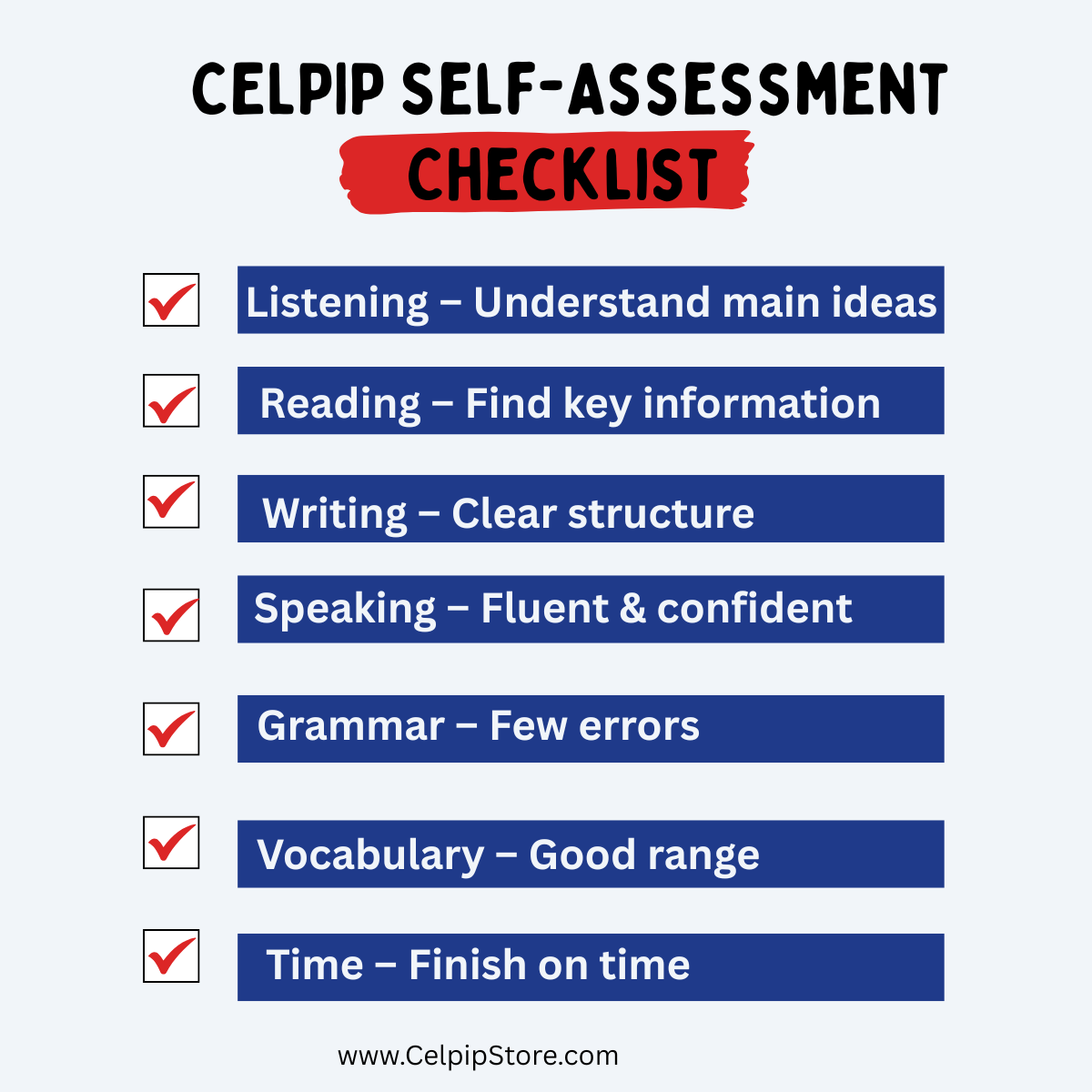
Final Thoughts on CELPIP Levels
Understanding CELPIP levels is about much more than learning what a number represents. Each level reflects your ability to communicate in English in practical situations, whether you're listening to a conversation, reading important information, writing a professional email, or expressing your ideas confidently.
As you prepare for the exam, remember that progress is rarely immediate. Every practice session, every article you read, every conversation you have, and every mistake you correct helps you become a stronger communicator.
Instead of comparing your progress with others, focus on your own journey. Set realistic goals, practice consistently, and celebrate each improvement along the way. Want a detailed explanation of one of the most important beginner levels? Read Understanding CELPIP Level 4.
Whether you're taking the CELPIP exam for immigration, citizenship, employment, or personal growth, investing in your English skills will continue to benefit you long after the exam is over.
At CELPIPStore, our mission is to help you prepare with confidence by providing practical guides, realistic practice materials, expert tips, and reliable learning resources. Want a detailed breakdown of Level 5 skills and strategies? Read CELPIP Level 5 explained. We encourage you to continue exploring our tutorials, practice questions, and study strategies as you work toward your target level.
Good preparation isn't about luck it's about having the right plan and following it consistently. Want a complete breakdown of Level 6 skills and strategies? Read CELPIP Level 6 explained.
About CELPIPStore
CELPIPStore is an online learning platform dedicated to helping test takers prepare confidently for the CELPIP exam. Our team creates comprehensive study guides, practice questions, exam strategies, and educational resources designed to improve English communication skills across Listening, Reading, Writing, and Speaking. Want a complete breakdown of one of the most important CELPIP levels? Read CELPIP Level 7 explained. Every guide is developed with a focus on accuracy, practical learning, and real-world English usage to support candidates preparing for immigration, citizenship, employment, and personal development. Want a complete breakdown of Level 8 skills and strategies? Read CELPIP Level 8 explained.
Why I recommend this: It builds the authority of CELPIPStore rather than a single individual.