1.png)
CELPIP Writing Task 1 vs Task 2
Introduction
CELPIP Writing includes two completely different tasks:
- Task 1: Writing an Email
- Task 2: Writing a Survey Opinion Response
Many students treat them the same, but this is a major mistake.
In reality, these two tasks test different skills, different thinking styles, and different writing structures.
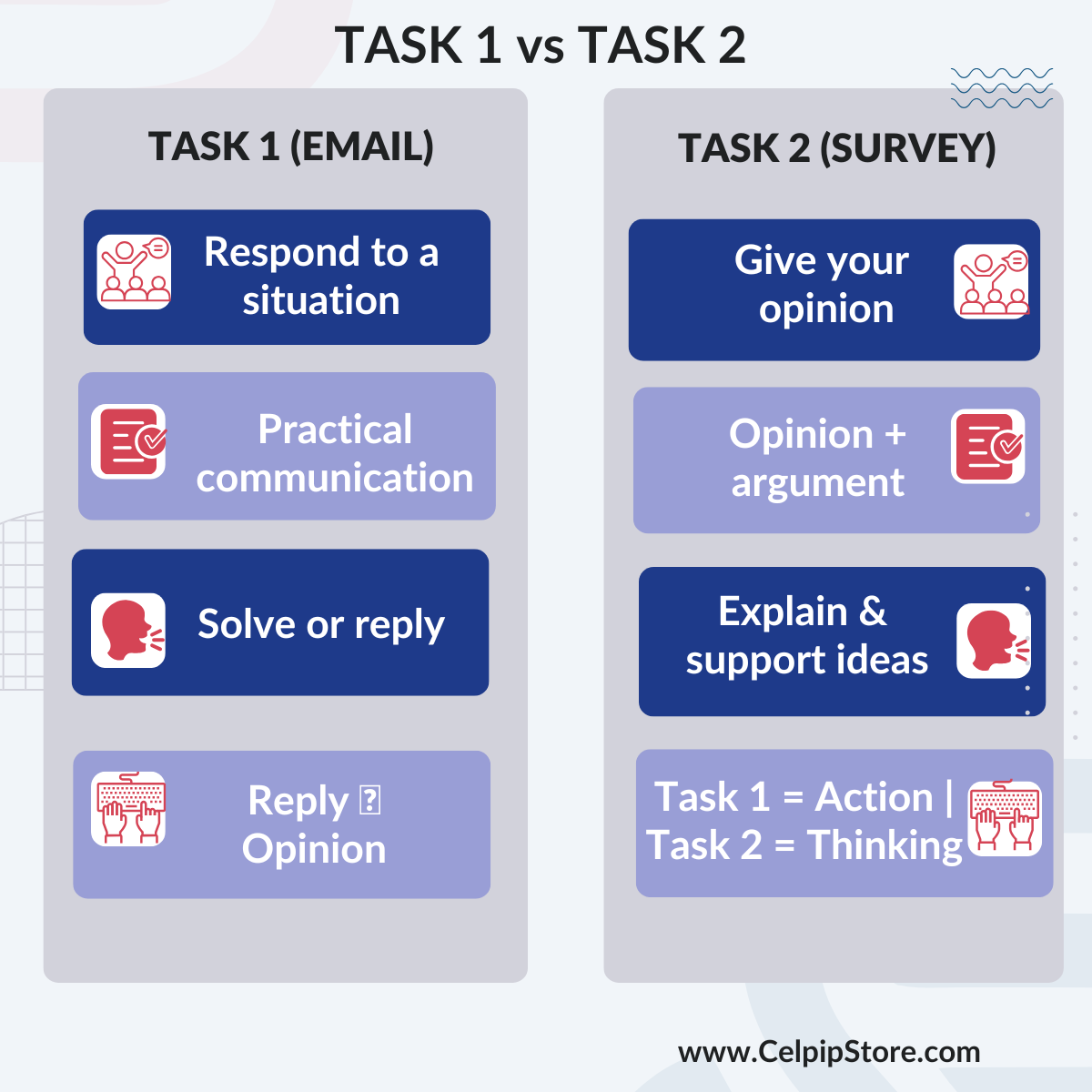
- Task 1 = Communication skill (real-life email writing)
- Task 2 = Argument skill (logical opinion writing)
To score Band 8–10, you must understand exactly how they differ and how your writing strategy must change.
This lesson will help you clearly separate both tasks and avoid confusion during the exam. While understanding the differences between Task 1 and Task 2 is important, it is equally essential to understand the complete CELPIP Writing system, including scoring criteria, structure, timing, and overall strategies for both tasks. For a complete breakdown of the Writing section, you should also read our Ultimate CELPIP Writing Guide.
Learning Objectives
By the end of this lesson, you will be able to:
- Understand key differences between Task 1 and Task 2
- Identify the correct writing style for each task
- Avoid mixing email and essay writing strategies
- Apply correct structure for both tasks
- Improve scoring consistency across both sections
Overview of CELPIP Writing Tasks
Task 1: Writing an Email
- Purpose: Communication
- Style: Formal / Semi-formal / Informal
- Focus: Clarity + tone + message delivery
- Structure: Flexible (but organized paragraphs)
Task 2: Survey Writing
- Purpose: Opinion + Argument
- Style: Formal
- Focus: Logic + reasoning + structure
- Structure: Fixed 4-paragraph system
Although Task 1 and Task 2 have different formats and purposes, both are part of the same Writing section and follow a unified scoring system. To understand how the entire Writing module is evaluated, read our Ultimate CELPIP Writing Guide.
Key Difference in Simple Words
- Task 1 = “How well you communicate a message”
- Task 2 = “How well you defend an opinion”
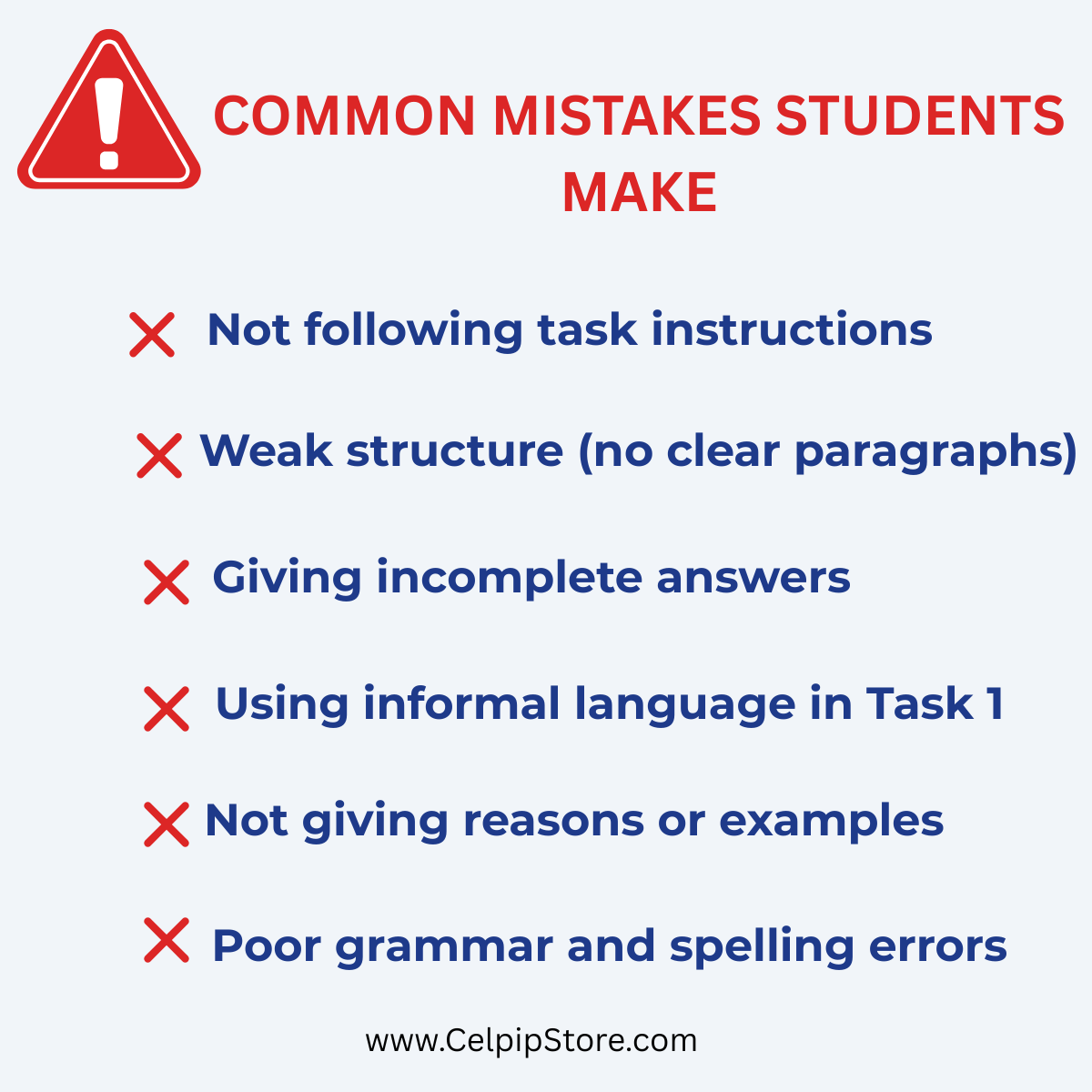
Common Mistakes Students Make
Many candidates lose marks because they confuse the two tasks.
Mistake 1: Using essay style in Task 1
- Writing like Task 2 in emails
- Too formal or robotic tone
Mistake 2: Using email style in Task 2
- Casual writing in opinion essay
- Weak arguments and informal tone
Mistake 3: No structure change
- Same writing pattern for both tasks
Mistake 4: Weak task understanding
- Not identifying purpose before writing
Many students lose marks because they focus only on differences between tasks but ignore the overall Writing strategy. Avoid these mistakes by understanding the full system in our Ultimate CELPIP Writing Guide.
What Examiners Expect
For Task 1:
- Clear communication
- Appropriate tone (friendly or formal)
- Direct response to situation
- Logical email structure
For Task 2:
- Clear opinion
- Strong reasoning
- Well-developed arguments
- Formal academic tone
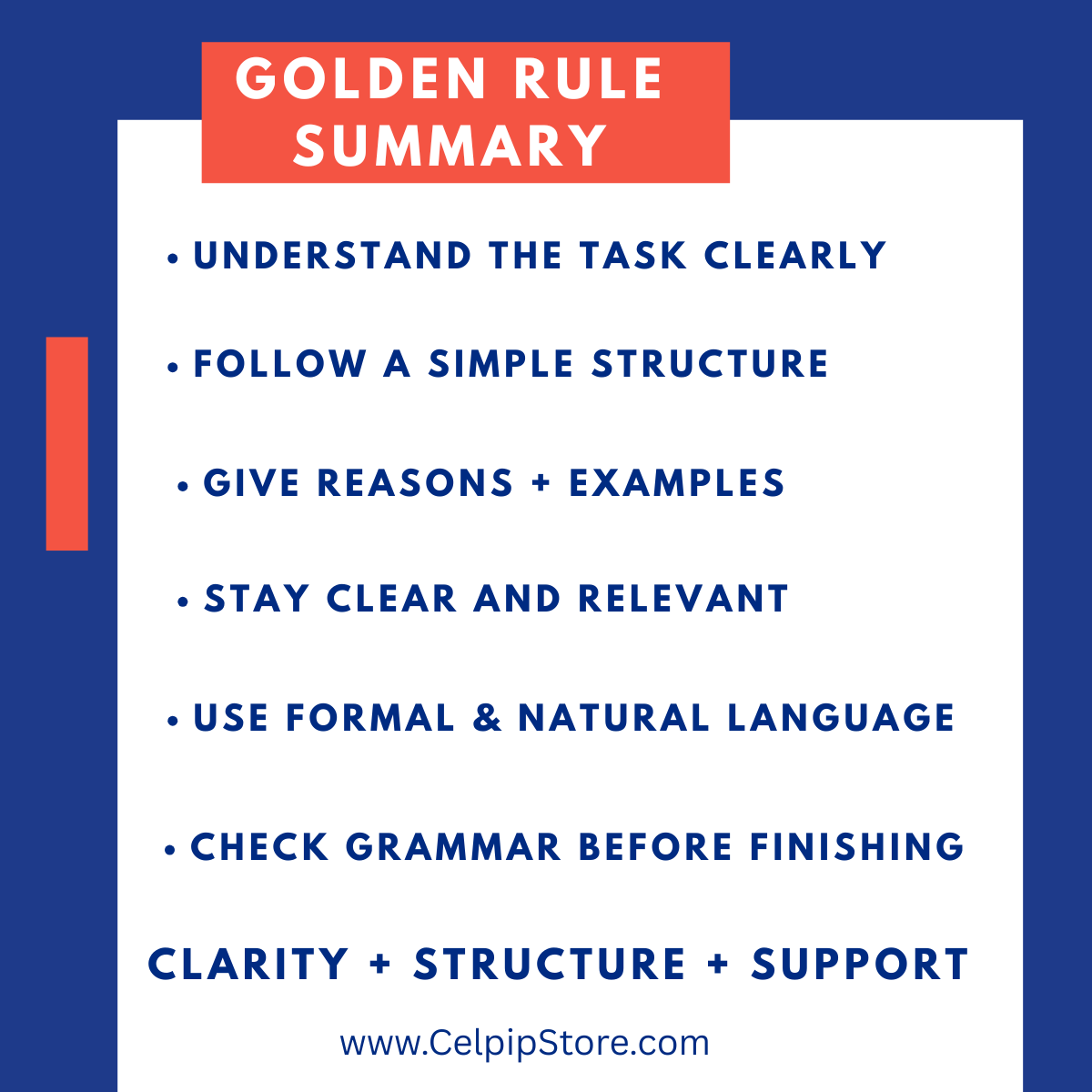
Golden Rule
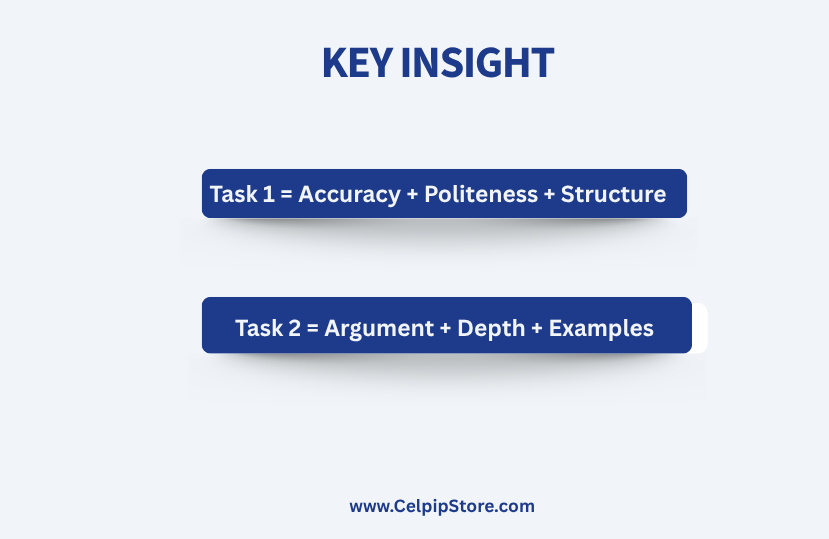
Task 1 = Communication Skill
Task 2 = Argument Skill
If you mix them, your score drops immediately. To score high in CELPIP Writing, it is not enough to compare tasks—you must also understand the complete scoring system and overall strategy. Learn this in our CELPIP Writing Guide.
Core Idea: Two Different Writing Mindsets
CELPIP Writing success depends on one key understanding:
Task 1 and Task 2 are not written with the same thinking style
- Task 1 = Communication mindset
- Task 2 = Argument mindset
If you switch the mindset correctly, your score increases immediately.
Side-by-Side Structure Comparison
Task 1: Email Structure (Flexible Framework)
You can use this structure:
1. Greeting
- Hi / Dear + name
2. Opening line
- Purpose of email
3. Main Body (2–3 paragraphs)
- Explain issue / request / information
- Keep tone appropriate
4. Closing
- Polite ending + sign off
Task 2: Opinion Essay Structure (Fixed Framework)
1. Introduction
- State opinion clearly
2. Reason 1
- Strongest argument
3. Reason 2
- Supporting argument
4. Conclusion
- Restate opinion
Strategy Difference (Most Important Section)
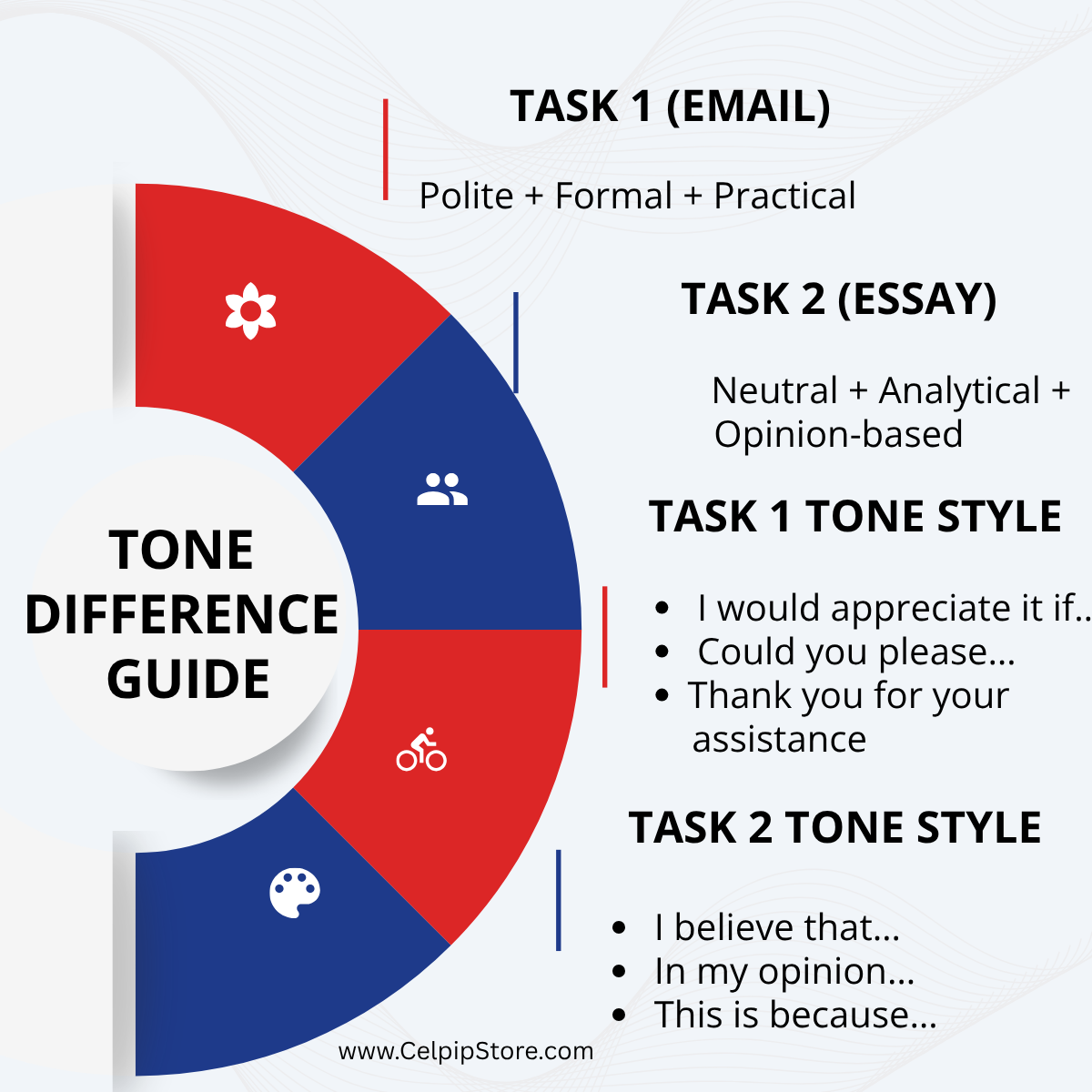
Task 1 Strategy (Email Writing)
Focus on:
- Clear message delivery
- Appropriate tone (formal or friendly)
- Direct response to question
- Simple explanations
Avoid:
- Overly academic writing
- Complex argument style
Use:
- Natural communication
- Practical explanations
- Polite language
Task 2 Strategy (Opinion Writing)
Focus on:
- Strong opinion statement
- Logical reasoning
- Deep explanation of ideas
- Structured paragraphs
Avoid:
- Casual language
- Weak reasoning
- Mixed opinions
Use:
- Formal tone
- Clear argument flow
- Logical connectors
Example Comparison
Task 1 Example (Email Style)
Hi John,
I am writing to inform you about an issue with my recent order. I received the wrong product and would like to request a replacement. Please let me know the next steps to resolve this issue.
Task 2 Example (Opinion Style)
In my opinion, increasing investment in public transport is the most effective solution to reduce traffic congestion. Firstly, it provides affordable transportation for a large number of people, reducing the need for private vehicles. Secondly, it helps decrease environmental pollution, leading to a healthier urban environment.
Common Transition Mistakes
Students often:
- Use essay writing in emails
- Use casual tone in Task 2
- Mix structure styles
- Forget task purpose
These mistakes directly reduce score.
Golden Strategy Rule
Always ask before writing:
- Is this communication? -> Task 1
- Is this opinion + argument? -> Task 2
Advanced Scoring Insight: What Really Changes Your Band Score
Most students think Task 1 and Task 2 are scored the same way. They are not.
CELPIP examiners evaluate each task differently:
- Task 1 -> Communication effectiveness
- Task 2 -> Logical argument strength
So your writing strategy must adjust accordingly.
Advanced Tips for Task 1 (Email Writing)
Focus Areas:
- Clear purpose from the first line
- Natural tone (formal or informal depending on context)
- Direct responses to all points in the question
High-Scoring Techniques:
-
Start with purpose immediately
“I am writing to inform you about…”
- Keep sentences simple and clear
- Use polite language consistently
Avoid:
- Overly academic tone
- Long complex explanations
- Missing one part of the question
Advanced Tips for Task 2 (Opinion Writing)
Focus Areas:
- Strong opinion clarity
- Logical flow of ideas
- Deep explanation of each reason
High-Scoring Techniques:
- Always use 2 strong reasons only
- Expand ideas using:
Point -> Explain -> Result - Use connectors:
- Firstly
- Moreover
- Therefore
- As a result
Avoid:
- Listing many weak ideas
- Changing opinion in conclusion
- Short undeveloped sentences
Examiner Insight (Very Important)
For Task 1:
Examiners check:
- Did you respond to all parts of the email?
- Is your tone appropriate?
- Is the message easy to understand?
For Task 2:
Examiners check:
- Is your opinion clear from the start?
- Are your reasons logical and developed?
- Is your structure consistent?
Vocabulary System: Task 1 vs Task 2
Task 1 Vocabulary (Communication Focus)
Use simple, natural, polite expressions:
- Inform
- Request
- Apologize
- Appreciate
- Concern
- Assistance
Example:
I would appreciate your assistance in resolving this issue.
Task 2 Vocabulary (Academic Argument Focus)
Use formal, analytical words:
- Significant
- Effective
- Advantageous
- Inefficient
- Crucial
- Impact
Example:
This solution is highly advantageous as it improves long-term productivity.
Pro-Level Difference
| Feature | Task 1 | Task 2 |
|---|---|---|
| Purpose | Communication | Argument |
| Tone | Polite / Natural | Formal / Academic |
| Structure | Flexible | Fixed 4-paragraph |
| Focus | Message clarity | Logic & reasoning |
Common High-Level Mistakes
Even advanced learners make these mistakes:
- Using academic tone in emails
- Using casual tone in essays
- Weak explanation in Task 2
- Missing tone consistency in Task 1
Final Summary: Task 1 vs Task 2 Mastery
CELPIP Writing has two very different goals:
- Task 1 (Email Writing): Focus on communication, tone, and clarity
- Task 2 (Opinion Writing): Focus on argument, logic, and structure
If you understand this difference clearly, your score improves immediately.
Task 1 = “Say it clearly”
Task 2 = “Prove it logically”
Final Comparison Blueprint
Task 1 (Email)
- Purpose: Communication
- Tone: Formal / informal / semi-formal
- Structure: Flexible
- Focus: Clear response + politeness
Task 2 (Opinion)
- Purpose: Argument
- Tone: Formal
- Structure: Fixed 4 paragraphs
- Focus: Logic + reasoning + explanation
Final Exam Checklist
Before submitting your writing, check carefully:
Task 1 Checklist
- Did I answer all parts of the email?
- Is my tone appropriate?
- Is my message clear and direct?
- Did I use polite expressions?
- Is my structure easy to follow?
Task 2 Checklist
- Did I clearly choose ONE option?
- Did I write ONLY 2 strong reasons?
- Is my structure 4 paragraphs?
- Did I explain each idea properly?
- Is my tone formal and consistent?
FAQs: CELPIP Writing Tasks
Q1: Which task is easier, Task 1 or Task 2?
Task 1 is usually easier because it is communication-based and less structured.
Q2: How many paragraphs should I write?
- Task 1 ? 3–4 flexible paragraphs
- Task 2 ? Always 4 fixed paragraphs
Q3: Can I use informal language in Task 2?
No. Task 2 must always be formal and academic.
Q4: Do I need examples in both tasks?
Examples are optional in Task 1, but helpful in Task 2.
Q5: What is the biggest mistake students make?
Mixing Task 1 and Task 2 writing styles.
7-Day Practice Plan
Day 1–2: Task 1 Focus
- Write 2 emails daily
- Focus on tone and clarity
Day 3–4: Task 2 Focus
- Write 1 opinion essay daily
- Use 4-paragraph structure
Day 5: Mixed Practice
- 1 Task 1 + 1 Task 2
Day 6: Timed Practice
- 26 minutes per task simulation
Day 7: Full Mock Test
- Real exam conditions
- No pause writing
Final Strategy Blueprint
To master both tasks:
- Understand task purpose first
- Use correct structure every time
- Keep tone consistent
- Practice daily writing
- Focus on clarity over complexity
Final Conclusion
CELPIP Writing success is not about writing more it is about writing correctly for the task type.
Once you master the difference between:
- Communication writing (Task 1)
- Argument writing (Task 2)
You unlock consistent Band 8–10 performance. To master CELPIP Writing completely, you must not only understand the differences between Task 1 and Task 2 but also learn how the entire Writing section is structured and scored. For a complete guide, start with our Ultimate CELPIP Writing Guide.