CELPIP Writing Templates (2026): Task 1 & Task 2 High-Score Patterns for CLB 9+
Introduction
Templates are one of the most powerful tools in CELPIP Writing but only if used correctly.
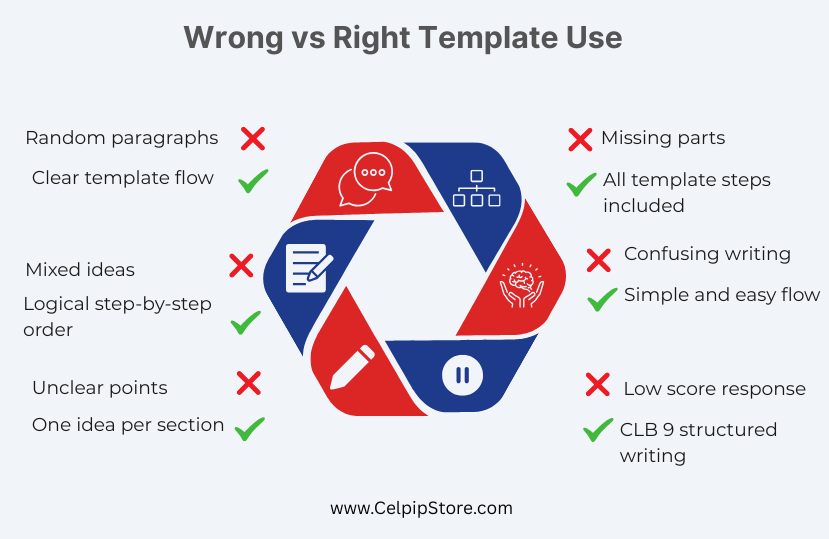
Many students misunderstand templates. They either:
- Memorize them blindly
- Use them rigidly
- Sound unnatural and robotic
However, high scorers use templates differently. They use them as:
- A structure guide
- A time-saving tool
- A confidence booster
This lesson teaches you how to use smart, flexible templates that improve your score without sounding memorized. Using templates in CELPIP Writing helps improve structure and speed, but your final score depends on how well you apply a complete writing system across both tasks. You can understand this full system in CELPIP Writing Mastery: Complete Strategy for High Band Scores.
Learning Objectives
By the end of this lesson, you will be able to:
- Use flexible templates for Task 1 and Task 2
- Adapt templates to any question
- Maintain natural and fluent writing
- Avoid robotic or memorized responses
- Improve speed and confidence in writing
Overview
This lesson focuses on practical writing patterns you can use in the exam.
You will learn:
- Email templates for different situations
- Essay templates for all question types
- Sentence-level patterns
- Adaptation techniques
Templates are useful for organizing ideas quickly, but they must be used within a proper writing framework that covers structure, tone, and task requirements. This complete framework is explained in CELPIP Writing Mastery Complete Strategy Guide.
Common Mistakes with Templates
1. Memorizing Full Answers
- Leads to unnatural writing
2. Using Same Sentences Everywhere
- Reduces score due to repetition
3. Ignoring the Question
- Template does not match task
4. Robotic Language
- Sounds artificial
5. Overdependence
- Cannot write without template
Key Insight:
Templates should guide your writing, not control it. Many candidates lose marks because they rely only on templates without understanding how CELPIP Writing is evaluated as a complete scoring system. To fix this, refer to CELPIP Writing Mastery Complete Scoring Strategy.
Task 1 Email Template (Flexible Structure)
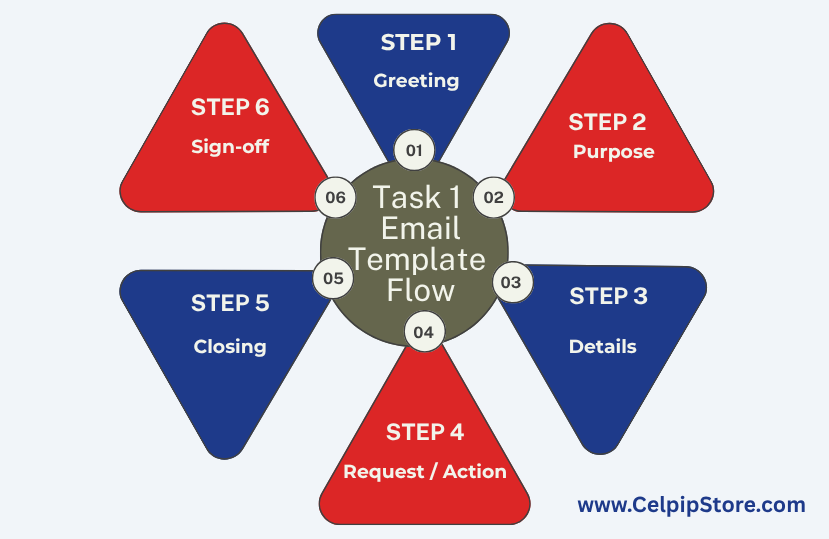
Opening (Purpose)
- “I am writing to inquire about…”
- “I would like to express my concern regarding…”
- “I am writing to request…”
Background
- “Recently, I…”
- “I would like to inform you that…”
Main Request
- “I would appreciate if you could…”
- “Could you please…”
Closing
- “I look forward to your response.”
- “Thank you for your time and assistance.”
Use these as patterns, not fixed sentences.
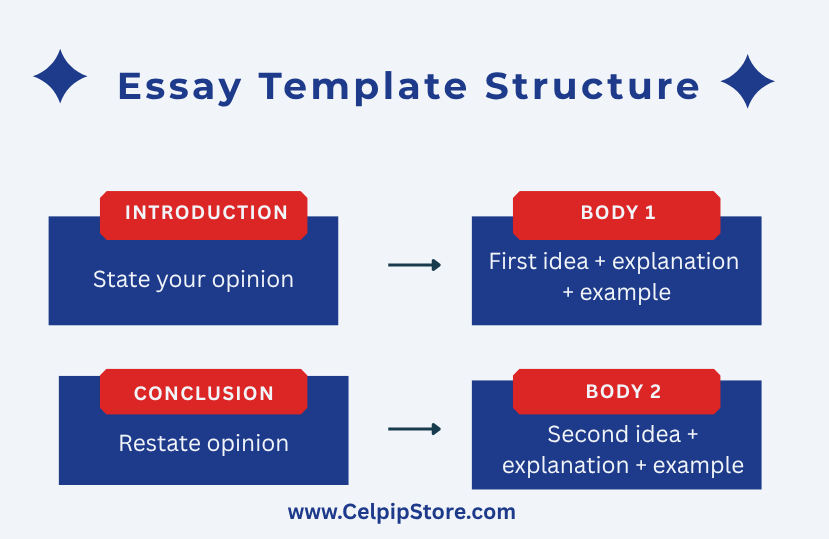
Task 2 Essay Template
Introduction
- “In today’s world, [topic] has become increasingly important.”
- “I strongly believe that…”
Body Paragraph 1
- “Firstly, one major reason is that…”
- “For example…”
Body Paragraph 2
- “Another important reason is that…”
- “This can be seen in…”
Conclusion
- “In conclusion,…”
- “Therefore, I believe that…”
Keep it natural and adaptable. Templates are effective only when combined with regular practice in real exam conditions, helping you improve timing, structure, and accuracy together. Follow the full system in CELPIP Writing Mastery Complete Preparation Strategy.
Template Usage Strategy
- Understand the question first
- Choose relevant template
- Adapt language
- Add your ideas
Templates + ideas = strong writing.

Advanced Template Use
High scorers do not repeat templates they modify them.
Technique 1: Paraphrasing Templates
Instead of repeating:
- “I am writing to request…”
Try:
- “I would like to ask for…”
- “I am contacting you regarding…”
Technique 2: Sentence Variation
Avoid repetition by changing structure:
- “This is important because…”
- “One reason for this is…”
Technique 3: Personalization
Add specific details:
- Examples
- Situations
- Clear explanations
Examiner Insights
Examiners can easily identify:
- Memorized writing
- Repetitive patterns
- Unnatural language
They reward:
- Natural flow
- Relevant content
- Clear structure
Practice Tasks
Task 1
Write an email using template for complaint.
Task 2
Write an essay using template for opinion question.
Practice Strategy
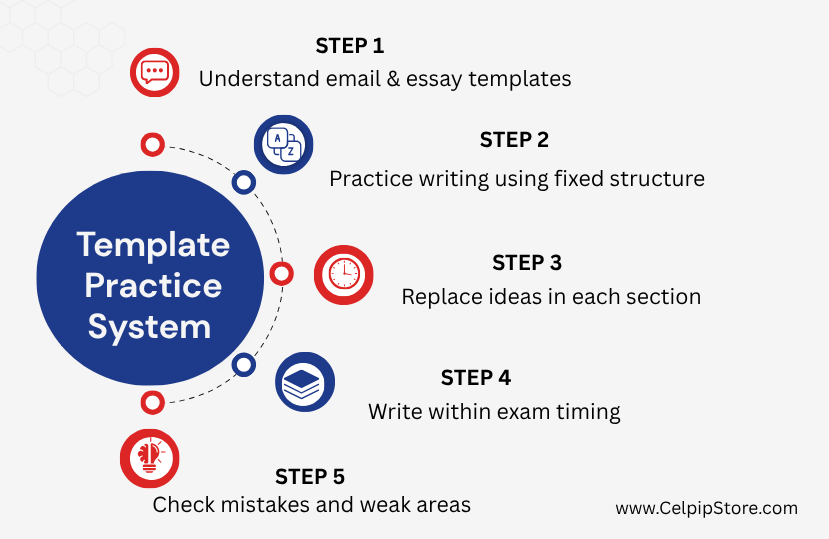
- Use template -> write answer
- Modify template -> rewrite
- Compare both versions
Practice = flexibility.
Summary
This lesson teaches how to use templates effectively.
Key ideas:
- Templates save time
- Templates improve structure
- Templates must be flexible
- Templates should sound natural
Final Checklist
Before submitting:
- Did I adapt the template?
- Does it match the question?
- Does it sound natural?
- Did I avoid repetition?
7-Day Template Practice Plan
Day 1–2 -> Learn templates
Day 3–4 -> Practice Task 1
Day 5–6 -> Practice Task 2
Day 7 -> Full writing test
Conclusion
Templates are powerful when used correctly.
To score CLB 9:
- Use templates as guides
- Adapt to the question
- Keep language natural
- Focus on clarity
Smart templates = faster writing + better scores. The writing mastery system becomes much stronger when templates are combined with complete strategy training for both writing tasks. Start with CELPIP Writing Mastery Complete Guide for High Scores.