CELPIP Speaking Mastery (2026): Complete Strategy for All 8 Tasks (CLB 9+ Guide)
Introduction
CELPIP Speaking is not a test of advanced English or complex grammar. It is a test of how clearly you can communicate ideas under time pressure in real-life situations. Many students enter the exam believing they need difficult vocabulary or perfect sentences, but that is not what the examiner is looking for.
In reality, most score drops happen because of weak structure, hesitation, and unclear responses not because of grammar mistakes. When students pause too long or struggle to organize their thoughts, their fluency score goes down quickly.
To reach CLB 9 or higher, you need a repeatable speaking system that helps you respond clearly in every task. This lesson is designed to give you exactly that system so you can speak confidently, stay structured, and perform consistently in the real exam. The CELPIP Speaking test includes multiple tasks, and Task 1 focuses on giving clear and practical advice in real-life situations. This task builds the foundation of structured speaking. You can master this in CELPIP Speaking Task 1: Giving Advice (CLB 9 Strategy Guide).
The CELPIP Speaking test includes multiple tasks, and Task 2 focuses on describing personal experiences clearly and naturally. This task is key for demonstrating fluency and storytelling ability. You can master this in CELPIP Speaking Task 2: Personal Experience (CLB 9 Strategy Guide).
The CELPIP Speaking test includes multiple tasks, and Task 3 focuses on describing a scene clearly using structured observation and logical sequencing. This task tests clarity and detail description skills. You can master this in CELPIP Speaking Task 3: Describe Scene (CLB 9 Strategy Guide).
The CELPIP Speaking test includes multiple tasks, and Task 4 focuses on expressing and supporting your opinion clearly with logical reasoning. This task is important for demonstrating critical thinking. You can master this in CELPIP Speaking Task 4: Opinion Questions (CLB 9 Strategy Guide).
Learning Objectives
By the end of this lesson, you will be able to:
- Understand all 8 CELPIP Speaking tasks clearly
- Use a structured response system for every task
- Improve fluency and reduce hesitation
- Organize ideas quickly under time pressure
- Deliver responses that match CLB 9 expectations
- Build confidence for real exam conditions
Task 3 requires you to describe visual details in a clear, organized way while maintaining fluency and accuracy under time pressure. Many students struggle with structuring their response. A complete method is explained in CELPIP Speaking Task 3 Describe Scene Step-by-Step Strategy.
Task 4 requires you to present your opinion, support it with reasons, and explain your thoughts in a structured and confident way. Many students struggle with idea development. A complete method is explained in CELPIP Speaking Task 4 Opinion Questions Step-by-Step Strategy.
Overview: CELPIP Speaking Exam Structure
CELPIP Speaking contains 8 independent tasks, each testing a different communication skill:
- Giving Advice
- Talking about a Personal Experience
- Describing a Scene
- Making Predictions
- Comparing and Persuading
- Dealing with a Difficult Situation
- Expressing Opinions
- Describing an Unusual Situation
Each task has:
- A short preparation time
- A speaking response time
- A specific communication goal
The key challenge is not vocabulary.
The key challenge is thinking and speaking at the same time. Task 1 requires you to understand a situation and provide helpful, logical advice within a limited time. Many students struggle with idea generation and clarity. A complete method is explained in CELPIP Speaking Task 1 Giving Advice Step-by-Step Strategy.
Task 2 requires you to describe a past experience with clear details, logical flow, and proper structure within a limited time. Many students struggle with idea organization. A complete method is explained in CELPIP Speaking Task 2 Personal Experience Step-by-Step Strategy.
To score high in Task 3, you must follow a clear structure: describe the overall scene, highlight key details, and organize your thoughts logically. You can apply this system from CELPIP Speaking Task 3 CLB 9 Describe Scene Strategy Guide.
To score high in Task 4, you must clearly state your opinion, provide strong reasons, and maintain logical flow throughout your response. You can apply this system from CELPIP Speaking Task 4 CLB 9 Opinion Strategy Guide.
What CLB 9 Really Means in Speaking
A common misunderstanding among students is that CLB 9 requires advanced vocabulary or complex grammar structures. This is not true.
CLB 9 is actually based on clarity, fluency, and communication effectiveness. It means your ideas are easy to follow, your response is complete, and your speech flows naturally without unnecessary pauses.
Examiners are not impressed by difficult words. They are impressed when you can express ideas clearly, stay on topic, and maintain smooth communication from start to finish. To score high in Task 1, you must follow a clear structure: identify the problem, give advice, and explain reasons logically and clearly. You can apply this system from CELPIP Speaking Task 1 CLB 9 Advice Strategy Guide.
To score high in Task 2, you must follow a clear structure: set the context, describe key details, and conclude the experience smoothly. You can apply this system from CELPIP Speaking Task 2 CLB 9 Personal Experience Strategy Guide.
In Task 3, fluency and clarity depend on how smoothly you describe visual elements without hesitation while maintaining logical flow. You can improve this in CELPIP Speaking Task 3 High Score Scene Description Guide.
In Task 4, fluency and clarity depend on how confidently you express opinions without hesitation while maintaining structured reasoning. You can improve this in CELPIP Speaking Task 4 High Score Opinion Guide.
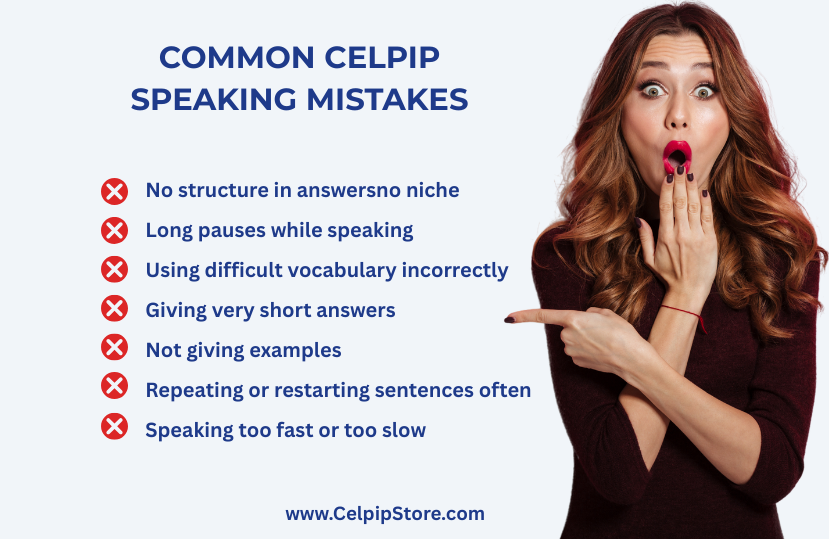
Common Mistakes Most Students Make
Mistake 1: No Structure
Students start speaking immediately without planning.
Result: ideas become random and unclear.
Mistake 2: Overthinking Vocabulary
Students pause too long searching for “advanced words.”
Result: fluency drops and score decreases.
Mistake 3: Not Fully Answering the Task
Students speak generally but miss the actual question.
Result: low task achievement score.
Mistake 4: Memorized Answers
Students try to force prepared answers into every task.
Result: unnatural and irrelevant responses.
Mistake 5: Silence and Hesitation
Long pauses break fluency flow.
Result: reduced speaking band score.
Many candidates lose marks in Task 3 because they either miss key details in the scene or fail to organize their description properly. Avoid these mistakes with CELPIP Speaking Task 3 Master Guide (Scene Description Strategy).
Many candidates lose marks in Task 4 because they give weak reasons or fail to clearly structure their opinion-based responses. Avoid these mistakes with CELPIP Speaking Task 4 Master Guide (Opinion Strategy).
The Core Idea: One System for All 8 Tasks
Most students make CELPIP Speaking harder than it actually is. They try to learn 8 different answers for 8 different tasks. This is the wrong approach.
High scorers use a single speaking framework and adjust it slightly for each task. This makes thinking faster, speaking smoother, and answers more natural under pressure.
The goal is simple:
You should never feel “blank” in the exam. You should always know how to start, what to say next, and how to finish clearly. In Task 1, fluency and clarity depend on how smoothly you present advice without hesitation while keeping your ideas simple and practical. You can improve this in CELPIP Speaking Task 1 High Score Advice Guide.
In Task 2, fluency and coherence depend on how smoothly you narrate your experience while connecting ideas logically and naturally. You can improve this in CELPIP Speaking Task 2 High Score Personal Experience Guide.
Universal Speaking Framework (CLB 9 System)
This is the core structure used across all CELPIP Speaking tasks:
1. Opening Line (1–2 seconds)
Start immediately without hesitation. This prevents silence and builds confidence.
Examples:
- “I think there are a few important points I can mention.”
- “If I were in this situation, I would suggest a simple solution.”
- “Let me explain my opinion clearly.”
2. Main Idea (Direct Answer)
Answer the question immediately. Do NOT delay with background explanation.
This is where many students lose marks because they “circle around” the topic instead of answering it directly.
A strong main idea is:
- Clear
- Simple
- Directly related to the task
3. Support Point (Reason or Example)
After your main idea, always add a reason or example.
This is what makes your answer complete. Without support, your response feels weak and unfinished.
You can use:
- Personal experience
- Logical reason
- Simple real-life example
4. Expansion (Detail or Impact)
Now expand your idea slightly. This shows fluency and depth.
You can explain:
- Why it matters
- What happens next
- How it affects people
This is where your answer becomes “high scoring.”
5. Closing Line (Natural Ending)
Always finish clearly. Many students stop suddenly, which feels incomplete.
Examples:
- “So this is what I would do in this situation.”
- “That’s why I strongly believe this is the best option.”
- “Overall, this would be a practical solution.”
Why This Framework Works
This system is powerful because it solves the biggest speaking problem: thinking under pressure.
When students do not have structure, they:
- Pause too much
- Repeat ideas
- Go off-topic
But when you use this framework, your brain follows a clear path:
Start -> Answer -> Explain -> Expand -> Finish
This reduces stress and increases fluency automatically.
Task Adaptation Strategy (Important)
Now let’s understand how this system changes slightly across tasks.
Advice-Based Tasks (Task 1, 6)
Focus on:
- Practical suggestions
- Simple solutions
- Clear reasoning
Use phrases like:
- “I would suggest…”
- “A good option would be…”
Experience & Opinion Tasks (Task 2, 7)
Focus on:
- Personal examples
- Feelings and opinions
- Real-life storytelling
Use phrases like:
- “In my experience…”
- “I personally believe…”
Description Tasks (Task 3, 8)
Focus on:
- Clear visual explanation
- Step-by-step description
- Logical sequencing
Use phrases like:
- “In this situation, I can see…”
- “First, then, after that…”
Thinking & Prediction Tasks (Task 4, 5)
Focus on:
- Logical assumptions
- Future outcomes
- Comparison and reasoning
Use phrases like:
- “I think this will happen because…”
- “Compared to that option…”
Fluency Is Not Speed: It Is Control
Many students believe fluency means speaking fast. This is incorrect.
In CELPIP Speaking, fluency means:
- Smooth flow of ideas
- Minimal hesitation
- Controlled pacing
- Clear transitions between thoughts
A CLB 9 candidate does not rush. Instead, they speak steadily and confidently, even if the sentence is simple.
When you try to speak too fast, you increase mistakes and lose structure. The real goal is controlled natural speech, not speed.
Examiner Insight: What Actually Gets High Scores
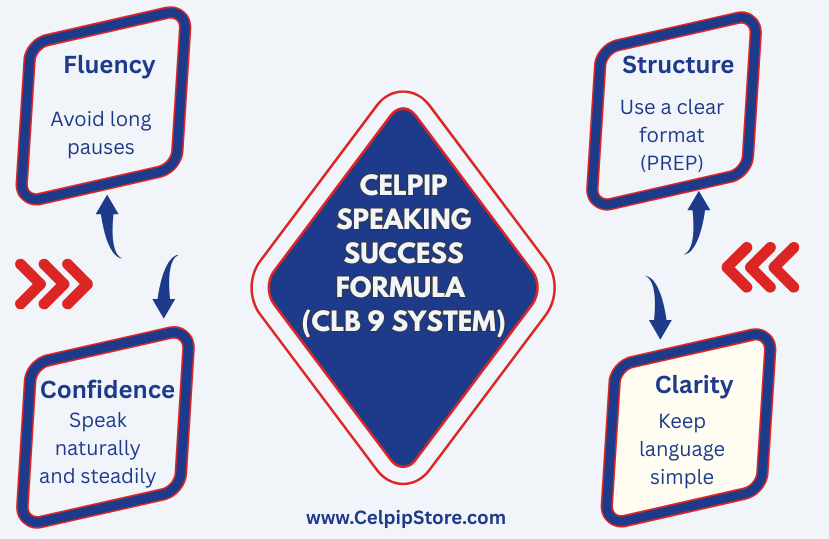
CELPIP examiners do not look for “perfect English.” They evaluate four key areas:
1. Content
Did you fully answer the question?
Even strong English will lose marks if the response is incomplete or off-topic.
2. Coherence
Is your answer easy to follow?
A well-structured answer always scores higher than a complex but disorganized one.
3. Fluency
Do you speak smoothly without long pauses?
Short natural pauses are fine, but frequent hesitation reduces your score.
4. Language Use
Is your grammar and vocabulary accurate and natural?
You do NOT need advanced words. You need correct and appropriate language.
High-Scoring Vocabulary Pattern (Simple but Powerful)
Instead of trying to use difficult words, focus on natural speaking patterns.
Replace complex vocabulary with clarity:
- “important” -> “really useful / helpful”
- “advantageous” -> “a good benefit”
- “complicated situation” -> “a difficult situation”
- “make a decision” -> “decide carefully”
CELPIP rewards natural communication, not academic vocabulary.
How to Build Ideas Quickly in 5 Seconds
One major challenge is thinking under pressure.
Use this mental formula:
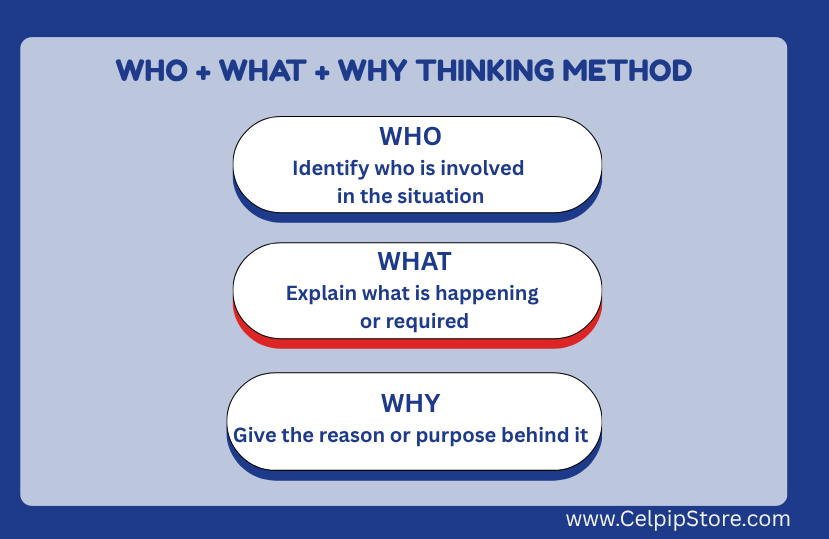
WHO + WHAT + WHY
Example task: Giving advice
- WHO: A friend
- WHAT: Needs help choosing a job
- WHY: They are confused about options
Now you instantly get ideas:
- Suggest comparing options
- Recommend asking for guidance
- Explain pros and cons
This removes “blank mind” situations.
Sample High-Scoring Response Style
Task Example: Giving Advice
“I think I can suggest a few helpful ideas. If my friend is confused about choosing a job, I would first recommend that they compare their options carefully. This is important because understanding different roles can make the decision easier.
Another suggestion would be to talk to someone experienced in that field. This can help them get a clearer idea of what to expect. Overall, I believe taking time to research would lead to a better decision.”
Notice:
- Simple language
- Clear structure
- No memorized phrases
- Smooth flow
Practice Technique Used by High Scorers
Top students do NOT only practice full answers.
They practice:
- 10-second idea generation
- Repeating answers with better fluency
- Rewriting answers in simpler language
- Speaking out loud daily (not silent reading)
This builds automatic speaking control.
Complete Summary of CELPIP Speaking Strategy
CELPIP Speaking is not about memorizing answers or using advanced vocabulary. It is about using a simple, repeatable communication system under time pressure.
Across all 8 tasks, your success depends on one core skill:
Can you speak clearly, logically, and continuously without losing control of your ideas?
If yes, you are already performing at CLB 9 level.
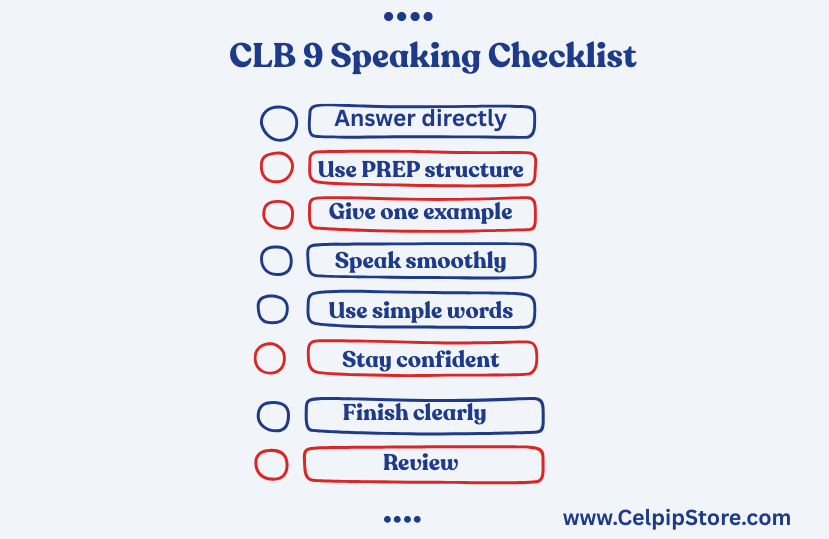
Final CLB 9 Checklist
Before answering any speaking task, mentally confirm this checklist:
Structure
- Did I start immediately without silence?
- Did I answer the question directly?
- Did I support my idea with a reason or example?
- Did I expand my answer with a detail?
- Did I end naturally?
Fluency
- Am I speaking smoothly without long pauses?
- Am I controlling my speed?
- Am I avoiding unnecessary repetition?
Content
- Did I fully answer the task?
- Is my response relevant and on-topic?
- Did I avoid going off-track?
Language
- Is my grammar simple but correct?
- Am I using natural vocabulary?
- Am I avoiding overthinking words?
Exam Strategy (What to Do in the Real Test)
In the actual CELPIP Speaking test, your mindset should be:
1. Don’t Aim for Perfection
Perfection creates hesitation. Focus on communication, not accuracy.
2. Start Immediately
Even a simple opening line is enough to build confidence and avoid silence.
3. Use Your Framework Every Time
Do NOT reinvent your answer in the exam.
Follow the same structure:
Answer -> Reason -> Example -> Expand -> Close
4. Keep Speaking Even If You Make Mistakes
Stopping is more harmful than making small errors.
Common Mistakes to Avoid (Final Warning)
- Memorizing answers for each task
- Trying to use difficult vocabulary
- Speaking too fast without control
- Leaving answers incomplete
- Overthinking grammar during speaking
These mistakes directly reduce CLB score potential. Many candidates lose marks in Task 1 because they give unclear advice or fail to explain their suggestions properly, which affects coherence and relevance. Avoid these mistakes with CELPIP Speaking Task 1 Master Guide (Giving Advice Strategy).
Many candidates lose marks in Task 2 because they provide unclear details or fail to maintain a logical flow in their story, which affects coherence. Avoid these mistakes with CELPIP Speaking Task 2 Master Guide (Personal Experience Strategy).
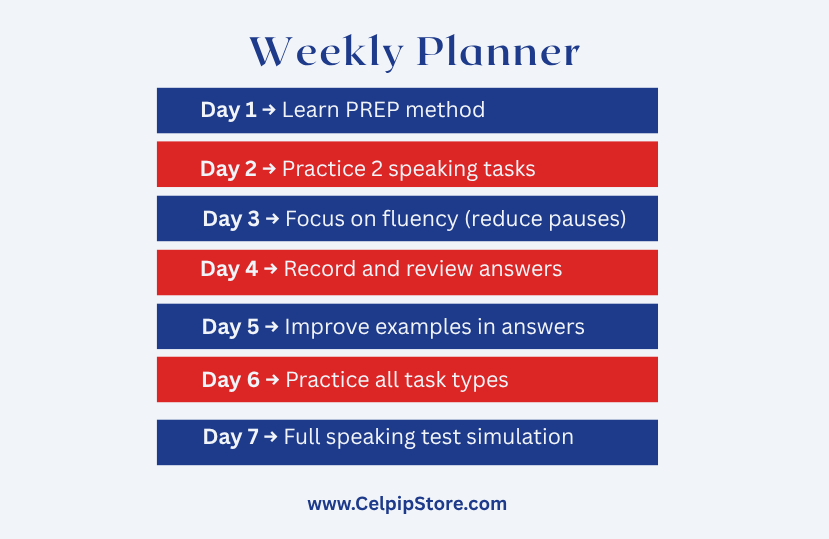
Final Practice Plan (7-Day CLB 9 System)
Day 1–2: Structure Training
- Practice only opening + main idea
- Focus on starting without hesitation
Day 3–4: Full Framework Practice
- Add reason + example + closing
- Practice all 8 task types slowly
Day 5–6: Timed Practice
- Simulate real exam timing
- Focus on fluency and control
Day 7: Full Mock Speaking Test
- Complete all tasks without stopping
- Review weak areas only after completion
Final Success Insight
Most students fail CELPIP Speaking not because they lack English ability, but because they lack a system.
Once you apply a structured speaking framework, your brain stops panicking under pressure. You automatically start thinking in organized steps instead of random ideas.
That is the difference between CLB 7 and CLB 9. Mastering Task 1 is essential for building strong speaking fundamentals, but overall success depends on performance across all CELPIP speaking tasks. Start with CELPIP Speaking Task 1 Complete Advice Strategy Guide.
Conclusion
If you master the system in this lesson, you will no longer depend on memorized answers or complex vocabulary. You will be able to respond confidently to any speaking task using a clear structure and natural English.
Mastering Task 2 is essential for improving fluency and storytelling, but overall success depends on performance across all CELPIP speaking tasks.
Start with CELPIP Speaking Task 2 Complete Personal Experience Strategy Guide.
Mastering Task 3 is essential for improving descriptive speaking skills, but overall success depends on performance across all CELPIP speaking tasks.
Start with CELPIP Speaking Task 3: Describe a Scene.
CELPIP Speaking is predictable. Once you understand the pattern, you control the test. Mastering Task 4 is essential for improving your opinion-based speaking skills, but overall success depends on performance across all CELPIP speaking tasks. Start with CELPIP Speaking Task 4: Opinion Questions